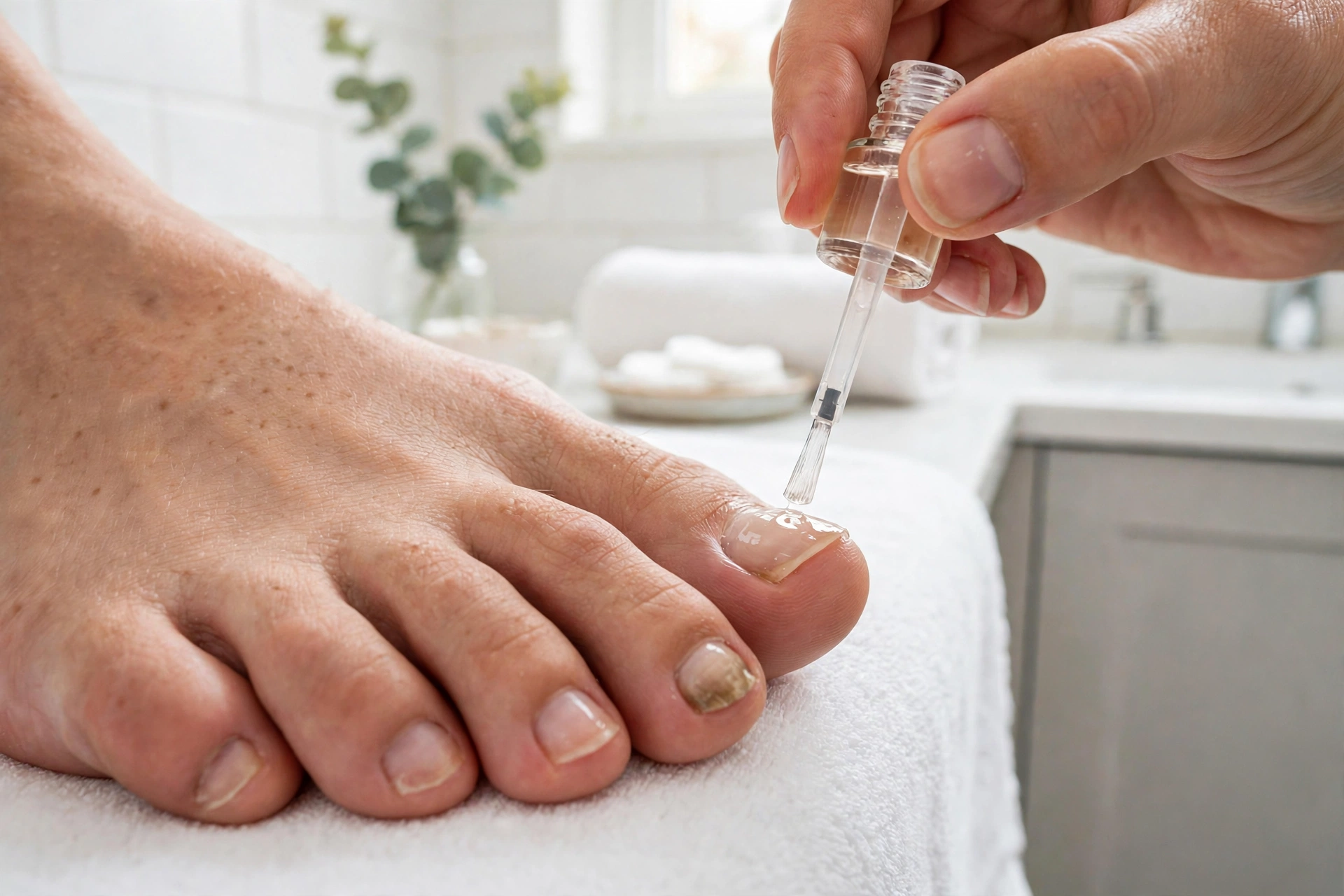
Quick answer: The only treatments with strong evidence against toenail fungus are prescription antifungal medications — oral tablets are the most effective, topical solutions work modestly for mild cases. Over-the-counter creams, tea tree oil, vinegar soaks and similar home remedies almost never clear an established nail infection on their own, though good foot hygiene prevents it from spreading and coming back.
⚠️ When to see a doctor: Talk to a clinician before starting treatment — not every thick, discolored nail is fungus (injury and psoriasis can look identical, and only a lab sample confirms it). See a doctor promptly if you have diabetes, poor circulation or a weakened immune system; if there is pain, swelling, bleeding or spreading discoloration at the nail base; or if walking is affected. This guide is educational and is not medical advice.
What toenail fungus actually is
Toenail fungus — onychomycosis — is an infection of the nail, usually by a dermatophyte fungus, the same family that causes athlete’s foot. It typically starts as a white or yellow-brown spot under the nail tip and, as the infection goes deeper, the nail thickens, discolors, turns brittle and crumbly, and may separate from the nail bed. It can affect several nails, and it is more common in toenails than fingernails.
Risk factors include athlete’s foot (which spreads to nails), older age, nail injuries, diabetes, impaired circulation, and spending time in warm, moist places like pool decks and gym showers. As Mayo Clinic’s primary care team notes, fungus establishes more easily as nails become brittle and dry with age, creating cracks where it can live.
Why it is so hard to kill
This is the part most articles skip, and it explains why “miracle cures” keep failing. Toenails are stacked layers of hard keratin — the fungus can sit between those layers, on top of the nail, underneath it, or inside the nail matrix (the cells that manufacture the nail itself). Topical products struggle to penetrate deep enough to reach it, and nails grow slowly, so even an effective treatment must run for months while the infected nail grows out. Understanding this makes the evidence hierarchy below feel obvious rather than disappointing.
What actually works (ranked by evidence)
1. Prescription oral antifungals — the most effective
Oral medications (most commonly terbinafine, sometimes itraconazole) are the strongest evidence-backed option: they travel through the bloodstream and reach the nail from the inside, which is exactly where topical products cannot go. The typical course runs about 12 weeks, and because the drugs can interact with other medicines and affect the liver, doctors monitor lab tests during treatment. This is a prescription-only path — ask your clinician whether you are a candidate.
2. Get a proper diagnosis first
Before spending anything, see your clinician and have them take a sample. Thick, discolored nails can also be nail injury, psoriasis or age-related change — none of which respond to antifungals. Mayo Clinic’s guidance is explicit: confirm the fungus is present so you start the correct treatment rather than months of the wrong one.
3. Prescription topicals — modest, for mild or early cases
Prescription nail lacquers such as efinaconazole are the best of the topical options, but they are considerably less effective than oral medication, may need up to 48 weeks of consistent use, and suit mild, early or surface-only infections best. Their advantage: far less drug interaction risk than oral treatment, which is why clinicians sometimes choose them first.
4. Foot hygiene — prevents spread and reinfection
Hygiene will not cure an infected nail, but it is what keeps the problem from spreading to other nails, to family members, and back to you after treatment:
- Wash and dry feet thoroughly every day — especially between the toes
- Change into clean, dry socks daily; choose moisture-wicking pairs if your feet sweat
- Wear shower shoes in gyms, pools and locker rooms
- Trim nails straight across, disinfect clippers after each use, and never share them or towels
- Treat athlete’s foot promptly — it is the most common feeder of nail fungus
What’s a waste of money
This is the section the internet hates, but it will save you the most money:
- Over-the-counter “nail fungus cure” oils and creams. There is no strong clinical evidence that OTC topicals clear established nail fungus — the keratin barrier that defeats prescription lacquers defeats these too.
- Tea tree oil, vinegar and other home soaks. Laboratory antifungal activity in a dish does not translate into penetrating a living nail. No credible guidance lists them as effective treatments for onychomycosis.
- Bleaching or filing the nail down and hoping. Cosmetically cleaner, but the infection lives under and inside the nail plate — surface work does not reach it.
- Laser treatments from clinics. Marketed aggressively, but published evidence is mixed and the cost is high for the cure rates reported. If you are considering it, get a confirmed diagnosis and a candid evidence discussion with a dermatologist first.
A note on our product policy
You will notice we are not recommending a specific “best nail fungus product” here. That is deliberate: the evidence says OTC topicals rarely resolve nail fungus, so recommending one would be misleading. The highest-value purchase in this space is boring — antifungal foot powder or spray to keep feet dry, and moisture-wicking socks — because prevention and recurrence control are the parts you can actually buy your way into. The treatment decision itself belongs with your clinician.
Not sure whether your nail problem is fungal? Our Foot Problem Finder walks you through the pattern, and the Conditions hub covers the look-alike problems, including athlete’s foot and ingrown toenails.
Frequently asked questions
Can toenail fungus go away on its own?
Rarely. Nails grow slowly and the fungus is protected inside keratin, so established infections persist without treatment. Mild cases that do not bother you may not need treatment at all — but they also rarely resolve spontaneously.
How long does treatment take?
Oral antifungals are typically taken for about 12 weeks, with full results visible only as the infected nail grows out — often 6 to 12 months for a big toenail. Prescription topicals can require up to 48 weeks of daily application.
Does Vicks VapoRub or tea tree oil work?
Small anecdotal reports exist, but there is no credible clinical evidence that these clear nail fungus, and the penetration problem is the same as with every other topical. They are not harmful as an adjunct to proven treatment, but they are not substitutes for it.
Will it come back after treatment?
Recurrence is common — nail fungus often comes back even after successful treatment. That is why the hygiene routine above matters as much as the medication: dry feet, clean socks, shower shoes, and treating athlete’s foot early.
I have diabetes — is toenail fungus dangerous for me?
It can be. Reduced circulation and healing capacity mean a minor nail or skin infection can become serious. Mayo Clinic advises people with diabetes to see their clinician about any nail fungus rather than managing it at home.
Sources
- Mayo Clinic — Nail fungus: Symptoms and causes
- Mayo Clinic Health Letter — No Simple Solution for Toenail Infections (treatment options and honest cure rates)
- College of Family Physicians of Canada, Tools for Practice — Putting the FUN in Fungi: toenail onychomycosis (cure rates: orals 45–60%, topicals 6–23%, placebo under 10%)
Educational only — not medical advice. Footcarely content is researched against published clinical guidance; see our Medical Disclaimer and How We Review pages.