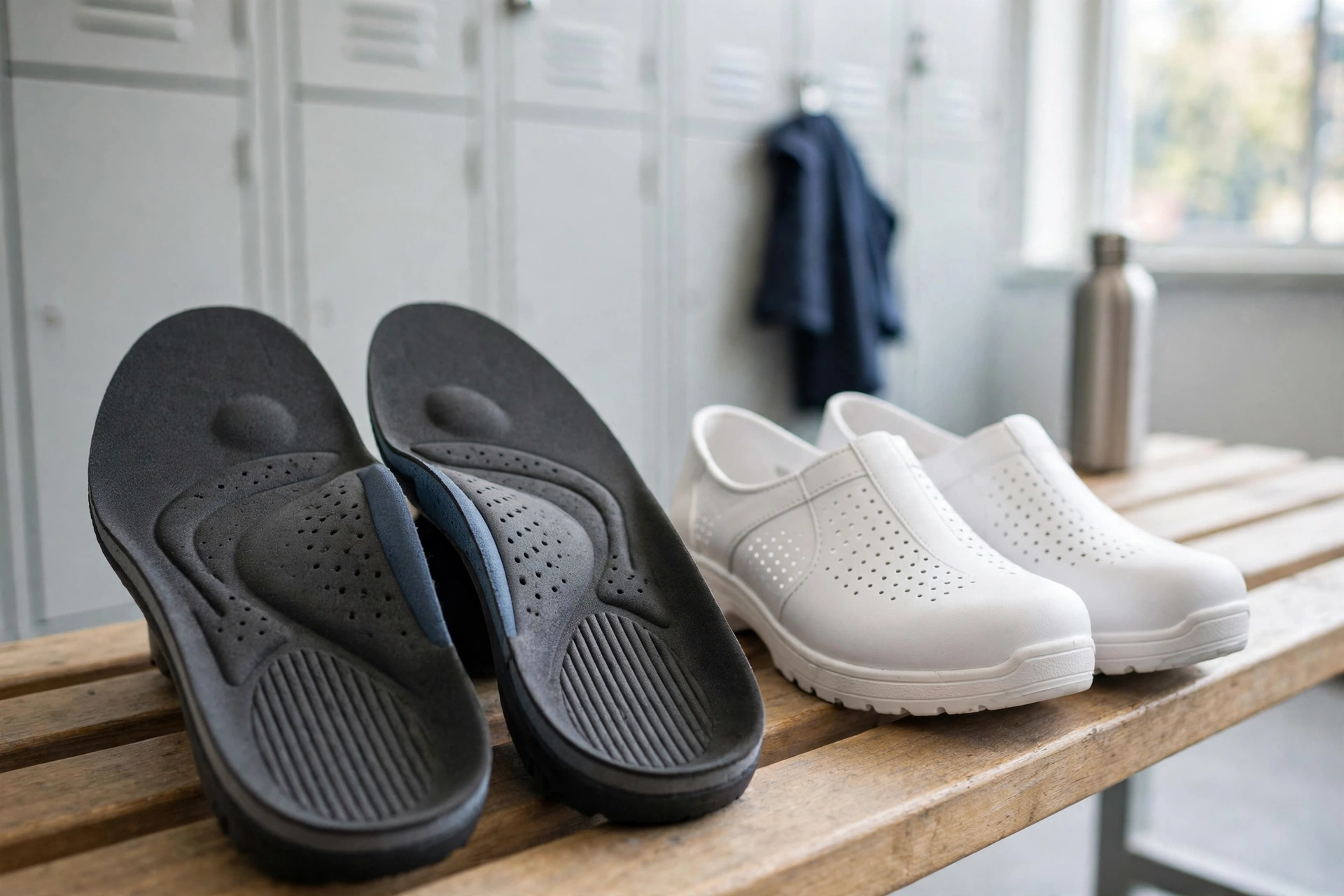
Best Insoles for Nurses: 12-Hour Shifts Without the Ache
Quick answer: The insole that comes in your shoe is a thin sheet of foam — it’s packaging, not support. For most nurses, a firm, structured insole like the PowerStep Pinnacle makes the biggest difference over a 12-hour shift. High arches or serious standing time? Superfeet Green. Tight budget? WalkHero. If you have diabetes or significant foot pain, skip the guesswork and ask about custom orthotics.
How we choose: structured support, cushioning that doesn’t flatten, fit in work shoes, durability and price — from manufacturer specs and consistent nurse feedback. Prices approximate, US, at time of writing. No payment for placement, ever.
Why insoles matter more on shift than off
On hard hospital floors, your arch works overtime: every hour of standing loads the plantar fascia and the small muscles of the foot with almost no recovery time. A good insole doesn’t just add padding — it spreads that load across the whole foot, supports the arch so it doesn’t collapse by hour eight, and absorbs the repetitive impact of walking on surfaces with zero give. The wrong insole (too soft, purely gel) feels nice for ten minutes and does almost nothing by hour ten.
The picks
1. Best overall — PowerStep Pinnacle (~$40–45)
The most-recommended over-the-counter insole in podiatry offices for a reason: a firm arch shell with a cushioned top layer — support that lasts the whole shift without feeling like a plank. It fits most nursing shoes and clogs once you remove the stock insole.
Best for: most nurses, mild-to-moderate arch pain, heel pain. Not for: very flat feet that need maximum control, or shoes with no removable insole and no spare volume.
2. Best for high arches and heavy standing — Superfeet Green (~$55)
A deep heel cup and a high, firm arch profile that suits feet which roll outward or have high arches. The structure is the point — this is support first, cushioning second. Give it a few shifts to adapt if you’re coming from flat foam.
Best for: high arches, standing-heavy roles, people whose feet ache “on top” of tiredness. Not for: low arches/flat feet (the arch can feel intrusive), or tight-fitting shoes.
3. Best budget — WalkHero insoles (~$20–25)
A surprisingly structured budget option: real arch support and decent cushioning for the price of a takeaway lunch. They wear out faster than PowerStep or Superfeet — expect to replace them sooner — but they’re a low-risk way to test whether insoles help you at all.
Best for: students, first-time insole users, a spare pair for your second shoes. Not for: heavy daily use over many months — budget for replacements.
4. When to consider custom orthotics
If pain persists despite good shoes and structured insoles — or you have diabetes, recurrent heel pain, or one foot that’s clearly different from the other — a podiatrist can assess whether a custom device is worth it. They’re the most expensive option (often $300+), so exhaust the $40–55 options first unless a clinician advises otherwise.
Fitting rules nurses get wrong
- Always remove the stock insole first. Stacking two insoles lifts your heel out of the shoe and causes rubbing.
- Match length, then trim. Most insoles are trim-to-fit: trace your old insole on the new one and cut the toe end only.
- Break them in. Wear structured insoles a few hours at a time for the first days — your arches need to adapt.
- Replace on schedule. Even the best insole compresses: 6–12 months of full-time shifts is a realistic lifespan.
- One pair per shoe pair. Moving a damp insole between shoes daily shortens its life and your patience.
Insoles work best as part of a system: the right shoe (our best shoes for nurses guide), calf stretching on days off, and rolling your foot on a frozen bottle after bad shifts. Heel pain that greets you with your first morning steps is a specific pattern — read our morning heel pain guide and the stretches that actually help.
FAQ
Are gel insoles good for nursing?
They add short-term comfort but little structure, and they flatten fast. For 12-hour shifts, a structured insole with real arch support outperforms pure gel for almost everyone.
Will insoles fix my plantar fasciitis?
They can reduce strain on the fascia and are a standard part of home management, but they’re one piece of the plan — stretching, load management and footwear matter too. See our complete plantar fasciitis guide.
Can I put insoles in clogs like Dansko?
Many clogs have limited internal volume and shaped footbeds — some accept a thin insole, others don’t. If the clog’s built-in arch already suits you, you may not need one. Never force a thick insole into a clog: it raises your foot and destabilises your ankle.
How do I know my size?
Insoles are sold by shoe-size ranges. Buy your shoe size, remove the stock insole, and trim the new one to match it exactly.
When should I see a professional instead?
Numbness, pain that alters your walk, swelling that doesn’t settle overnight, or any foot problem with diabetes — get assessed rather than upgrading gear.
Sources: manufacturer specifications for each model; American Academy of Dermatology footwear guidance (aad.org). This article contains no affiliate links yet; when we add them, they will be disclosed here and never affect our picks. See How We Review and our Medical Disclaimer.