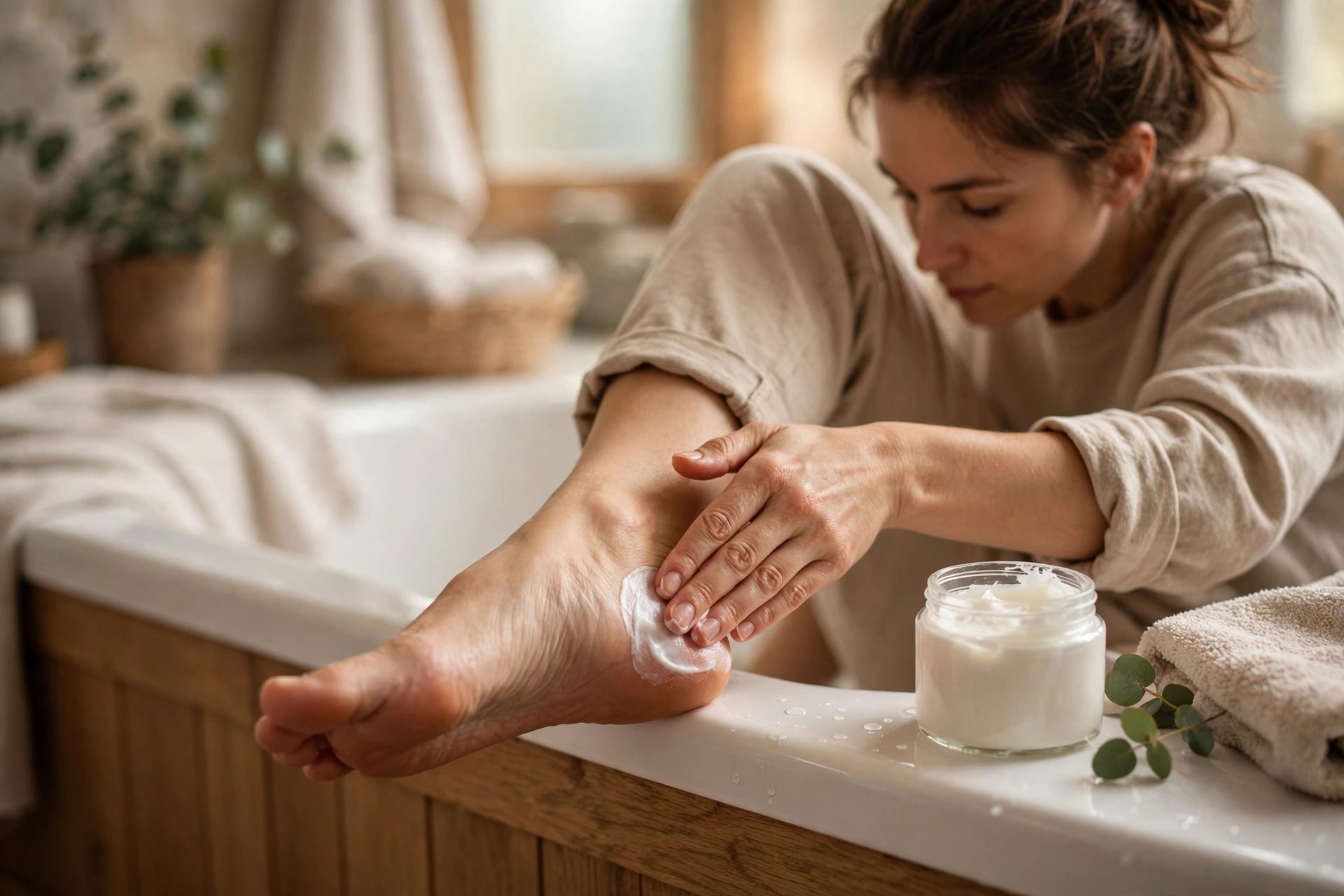
Cracked Heels: What Actually Helps (and What Makes Them Worse)
Quick answer: Cracked heels heal when you do three things together: soften the thick, hard skin with a cream containing 10–25% urea (the American Academy of Dermatology’s recommended range), seal the moisture in — petroleum jelly and socks at night — and stop wearing open-backed shoes while they heal. Most mild-to-moderate cracks improve noticeably within one to two weeks of a daily routine.
When to see a doctor first
Skip the home routine and get medical advice first if: a crack is deep, bleeding, or painful to walk on; the skin around it is red, warm, swollen or oozing (possible infection); cracks keep returning despite two weeks of proper care; or you have diabetes or poor circulation — with diabetes, even a small heel crack can become a serious wound, and self-treating with files and acid creams is not safe. The AAD notes cracked heels can also be a sign of a medical condition such as diabetes or a skin condition like eczema or athlete’s foot — if yours won’t heal, that possibility deserves a proper look.
Why heels crack
The skin on your sole has no oil glands, so it dries out faster than skin anywhere else. When dry heel skin is pressed under your body weight with every step, it spreads sideways — and if it has lost its flexibility, it splits instead of stretching. That’s why cracks form at the edge of a thick rim of hard skin (callus): the callus can’t flex, so the skin at its border tears. Standing for long periods, open-backed shoes (which let the heel pad splay), long hot showers, cold dry weather and walking barefoot all make it worse.
The routine that works
- Shorten and soften your soak. Limit baths and showers to 5–10 minutes in warm (not hot) water, with a gentle, fragrance-free cleanser — long hot water strips the oils your heels can’t replace.
- Moisturise within 5 minutes of bathing. While the skin is still damp, apply a cream containing 10–25% urea (or an alpha hydroxy acid or salicylic acid). Urea does two jobs: it draws water into the skin and gently dissolves the thick, hard layer so the moisturiser can actually get in. Reapply whenever your heels feel dry through the day.
- Gently thin the callus — never hack at it. After soaking, when the skin is soft, smooth the hard rim lightly with a pumice stone or foot file. A little at a time, over days. Never use razor-style callus shavers or “cheese grater” files, and never file into a crack: aggressive removal is how home care turns into bleeding and infection.
- Seal it in overnight. Before bed, apply plain petroleum jelly over the urea cream and wear cotton socks. This overnight “seal” is the step most people skip — and the one that makes the biggest visible difference.
- Protect cracks during the day. A liquid bandage over a crack forms a barrier that reduces pain, keeps germs out and helps the split close. (Keep urea cream off open cracks — it stings and can irritate raw skin; use it on the hard skin around them.)
- Change your shoes while you heal. Closed-back shoes with a cushioned heel. Open-backed shoes, flip-flops and worn-down heels are the top mechanical cause — wearing them undoes the other five steps.
Want this as a day-by-day plan? Our free 7-Day Cracked Heel Plan lays out the same routine morning and night for a week.
What to avoid
- Ordinary body lotion alone. It feels nice for an hour but can’t soften a thick callus — without urea or a similar active ingredient, it mostly perfumes the problem.
- Aggressive filing or cutting callus. Removing too much leaves the heel thinner, sorer and more likely to split — and any cut is an infection risk.
- Soaking for 30+ minutes. Over-soaking dries skin further once you get out.
- Viral “peeling” foot masks on cracked skin. The acids keep working into open fissures. Painful, and a bad idea with any break in the skin.
- Ignoring a crack that won’t close. A fissure that stays open for weeks is a medical question, not a moisturiser question.
How long until heels look normal?
Surface dryness improves within days. Shallow cracks typically close within one to two weeks of the full routine. A thick callus rim takes longer — three to four weeks of gentle, consistent work — because you’re gradually thinning skin that built up over months. Consistency beats intensity: five gentle minutes daily outperforms one aggressive weekend session, every time. Not sure whether your heel problem is dryness, a callus or something else? Take the 60-second Foot Problem Finder quiz to sort it out.
FAQ
What percentage of urea cream is best for cracked heels?
The American Academy of Dermatology recommends looking for 10–25% urea for dry, cracked heels. Towards 25% for thick, hard callus; 10% is gentler for maintenance once the skin has recovered.
Can I just use petroleum jelly?
Petroleum jelly is an excellent sealant and the AAD recommends it at night — but on its own it sits on top of hard callus rather than softening it. Pair it with a urea cream underneath for thick, cracked skin.
Why do my heels crack every summer?
Open-backed sandals and flip-flops let the heel pad spread sideways with each step, stressing dry skin until it splits. Switching to closed-back shoes for a few weeks usually breaks the cycle.
Are cracked heels a sign of diabetes?
They can be associated with diabetes — reduced sweating and circulation make diabetic feet drier and slower to heal. If you have diabetes, don’t self-treat cracks: get them checked, and never use callus shavers or strong acid creams on your feet.
Should I file before or after soaking?
After. Soaking softens the hard skin so a pumice stone removes it gently. Filing dry, hard callus takes more force and removes less — and hurts more when you overdo it.
Sources: American Academy of Dermatology, “How to care for dry, cracked heels” (aad.org). Educational information only — not medical advice. See our Medical Disclaimer.