Quick answer: The stretches that help plantar fasciitis most are the fascia-specific toe pull (hold 10 seconds, 10 reps, 3 times a day — starting before your first morning steps), calf stretches against a wall, and a slow frozen-bottle roll. Done daily, most people feel a real difference within a few weeks.
⚠️ When to see a doctor: Stop and get checked if stretching sharply increases your pain, if your heel pain followed an injury, if you cannot bear weight, or if you have diabetes, poor circulation or reduced feeling in your feet. This guide is educational and is not medical advice. New to this condition? Start with our complete plantar fasciitis guide.
Why stretching works for plantar fasciitis
Your plantar fascia tightens overnight and during long sits — which is why the first steps of the day hurt most. Gentle, repeated stretching loosens the fascia and the calf muscles that pull on it, reducing the strain at the heel with every step. Tight calves are part of the problem for most people: studies of plantar fasciitis patients consistently find limited ankle flexibility, which is why this routine works the calf as well as the sole.
Ground rules: stretches should feel like a firm pull, never a sharp pain. Hold each position steady instead of bouncing. Do the routine daily — consistency beats intensity.
The 7 stretches
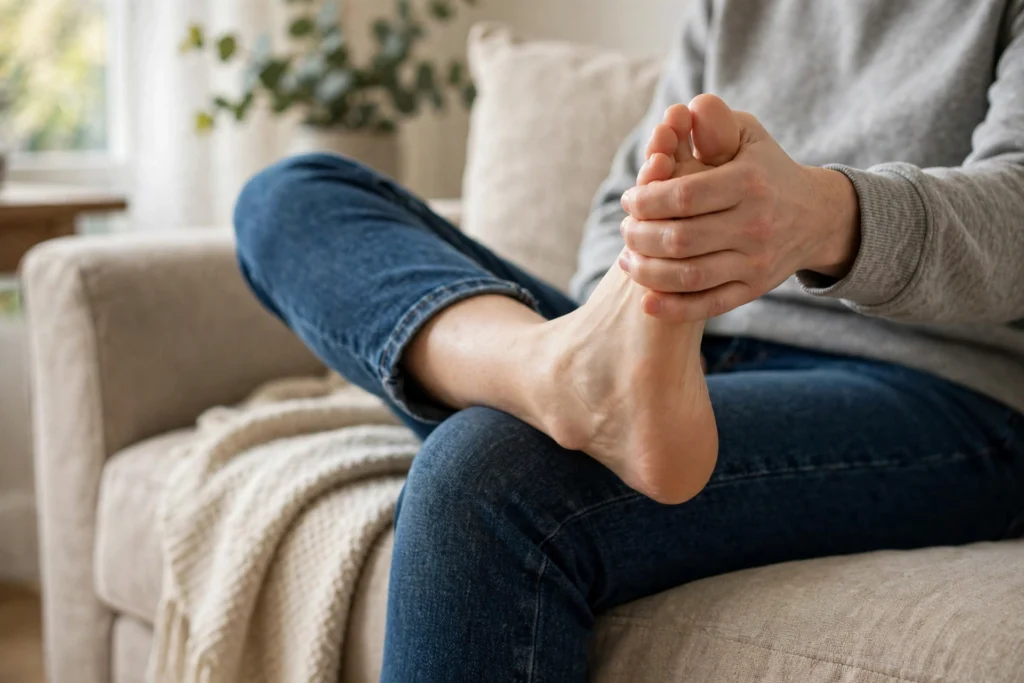
1. The fascia stretch (toe pull) — the one with research behind it
Sit with the sore foot crossed over the opposite knee. With the hand on the same side, pull your toes back toward your shin until you feel a stretch along the arch. Run your other thumb along the sole — the fascia should feel like a tight band. Hold 10 seconds, repeat 10 times, do 3 sets a day. The first set must happen before your first steps in the morning and before standing after long sits.
This protocol, developed by Dr. Benedict DiGiovanni at the University of Rochester, was tested against standard calf stretching in a clinical trial: after 8 weeks, more than 90% of patients doing this stretch were satisfied with their pain relief. It is the single best-studied stretch for this condition.
2. Towel stretch in bed
Before getting up, loop a towel or belt around the ball of your foot and gently pull your toes toward you, keeping the knee straight. Hold 30 seconds, repeat 3 times on each foot. It takes the shock out of those first steps while the fascia is still cold and tight.
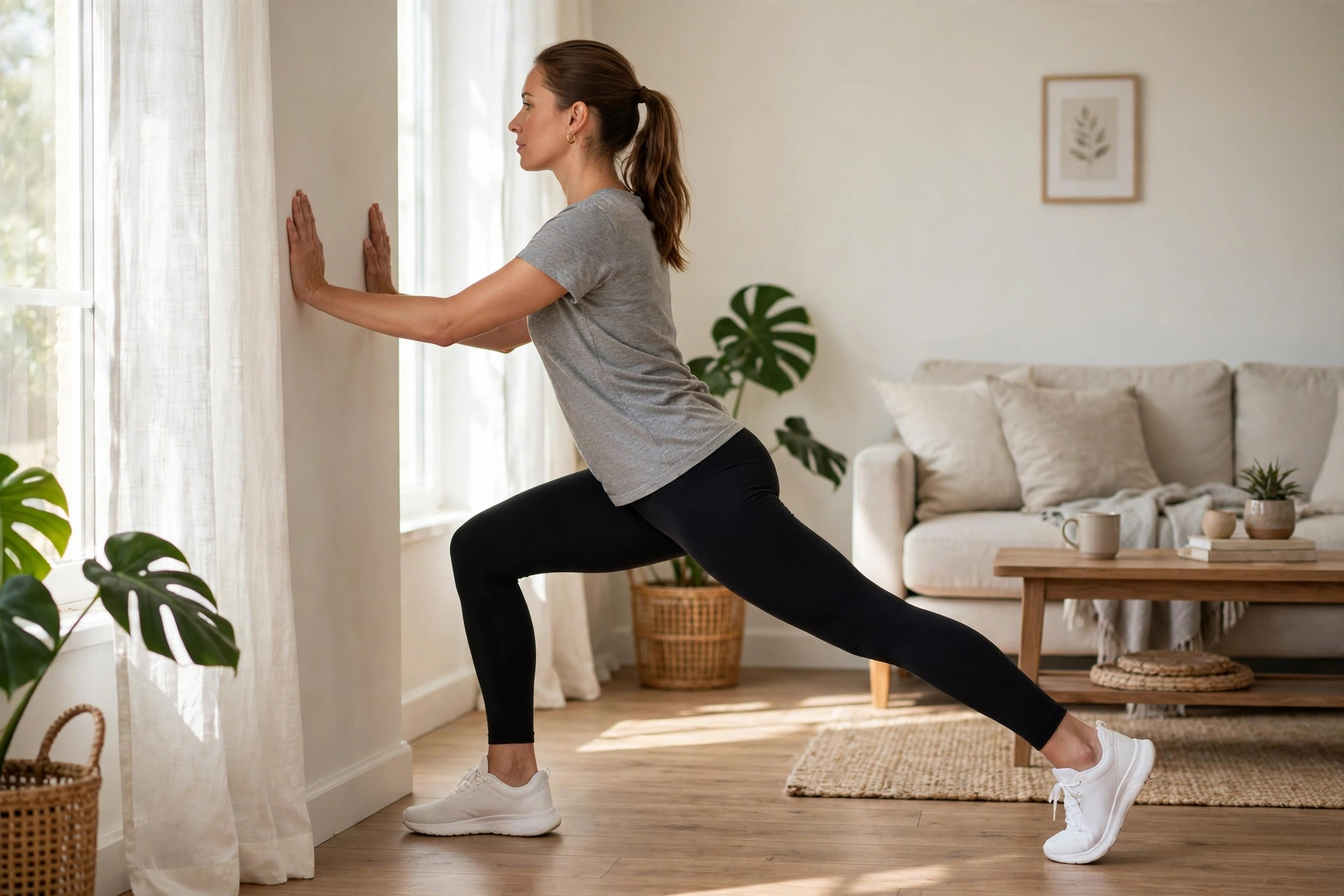
3. Wall calf stretch — straight knee
Stand facing a wall, hands on the wall, sore foot a step behind with the heel pressed into the floor and toes pointing straight ahead. Bend the front knee and lean in until you feel a stretch high in the back calf. Hold 30 seconds, repeat 3 times, twice a day. This targets the gastrocnemius, the big calf muscle that feeds tension into the heel.
4. Wall calf stretch — bent knee
Same wall position, but this time bend the back knee slightly while keeping the heel down. The stretch drops lower, into the soleus and the Achilles tendon. Hold 30 seconds, repeat 3 times. If your ankle feels stiff and “blocked” in the straight-knee version, this is usually the version you were missing.
5. Frozen bottle roll
Freeze a water bottle, place it under your arch and roll slowly from heel to toes for 10–15 minutes, pressing as firmly as is comfortable. It combines a gentle fascia stretch with cold therapy to calm the irritated tissue — ideal after a long day or a shift. A tennis or lacrosse ball works when you don’t have a frozen bottle.
6. Marble pickups (toe scrunches)
Drop a handful of marbles — or a crumpled hand towel — on the floor and pick each one up with your toes, dropping them into a cup. Two minutes per foot. It feels like a game, but it strengthens the small muscles inside the foot that support the arch, so the fascia has less work to do with every step.
7. Slow heel raises (strengthening)
Once stretching alone stops being enough, add load. Stand on a step with a rolled towel under your toes (this engages the fascia’s “windlass” mechanism) and rise up slowly — 3 seconds up, pause 2 seconds, 3 seconds down. Aim for 3 sets of 12, every other day, building up gradually. Research on this high-load approach found faster pain reduction than stretching alone at the 3-month mark. Mild discomfort during the exercise is acceptable; sharp pain is not — stop and regress if you feel it.
A simple daily routine
- In bed, before first steps: fascia stretch (stretch #1), then towel stretch (#2).
- Morning: wall calf stretches, straight knee (#3) and bent knee (#4).
- Midday: second set of the fascia stretch (#1) — especially after long sitting.
- Evening: third set of #1, marble pickups (#6), frozen bottle roll (#5) after activity.
- Every other day: slow heel raises (#7).
Give the routine two consistent weeks before judging it. Steady improvement — even slow — is the expected pattern; our complete guide covers the rest of home care (footwear, insoles, load management) that works alongside these stretches, and our Remedies hub collects all of it in one place.
Frequently asked questions
How long until stretches help?
In the DiGiovanni trial the program ran 8 weeks, and most patients reported clear improvement within that window. Many people feel some easing of morning pain within 1–2 weeks of daily stretching. If nothing has changed after 2–3 weeks of doing it consistently, get checked in person.
Should stretching hurt?
A firm pulling sensation is right. Sharp, stabbing or increasing pain is not — ease off. The fascia is already irritated; forcing a stretch can flare it up and set you back.
Which single stretch matters most?
The fascia-specific toe pull (#1), done before your first steps of the day. It has the strongest research support and directly targets the tissue that hurts. If you only have two minutes, spend them there.
Can I stretch too much?
Yes — more is not always better. Three sets a day of the toe pull plus the calf routine is the studied dose. Aggressive stretching several times an hour, or stretching through sharp pain, tends to irritate the fascia rather than heal it.
Do I still need good shoes if I stretch?
Yes. Stretching loosens the tissue; footwear decides how much strain it takes during the other 10,000 steps of your day. Supportive shoes or a firm insole protect the gains you make — we compared the leading options in our insoles roundup.
Sources
- American Family Physician — Plantar Fascia Stretching Program for Chronic Heel Pain (summary of the DiGiovanni trial)
- University of Rochester / ScienceDaily — New stretch relieves pain from plantar fasciitis
- Mayo Clinic Health System — Self-care tips for plantar fasciitis (stretching as first-line care)
Educational only — not medical advice. Footcarely content is researched against published clinical guidance; see our Medical Disclaimer and How We Review pages.