Affiliate disclosure: Footcarely is reader-supported. When you buy through links on our site, we may earn a commission at no extra cost to you. Commission never buys a ranking — every pick below says who it is for, and who should skip it. See our Affiliate Disclosure and How We Review.
Quick answer: For most people with plantar fasciitis, a firm prefabricated insole with real arch support helps more than a soft gel cushion. Our top pick for most feet is the PowerStep Pinnacle for its balance of support and comfort; runners may prefer Superfeet’s firmer support. If your pain has not improved after several weeks in good insoles, skip further spending and get assessed for custom orthotics instead.
Why insoles may help plantar fasciitis
Plantar fasciitis is driven by repeated strain on the fascia where it meets the heel. A supportive insole spreads load across the whole foot instead of letting it concentrate at the heel and arch, which may reduce that strain across the thousands of steps you take daily. Shoe inserts and arch supports are among the standard first-line options specialists recommend, alongside stretching and activity changes. Insoles are not a cure — they work best as one part of the routine in our complete plantar fasciitis guide.
How we chose these picks
- Firm arch support over soft cushioning — gel alone rarely reduces fascia strain.
- A deep heel cup to keep the heel centred and stable.
- Fits real shoes — work shoes, trainers and everyday footwear, not just running shoes.
- Value over time — typical US price and how long a pair realistically lasts.
The picks
1. PowerStep Pinnacle — best for most people
Best for: everyday shoes and work shoes; first-time insole buyers. Not for: very narrow dress shoes (it is a full-length, fairly substantial insole).
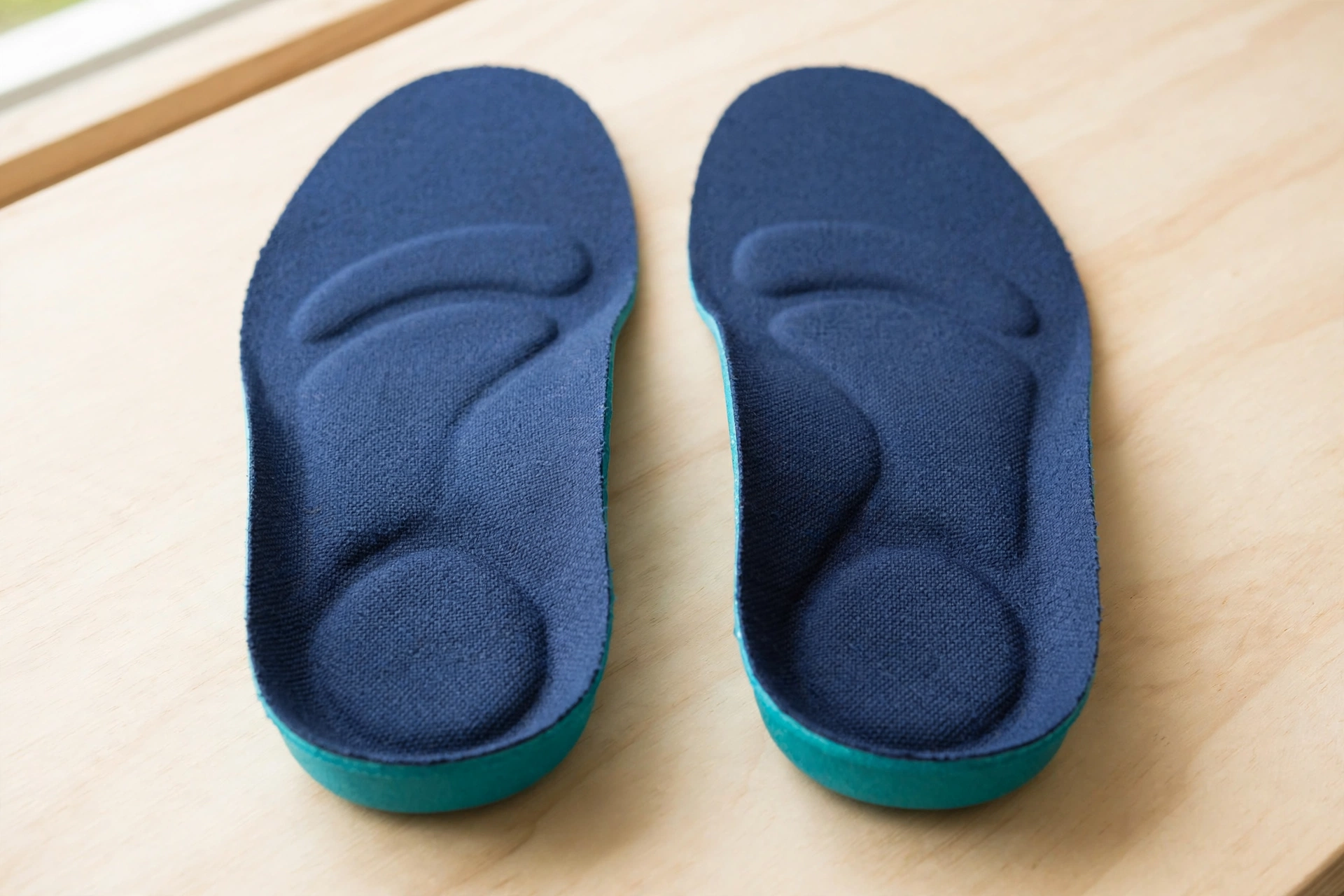
The Pinnacle is the insole podiatry clinics have recommended for years: a firm-but-forgiving arch, a deep heel cradle, and enough cushioning that it does not feel like standing on a plank. It is the safest first purchase for plantar fasciitis — supportive enough to change how your foot loads, comfortable enough that you will actually keep wearing it. Typical US price: around $40–45. Expect 6–12 months of daily wear.
2. Superfeet Green — best firm support for active feet
Best for: runners, walkers and high arches who want maximum structure. Not for: anyone who wants a plush feel — these are deliberately firm.
Superfeet’s high-profile insoles use a rigid stabiliser cap under the heel and arch. The support is noticeably firmer than the PowerStep, which many runners and people with high arches prefer, especially in running shoes with removable liners (remove the stock liner first). There is an adjustment period of about a week. Typical US price: around $55.
3. WalkHero Comfort & Support — best budget pick
Best for: trying insoles for the first time on a budget; long shifts on hard floors. Not for: severe or long-standing cases — budget materials compress faster.
WalkHero’s insole offers a surprisingly structured arch and heel cup for the price, which is why it is a sensible first experiment before spending more. The trade-off is durability: heavy daily use can flatten them within a few months, at which point support drops off. Typical US price: around $20–25.
4. Custom orthotics — when prefabricated is not enough
Best for: pain that persists after 6–8 weeks of stretching plus good prefabricated insoles, unusual foot shapes, or diabetes-related foot concerns (always clinician-guided). Not for: a first step — most people improve without them.
Custom orthotics are moulded to your feet by a podiatrist, or made-to-measure through specialist services. They cost far more (often $200+ in a clinic), so they belong after — not before — the basics. Cleveland Clinic lists custom shoe inserts among the options specialists may recommend when simpler measures are not enough.

How to get the most from your insoles
- Remove the shoe’s original liner before inserting a full-length insole, so your foot is not crowded.
- Break them in: a few hours the first day, building up over a week.
- Wear them in the shoes you spend the most hours in — for most people that is work shoes, not trainers.
- Keep stretching. Insoles reduce strain; stretching addresses the tightness that contributes to it.
- Replace them when the arch visibly flattens or your symptoms creep back — usually every 6–12 months.
Frequently asked questions
Should insoles feel uncomfortable at first?
A firm arch can feel strange for the first few days — that is normal. Sharp pain, numbness or new pain in your knees or back is not; stop and reassess the fit.
Are gel insoles good for plantar fasciitis?
Soft gel cushions the heel but does little to support the arch, which is where the strain reduction happens. Most people with plantar fasciitis do better with a firm, structured insole, possibly with a cushioned top layer.
Can I move one pair between shoes?
Yes — full-length insoles swap easily between shoes with removable liners. Just make sure each shoe still fits well with the insole in place.
How long before I know if they are helping?
Give it 2–3 weeks of daily wear combined with stretching. If there is no improvement at all, the insole is not the missing piece — get your feet assessed in person.
Do I need insoles in both shoes if only one foot hurts?
Yes. Wearing an insole in only one shoe creates a leg-length difference that can cause its own problems. Always fit the pair.
Sources
- Mayo Clinic — Plantar fasciitis: Symptoms and causes
- Cleveland Clinic — Plantar fasciitis treatment
Educational only — not medical advice. Prices are typical US prices at the time of writing and change frequently; check the current price before buying. See our Medical Disclaimer.