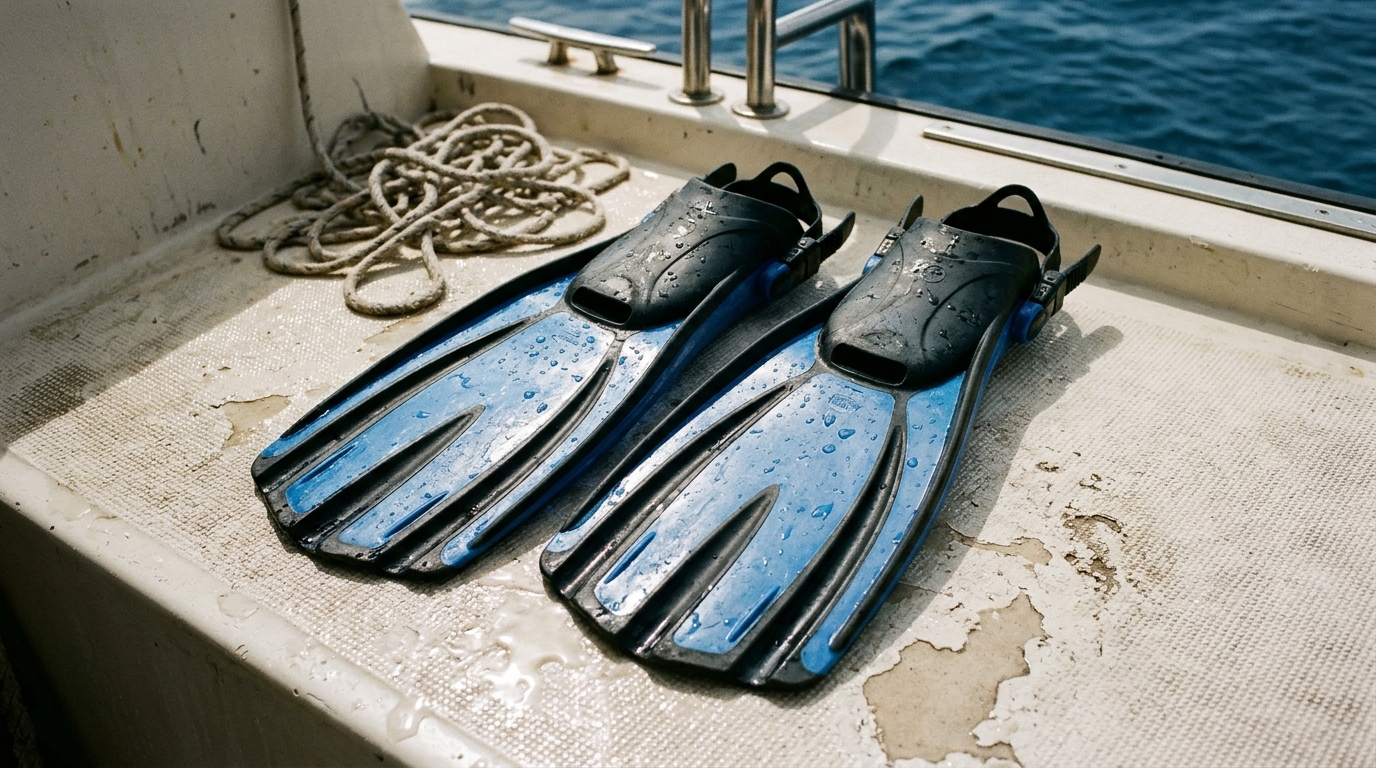
Quick Answer: In short, foot pain from scuba diving usually comes from your fins — a stiff blade forces your feet into a hard kicking motion for an hour at a time, and a tight foot pocket squeezes your toes and arches. Heavy gear and barefoot boat-deck walking add to the strain. It usually eases with rest, better-fitting fins, and stretching. If it stays sharp, lasts more than a couple of weeks, or comes with swelling, get it checked by a doctor or podiatrist.
See a doctor promptly if you notice:
- Sharp or severe pain in the heel, arch, or a single spot on a bone
- Pain that makes walking or putting weight on your foot difficult
- Swelling, redness, or warmth that doesn’t settle within a day or two
- Numbness, tingling, or a burning feeling in your foot or toes
- Pain that keeps coming back after every dive despite rest
Why Scuba Diving Can Hurt Your Feet
Diving looks easy on your feet — you’re weightless, floating, barely touching anything. But that floating is exactly the problem: your feet do almost all the work of moving you through the water, strapped into stiff fins for an hour or more at a stretch. Every kick bends your foot hard against the blade, loading your arches and ankles with each stroke.
Then there’s everything before you even get in the water. You carry a heavy tank and weight belt across a hot, uneven boat deck, often barefoot or in thin-soled booties. Slippery decks, ladders and rocky shore entries all ask your feet to grip and balance under load. Our guide to foot pain from swimming covers the same kicking soreness in the pool — diving adds fins, weight and hard surfaces.
What It Is: The Most Common Causes
Fin pressure is the biggest culprit. A fin blade acts like a lever, and your foot is the handle. With every kick, the blade resists the water and pushes back into your toes, arches and ankles. Stiff fins make it worse — they’re built for power, not comfort — and a long dive means hundreds of kicks.
A tight foot pocket squeezes your foot from the sides. Open-heel fins should fit snug, but a pocket that’s too narrow presses on the sides of your foot and jams your toes forward with every kick. Full-foot fins are worse in the wrong size — too small and they pinch; too big and your foot slides and blisters.
Cramping is another frequent complaint. The flutter kick keeps your calves and the small muscles in your feet working non-stop, and cold water tightens muscles faster. If you’re dehydrated or out of practice, a cramp can hit mid-dive and leave your arch aching for days. Our guide to foot pain from surfing explains how water sports load the same small foot muscles — diving does it longer, with fins attached.
Boat decks and shore entries hurt too. Walking barefoot on a hot, wet deck or across sharp coral rubble with a tank on your back pounds your heels and bruises your soles. And the giant stride entry — jumping off the boat with all that weight — lands hard on your heels.
What Helps: Fins That Work With Your Feet
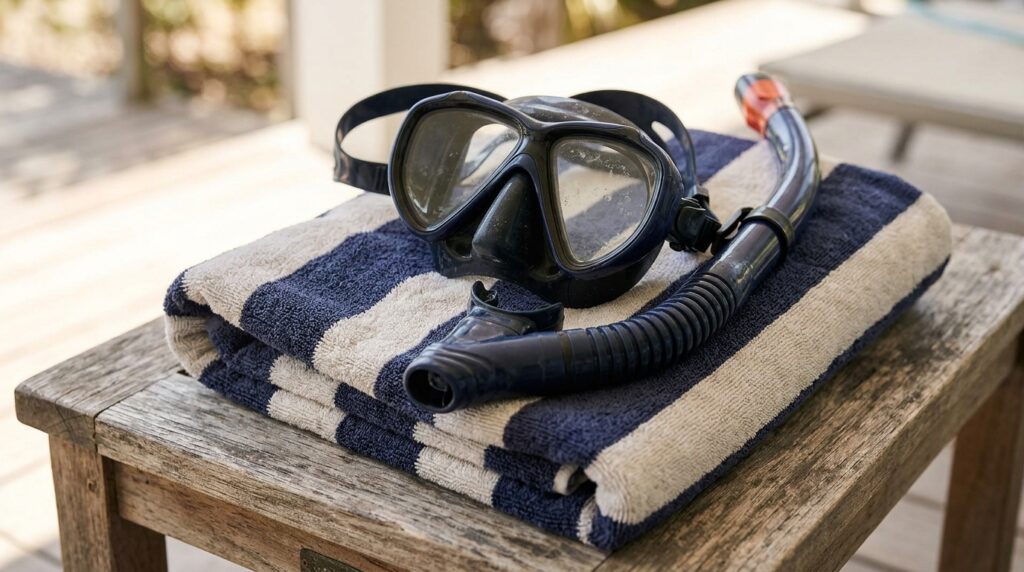
The first fix is fit. Your fins should hold your foot firmly without pinching. With open-heel fins, wear the booties you’ll dive in and check your toes aren’t jammed against the front of the pocket — leave room to wiggle them. If your feet ache after every dive, try a softer, more flexible blade — it takes less effort per kick and puts less strain on your arches. The Cleveland Clinic notes that reducing repetitive strain on the plantar fascia eases arch pain.
Learn a relaxed kick — it should come from your hips and thighs, not from snapping your ankles. Keep your knees soft and your ankles loose, and slow down — a steady, easy kick moves you just as far as a hard frantic one, with far less strain.
Wear booties with a real sole. Thin neoprene socks are fine in the water but useless on a boat deck. A sturdy-soled bootie protects your soles from hot decks, sharp rocks and ladder rungs, and spreads the load of your gear.
What Helps: Recovery After a Dive
After a sore dive, swap your fins for soft, supportive shoes as soon as you’re back on the boat. Stretch your calves and arches gently — a wall calf stretch and a few ankle circles work well — and roll the bottom of your foot over a tennis ball to loosen tight tissue.
Drink water and rest between dives — dehydration makes cramps more likely, and tired feet cramp sooner on the second dive. If your arches still ache the next morning, take a day off — pushing through sore feet changes how you kick, and that compensation turns a small ache into a real injury.
Your Daily Routine for Happier Feet on Dive Days
Here’s a routine to keep your feet comfortable on a dive trip:
- Stretch your calves and arches daily: A wall calf stretch and a few ankle circles each morning take two minutes and keep your heels and arches loose.
- Strengthen your feet: Toe spreads, towel scrunches and single-leg balance build the small muscles that support your arches.
- Check your fin fit before the trip: Fit, blade, and booties with a real sole.
- Kick from the hips: Slow, steady kicks with loose ankles beat hard frantic ones.
- Recover after every dive: Roll sore feet over a tennis ball, stretch your calves, swap into supportive shoes.
FAQs
Is foot pain from scuba diving normal?
Mild soreness in the arches or calves, especially after a long dive or your first in a while, is common and usually fades with rest and better-fitting fins. Sharp or persistent pain is not normal.
Why do my arches hurt after diving?
Every kick pushes your foot hard against the fin blade, and your arch takes most of the force. Stiff fins and a tight foot pocket make it worse, and cold water tightens the muscles further.
Can scuba diving cause plantar fasciitis?
Diving can irritate the plantar fascia, especially with stiff fins and tight calves. Rest, calf stretching and softer fins usually help — persistent heel pain should be checked by a doctor.
Are open-heel or full-foot fins better for sore feet?
Open-heel fins with well-fitting booties usually suit sore feet better — the bootie cushions your foot and the straps adjust. Full-foot fins need an exact size: too small and they pinch, too big and they blister.
When should I see a doctor about foot pain from scuba diving?
See a doctor promptly if the pain is sharp or severe, swelling doesn’t settle, you can’t put weight on your foot, or it keeps coming back despite rest and different fins.
Sources
- Mayo Clinic — plantar fasciitis causes and symptoms
- Cleveland Clinic — arch pain and calf tightness information
- American Podiatric Medical Association — foot strengthening exercises
This article is for general information only and is not medical advice. Talk to your doctor or a podiatrist about your own feet.