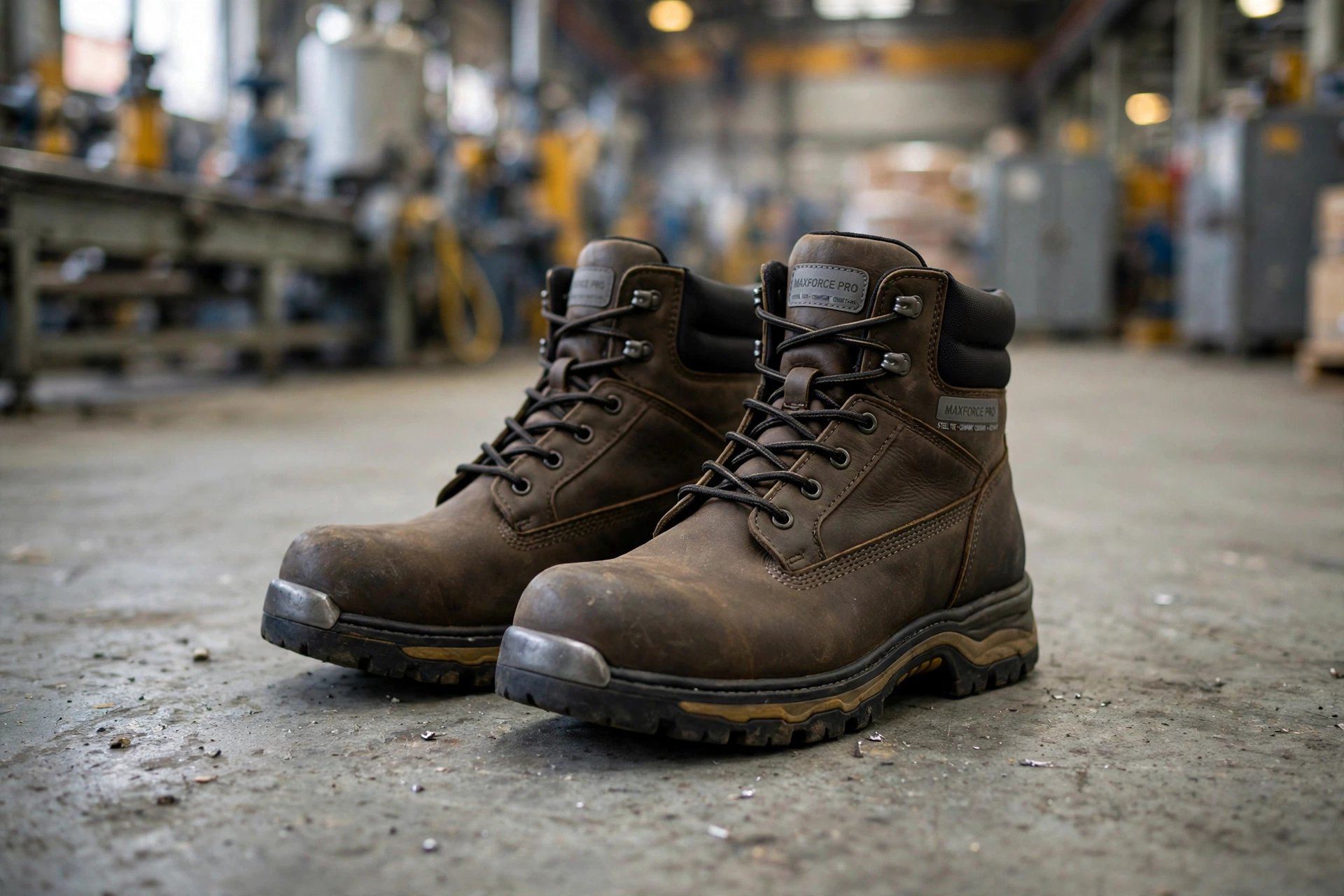
Best Shoes for Factory Workers (2026): Concrete-Floor Comfort + Safety Picks
Factory floors are concrete, shifts are long, and the work splits two ways: static stations where you barely move, and roving roles that walk miles. The shoe that fixes static fatigue (deep, wide, stable cushioning) is not quite the shoe that fixes walking fatigue (lighter, responsive). Start by knowing which one your shift is.
What factory workers’ feet actually go through
- Concrete floors for full shifts — the hardest surface in this cluster
- Static stations: sustained pressure with no relief between steps
- Safety rules: steel/composite toes, slip resistance, sometimes EH ratings
- Heat, dust, oils and chemicals depending on the line
What to look for in factory worker shoes
- Match the shoe to static vs walking: Static stations: Hoka Bondi’s wide platform and deep EVA. Walking roles: Brooks Ghost or ASICS Gel Nimbus.
- Safety toe when required: ASTM F2413 certified steel, alloy or composite. The Thorogood Heritage is the comfort leader among steel toes.
- Cushioning that doesn’t die at month three: Factory foam dies fast. Budget for an insole swap at month 3–4 and a two-pair rotation.
The 5 best shoes for factory workers (2026)
Thorogood American Heritage Steel Toe — Best comfortable steel toe
The steel-toe boot concrete workers settle into: MAXWear wedge outsole spreading pressure across the whole foot, Poron footbed that outlasts memory foam, resoleable Goodyear welt. Needs a 2–3 week break-in.
Best for: Daily concrete wear with a steel-toe requirement Not for: Mud or gravel — the wedge is built for floors
Hoka Bondi — Best static-standing cushioning
Maximum EVA depth, wide stable platform, rocker geometry — the standing-heavy gold standard where no safety toe is required.
Best for: Static stations, assembly lines Not for: Safety-toe sites, walking-heavy roles
Brooks Ghost — Best mixed standing + walking
DNA Loft cushioning with a smooth heel transition — lighter than the Bondi and better for roving roles.
Best for: Mixed factory roles, hospital-adjacent lines Not for: Safety-toe requirements
ASICS Gel Nimbus — Best for walking distance
Gel heel impact absorption plus responsive forefoot — the heel-strike specialist for high-mileage factory floors.
Best for: Large plants, distribution-adjacent roles Not for: Static stands — the Bondi wins those
Skechers Max Cushioning — Best budget
Max Cushioning foam at an entry price — rotates well as the second pair of a two-pair strategy.
Best for: Budget buyers, second-pair rotation Not for: Safety-toe sites
End-of-shift foot routine for factory workers
- Two-pair rotation is the single highest-value move on concrete: foam recovers between wears and both pairs last longer.
- Swap the factory insole at month 3–4; it packs down before the midsole.
- If your plant allows it, an anti-fatigue mat at a static station helps as much as the shoe.
Frequently asked questions
Do factory workers need steel toe boots?
Depends on the plant and role. Around heavy materials and forklifts, usually yes — check your site’s ASTM F2413 requirement.
Are running shoes OK on a factory floor?
Where no safety toe is required, yes — the Bondi (static) and Ghost/Nimbus (walking) are the strongest options.
What’s the most comfortable steel toe boot?
The Thorogood American Heritage leads 2026 comfort roundups, with KEEN Utility and Timberland PRO as alternatives.
How long do factory shoes last?
Premium cushioned shoes 8–12 months of daily concrete use; budget shoes 4–6 months. Replace on cushioning, not looks.
Static station vs walking role — does it change the pick?
Yes. Static: deep, wide, stable (Bondi). Walking: lighter and responsive (Ghost, Nimbus). Buying the wrong type is the most common factory footwear mistake.
Sources
- Best Shoes for Concrete Floors — The Foot Facts
- Most Comfortable Steel Toe Boots & Shoes 2026 — The Foot Facts
- Best Work Boots for Standing on Concrete All Day — Hard Worker Gear
Footcarely is reader-supported. We don’t use affiliate links yet — when we do, this page will say so. Prices change; check the current listing before you buy. This guide is general information, not medical advice. Persistent foot pain deserves a podiatrist, not just new shoes.
Related: Best Shoes for Nurses · Best Insoles for Plantar Fasciitis · Foot Problem Finder quiz · Best Shoes by Profession hub