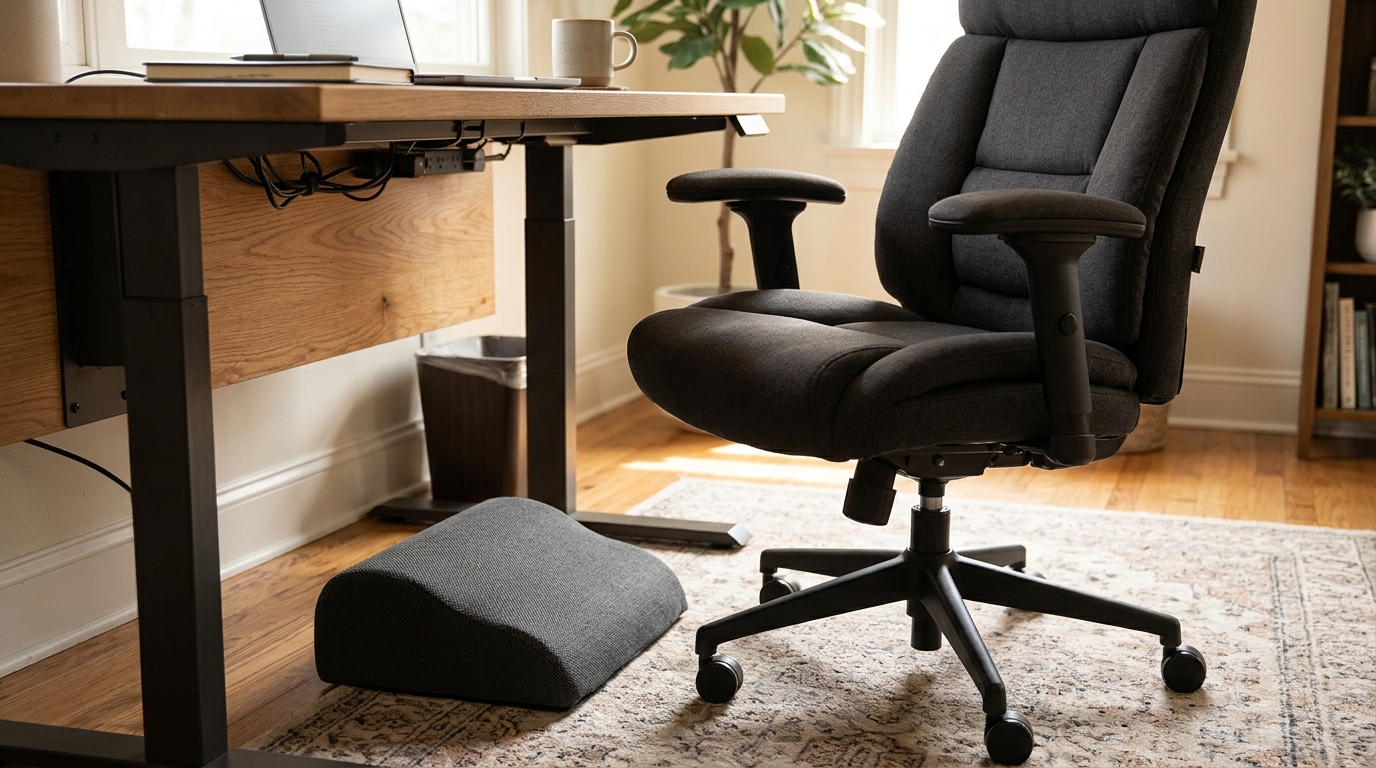
Foot pain after sitting all day is common, and it usually comes down to stiffness: when you sit for hours, blood flow to your feet slows, your calf muscles tighten, and the tissues under your feet stiffen up — so the first steps after standing feel sore, achy, or even tingly. Poor posture, crossed legs, and shoes with no support can make it worse. Gentle movement, stretching, and supportive shoes usually ease it quickly, but pain that comes with swelling in one leg, redness, or numbness that won’t go away should be checked promptly.
See a doctor promptly if you notice any of these:
- Swelling, pain, or warmth in one leg only, especially in the calf
- Redness, warmth, or a visible vein that feels hard or tender
- Numbness, tingling, or weakness in a foot that doesn’t fade after moving around
- Foot pain that keeps worsening over days despite stretching and movement
- A foot wound or ulcer that won’t heal, especially if you have diabetes
What foot pain after sitting all day is and why it happens
Sitting all day doesn’t sound hard on your feet — after all, they’re not doing anything. But that’s exactly the problem. Your feet and lower legs depend on movement to keep blood circulating and tissues supple. When you sit still for hours, that system slows down, and your feet pay the price when you finally stand up.
The first culprit is stiffness. The plantar fascia — the thick band under your foot — and your calf muscles both tighten during long periods of stillness, much like they do overnight. That’s why the first steps after a long meeting or a long drive can feel so similar to the first steps in the morning: the tissues have shortened, and they protest when suddenly asked to stretch under your full body weight.
Circulation is the second factor. Sitting, especially with your knees bent at a right angle for hours, slows blood flow back from your feet. Fluid can pool in the lower legs, leaving your feet feeling puffy, heavy, or achy by late afternoon.
Then there’s what you stand up into. If you spend the day in flat, unsupportive shoes — or in socks on a hard office floor — your stiff, sleepy feet suddenly have to support your whole weight with no help from your footwear. People with existing foot issues, like plantar fasciitis, flat feet, or arthritis, tend to feel this most sharply, because their feet are already working with less margin.
What helps foot pain after sitting all day
Movement is the most powerful fix, and it doesn’t need to be dramatic. The Cleveland Clinic recommends getting up and moving at least once an hour during long sitting stretches, and even small movements count: ankle circles under your desk, flexing and pointing your feet, or standing up to walk to the water cooler all get blood moving again.
Stretching is the second piece. A seated calf stretch — looping a towel around the ball of your foot and pulling gently toward you — loosens the fascia and calves before you stand. A standing wall stretch, heel on the floor and leaning in for 30 seconds per leg, works even better once you’re up. Rolling your foot over a tennis ball for a minute or two can also wake up stiff tissues and ease that first-steps ache.
Footwear and desk setup matter more than people think. Supportive shoes with cushioning and arch support give your stiff feet a much easier first few steps than flat, flimsy shoes do. The Mayo Clinic notes that prolonged sitting is linked to circulation problems in the legs, and that regular movement, proper footwear, and avoiding crossed legs all help reduce swelling and discomfort. Compression socks can also help if your feet tend to swell by afternoon, by gently encouraging blood back up from your legs.
A daily routine for happier feet at a desk job
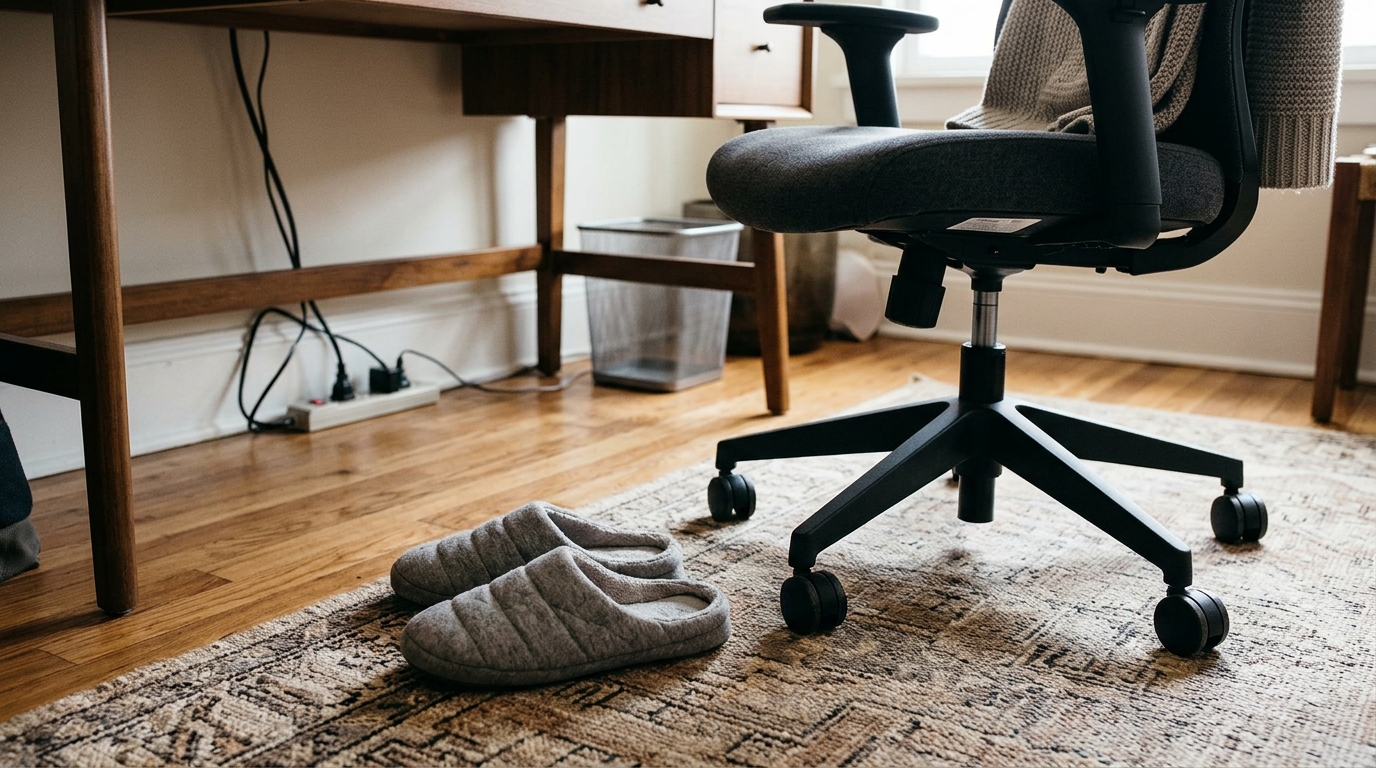
Start the day in supportive shoes — even at home — and do a quick calf stretch before you sit down. Keep a tennis ball under your desk.
Through the day, move a little every hour. Stand up, walk for a couple of minutes, do ten ankle circles per foot, and uncross your legs. Roll the tennis ball under each foot for a minute while you’re on a call. These tiny breaks add up: they keep your circulation going and stop stiffness from building all day.
When you finish work, stretch your calves properly — a wall stretch, 30 seconds per leg, twice — and take a short walk before you settle on the sofa for the evening. If your feet feel puffy, elevate them on a cushion for 15 minutes while you relax. The pattern is simple: move often, stretch daily, and don’t let your feet sit still for hours and then demand a sprint.
Frequently asked questions
Why do my feet hurt when I stand up after sitting for hours?
Because your feet stiffen up while you sit. The plantar fascia and calf muscles tighten during stillness, blood flow slows, and fluid can pool in your lower legs. The first steps stretch those stiff tissues under your full body weight, which is why they ache — and why the pain usually fades after a few minutes of walking.
Is foot pain after sitting a sign of poor circulation?
It can be, but usually it’s just stiffness and fluid pooling from inactivity, which improves with movement. However, swelling or pain in one leg only, redness, warmth, or a tender, hard vein are warning signs of a circulation problem like a blood clot, and those need prompt medical attention.
Can sitting all day cause plantar fasciitis?
Sitting alone doesn’t usually cause it, but it can aggravate it. If your fascia is already irritated, long sitting lets it tighten up, so standing brings on that familiar first-steps pain. Regular stretching and supportive shoes can help keep it from flaring up.
Do compression socks help with foot pain from sitting?
They can help, especially if your feet and ankles swell by afternoon. Compression socks gently squeeze the lower leg, encouraging blood to flow back upward instead of pooling. They’re a useful addition to regular movement breaks, not a replacement for them.
What shoes should I wear if I sit all day?
Supportive ones with cushioning and arch support — even indoors. Flat, flimsy shoes or bare feet on hard floors give stiff feet no help when you stand up. If you work from home, a pair of supportive house shoes is one of the easiest upgrades you can make.
Sources
- Cleveland Clinic — Why Sitting All Day Is Bad for Your Health
- Mayo Clinic — Prolonged Sitting: Health Risks and Prevention
- American Academy of Orthopaedic Surgeons — Plantar Fasciitis and Bone Spurs
This article is for information only and is not medical advice. If foot pain after sitting comes with swelling in one leg, redness, warmth, or numbness that doesn’t fade, talk to a healthcare professional promptly.