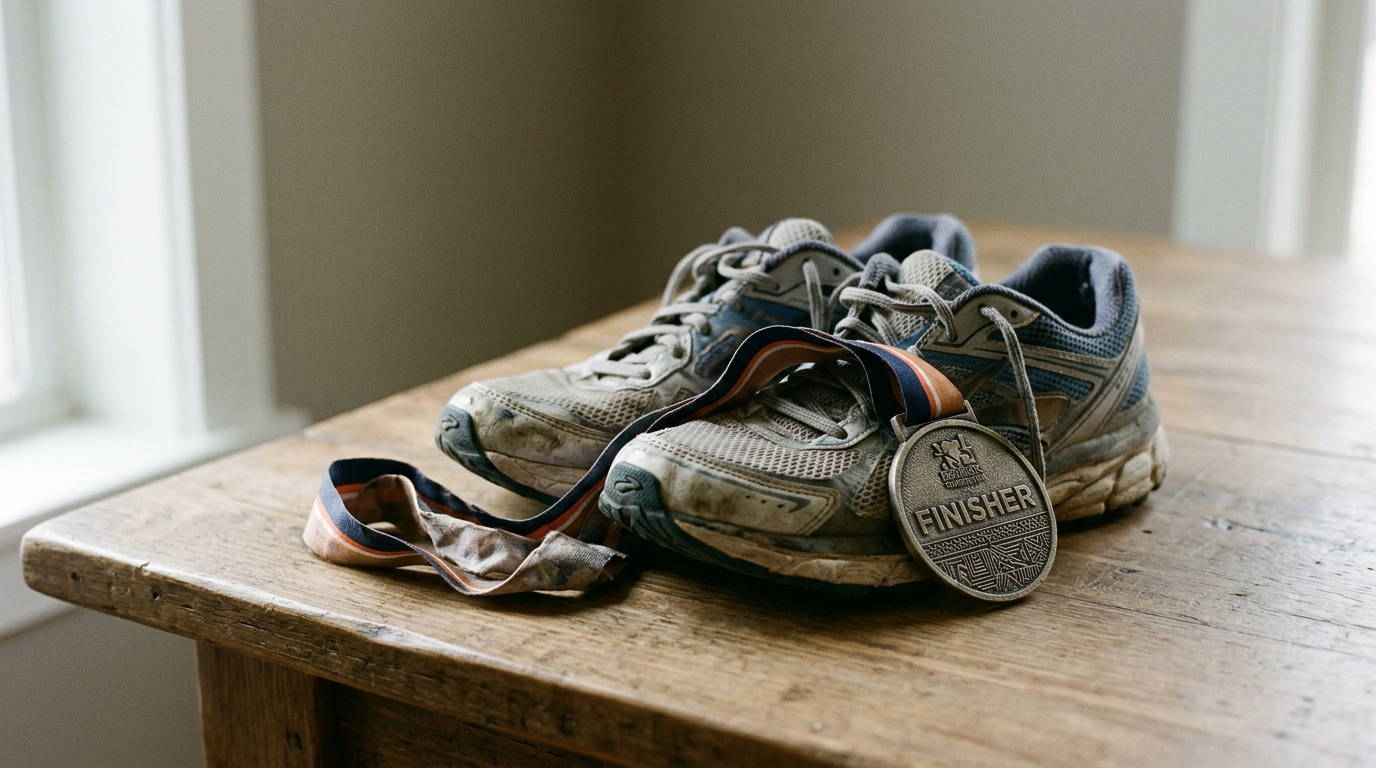
Foot care after running a marathon matters more than most finishers expect. After 26.2 miles, blisters, black toenails, swelling, and raw skin are all common, and most of it heals on its own if you give your feet a real break: rest for a few days, ice sore spots, keep your feet raised, wear roomy supportive shoes, and leave blisters and bruised toenails alone unless they look infected. Your feet did a huge job, and they need time to recover before you ask them to run again. If you notice severe pain, a hot red area, or a toenail lifting with pus, see a doctor promptly.
See a doctor promptly if you notice any of these:
- Foot pain that is severe, sudden, or much worse than normal post-race soreness
- A blister or cut that turns red, hot, swollen, or starts oozing pus
- Swelling that does not ease after a few days, or one foot swelling far more than the other
- A toenail that is very painful, lifting, or bleeding heavily
- Numbness, tingling, or a foot that will not bear weight — possible signs of a stress fracture
What a marathon does to your feet
A marathon is about 26.2 miles — roughly 40,000 to 50,000 steps, each one landing with several times your body weight. Your feet sweat for hours inside warm shoes, your toes slide forward on every downhill stretch, and your skin rubs against your socks and shoes thousands of times. Good foot care after running a marathon starts with understanding what actually happened down there.
The most common complaints are blisters, black toenails, and swelling. Blisters form where skin rubs repeatedly and the layers separate, filling with fluid. Black toenails happen when a toe bangs against the front of the shoe again and again, bruising the nail bed and trapping blood underneath. Swelling is your body’s normal response to hours of impact: fluid collects in the tissues, and your feet can look puffy for a day or two.
Why blisters and black toenails happen
Blisters are a friction problem. When your feet sweat, skin gets softer and sticks more to fabric, so every step tugs at the same spot. The skin layers shear apart and fluid fills the gap as a cushion. Blisters love the heel, the ball of the foot, and the sides of the toes — anywhere the shoe moves against skin.
Black toenails are an impact problem. On downhills especially, your foot slides forward and your longest toe taps the front of the shoe with every step. Do that thousands of times and blood collects under the nail, turning it dark. The nail may eventually loosen and fall off, which sounds alarming but is usually harmless — a new nail grows in over several months. A toenail that is very painful right after the race may need a doctor to relieve the pressure, so do not try to drain it yourself.

What helps your feet recover
Rest is the single most important thing, and it is the one runners resist most. Give yourself at least three to seven days without running — walking is fine if it does not hurt. Your body needs that window to repair, and running through the soreness is how small problems become injuries. Rest, ice, and elevation really are the backbone of recovery.
Ice helps with the worst of the swelling and soreness. A cold soak or an ice pack wrapped in a towel, ten to fifteen minutes at a time, a few times a day for the first couple of days, takes the edge off. Keep your feet raised on pillows when you sit down — elevation helps fluid drain away instead of pooling around your ankles.
Leave blisters alone if you can. An intact blister is a clean, sealed cushion, and popping it opens the door to infection. If a blister has already burst, clean it gently with soap and water and cover it with a sterile dressing. If it turns red, hot, or painful, or starts leaking pus, that is an infection — see a doctor. For black toenails, keep the nail clean and let it fall off in its own time. Do not pull a loose nail off.
A post-race recovery routine
Race day evening, get your shoes off as soon as you can and look at your feet. Wash them gently with warm water and soap, dry them carefully — especially between the toes — and put on clean, dry socks. If your feet are swollen, sit with them raised for twenty minutes, and ice any hot spots.
Over the next two or three days, keep walking gently but skip running completely. Wear comfortable shoes with a wide toe box, and change your socks if your feet sweat. Check your blisters and toenails each morning for less redness and less pain. Skip hot baths while blisters are still raw.
In the second week, start back slowly. A short, easy jog is fine if your feet feel normal when you walk, but stop if pain flares up. If a toenail is still very painful, or a sore spot is not improving after two weeks, get it checked rather than training through it.
Frequently asked questions
How long do feet take to recover after a marathon?
Most runners feel back to normal within one to two weeks. Blisters usually dry up in a few days, swelling settles within a couple of days, and soreness fades over the first week. Bruised toenails take months to grow out but should stop hurting within a week or two.
Should I pop a blister after a marathon?
Try not to. An intact blister protects the skin underneath and heals faster left alone. Cover it with a blister plaster and let it dry out. If it has already burst, clean it gently, cover it with a sterile dressing, and watch for signs of infection like spreading redness or pus.
Will a black toenail fall off after a marathon?
It often does, sometimes weeks later, and that is usually fine. The damaged nail loosens as a new one grows underneath. Keep it clean. If it is very painful or looks infected, see a doctor.
When can I run again after a marathon?
Most runners take at least a week off running, and many take two. Walk as much as feels comfortable, then try a short easy run only when your feet feel normal walking. If pain flares up when you run, stop and take a few more days off.
How do I prevent blisters in my next marathon?
Wear shoes with enough room for your feet to swell, and test them on long training runs first — never race in new shoes. Use moisture-wicking socks and tape to known hot spots.
Sources
- Cleveland Clinic — Blisters: Causes, Treatment, and Prevention
- Mayo Clinic — Black Toenails After Running: Causes and Care
- American Podiatric Medical Association — Running Injuries and Foot Care
- NHS — Blisters: Causes and Treatment
This article is for information only and is not medical advice. If your foot pain is severe, sudden, or not improving, talk to a healthcare professional for a proper diagnosis.