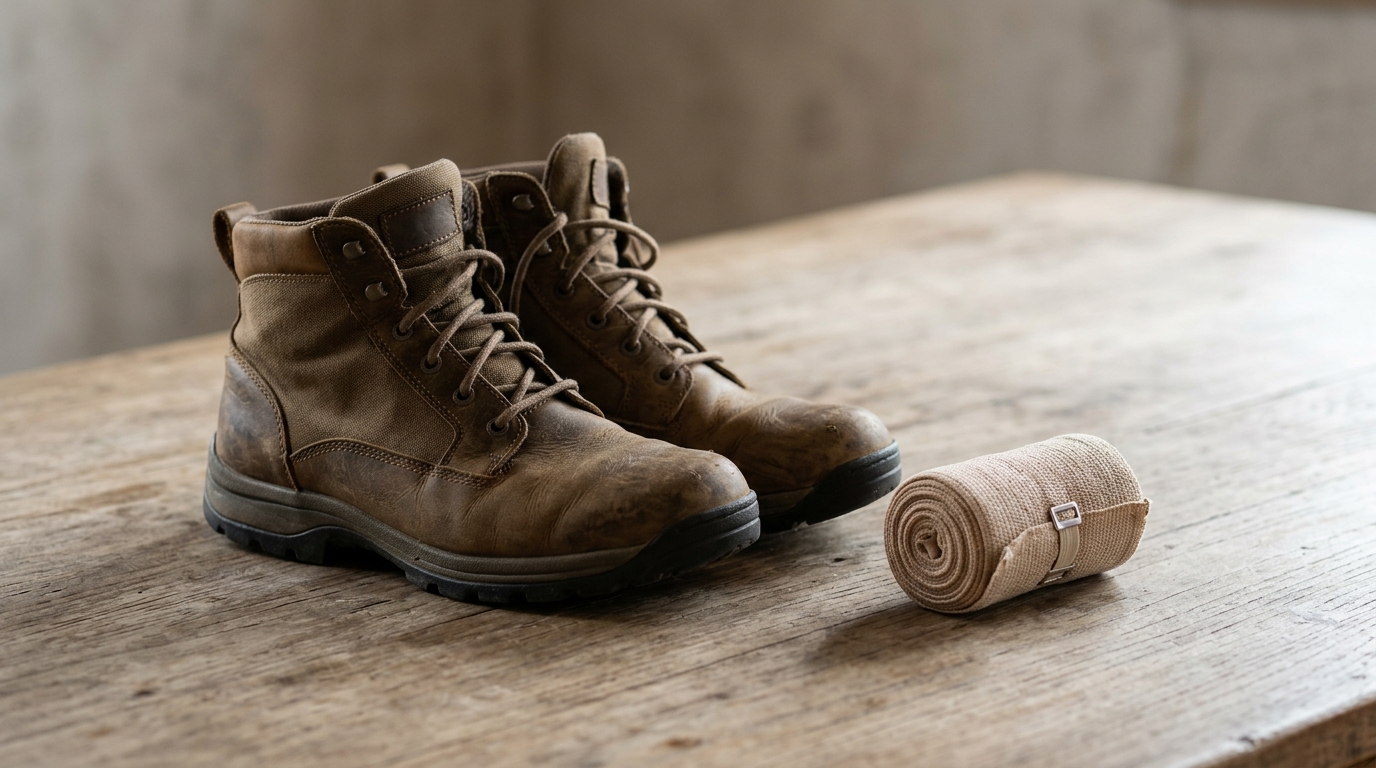
Learning how to prevent blisters hiking starts with what causes them: friction, moisture, and heat on the same patch of skin. Your boot rubs one spot with every step, sweat softens the skin, and the layers of skin separate and fill with fluid. How to prevent blisters hiking comes down to cutting friction, keeping feet dry, and catching hot spots before they become blisters. The right socks, well-fitted boots, and a roll of tape will do more for your feet than almost any other piece of gear. If a blister does form and it looks infected, get it checked by a healthcare professional.
See a doctor promptly if you notice any of these:
- A large, very painful blister, or one filled with blood
- Spreading redness, warmth, swelling, or pus around a blister
- Fever or red streaks running up from the foot
- A blister that will not heal, especially with diabetes or poor circulation
- Severe pain, numbness, or being unable to put weight on the foot
Why hiking blisters happen
A blister is your skin’s response to repeated rubbing. On a hike, your foot moves inside your boot with every step — sliding forward on downhills, lifting at the heel on uphills. That movement creates shear force: the outer layer of skin is pulled one way while the deeper layers stay put, and the layers separate. Fluid fills the gap as a cushion, and you have a blister — which is why knowing how to prevent blisters hiking starts with friction.
Moisture makes everything worse. Sweat softens the skin and raises friction, which is why blisters so often appear a few hours into a hike, once your socks are damp. Heat adds to the problem, and so does grit: a grain of sand or a fold in a sock concentrates the rubbing on one spot. Downhills are the worst, because your foot slides forward and your toes press into the front of the boot.
Start with the right socks
Socks are your first line of defence. Cotton is the worst choice for a hike: it soaks up sweat, stays wet, and gets rough and wrinkled against your skin. Instead, wear moisture-wicking socks made from merino wool or a synthetic blend — they pull sweat away, keep your feet drier, and stay smooth when damp.
Many experienced hikers swear by a two-sock system: a thin liner sock under a thicker hiking sock. The two layers rub against each other instead of against your skin, so the friction happens between the socks, not on your foot.
Pull your socks smooth, with no folds around the toes or heel, and carry a spare pair. Swapping into dry socks halfway through a long hike is one of the simplest things you can do.
Boot fit: the foundation of blister prevention
No tape or fancy socks will save you if your boots do not fit. A boot that is too big lets your foot slide around; a boot that is too small squeezes your toes and rubs the heel raw. The right fit leaves about a thumb’s width between your longest toe and the front of the boot, with your heel held firmly in place.
Try boots on in the afternoon, when your feet are slightly swollen, wearing the socks you will actually hike in. Walk around the shop and up and down any slope they have, and watch your heels: if they lift, the boot is not holding your foot, and blisters will follow. A heel-lock lace, looped through the top hooks, can stop a lot of heel slippage without making the boot tight elsewhere. Never take brand-new boots on a long hike — break them in first.
Tape hot spots before they become blisters
The single best habit you can build on the trail is the hot-spot check. A hot spot is that warm, slightly sore feeling on your heel or toe — the stage before a blister forms. The moment you feel one, stop and deal with it. Do not wait until the next rest stop — it will not go away, and every step you take makes the blister bigger.
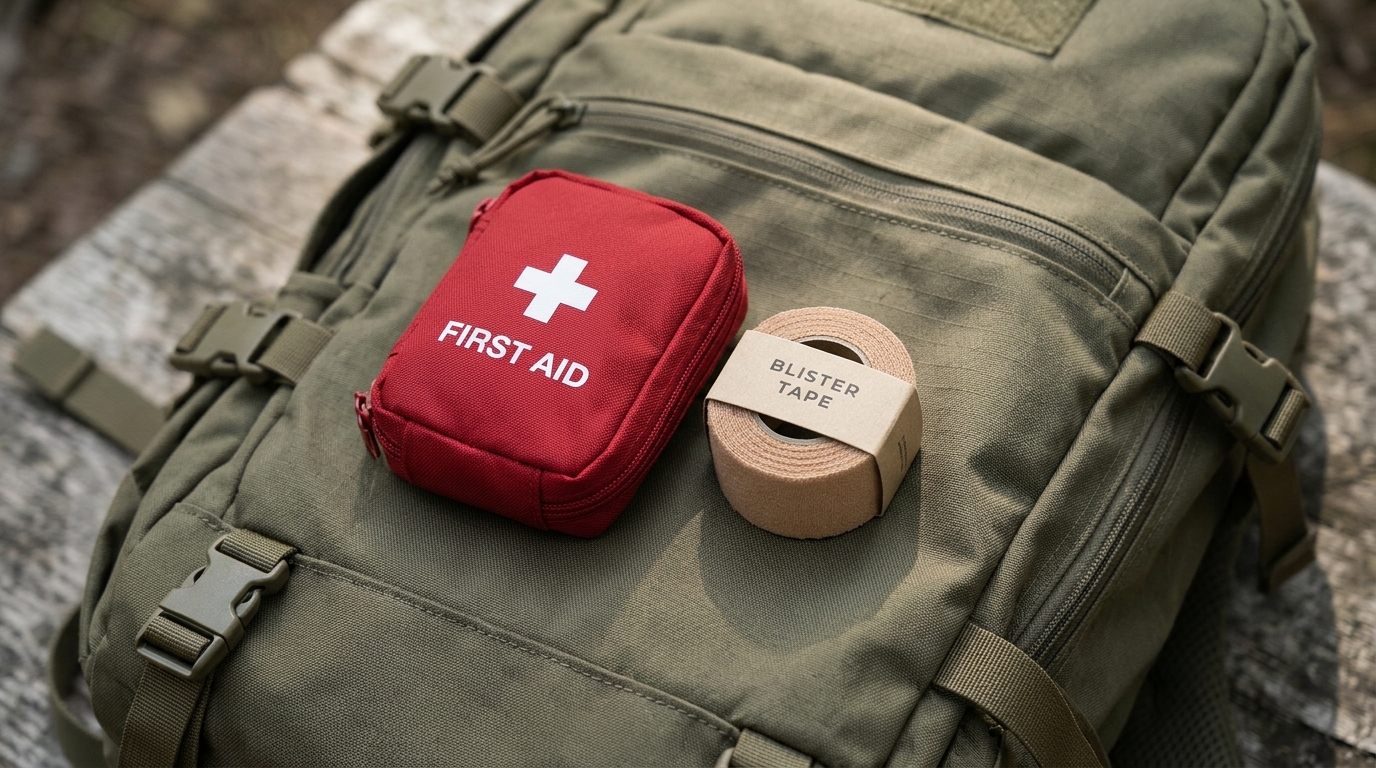
Tape is your best tool here. Sports tape, kinesiology tape, or specialist blister-prevention tape all work: clean and dry the skin, then apply it smoothly over the hot spot, extending well past the sore area so the edges do not peel up. Moleskin is another good option — cut a doughnut shape so the pressure sits around the hot spot rather than on it. Taping before the hike is just as useful: if your heels always rub, tape them before you start walking.
A pre-hike routine for blister-free feet
The night before, check your boots, socks, and blister kit. Make sure your boots are clean and dry and your pack holds tape, moleskin, blister plasters, and a spare pair of socks.
On the morning of the hike, trim your toenails straight across and not too short — long nails press into the boot on downhills, and over-trimmed nails can catch and tear. Put on your socks smooth, with no wrinkles, and lace your boots snugly but not tight. Tape any spots you know are trouble before you set off.
On the trail, stop at the first sign of a hot spot and tape it immediately. At lunch, take your boots and socks off to let your feet dry, and swap to your spare socks if the first pair is damp. At the end of the day, wash your feet, dry them thoroughly — especially between the toes — and let any hot spots breathe overnight.
Frequently asked questions
What is the best way to prevent blisters when hiking?
Wear moisture-wicking socks and well-fitted, broken-in boots, and tape hot spots the moment you feel them.
Do double socks really help prevent blisters?
Yes, for many hikers they do. A thin liner sock under a hiking sock lets the two layers rub against each other instead of against your skin. Make sure your boots still fit with the extra layer.
Should I pop a blister from hiking?
It is best not to pop a small blister — the skin over it protects against infection. If a large blister makes walking difficult, clean it, drain it at the edge with a sterile needle, leave the skin in place, and cover it with a blister plaster.
How do I tape my feet to prevent blisters?
Clean and dry the skin, then apply sports tape smoothly over the spot that rubs, extending it well past the sore area. Tape known trouble spots before the hike.
Why do I get blisters even with good boots?
Usually it comes down to moisture, fit, or unbroken-in boots. Try a liner sock, a heel-lock lace, and a dry spare pair — and tape the spots that always rub.
Sources
- Cleveland Clinic — Blisters: Causes, Symptoms, and Treatment
- Mayo Clinic — Blisters: First Aid and Prevention
- American Podiatric Medical Association — Blisters and Foot Care
- NHS — Blisters: Causes and Treatment
This article is for information only and is not medical advice. If your foot pain is severe, sudden, or not improving, talk to a healthcare professional for a proper diagnosis.