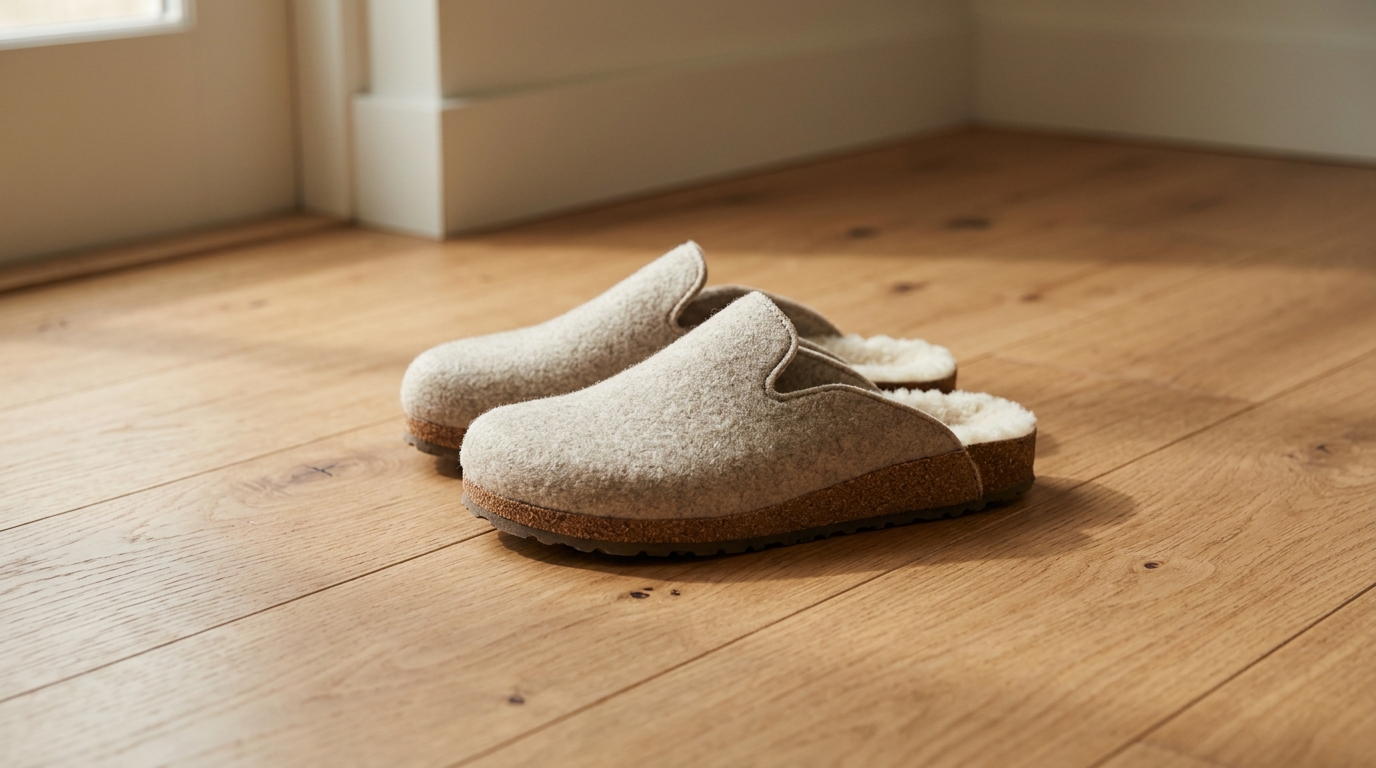
Foot pain walking barefoot is one of the most common complaints podiatrists hear, and it usually comes down to one thing: no support. Shoes and slippers cushion your heels, hold up your arches, and spread the pressure of each step. Barefoot on a hard floor, your arches flatten, your heel takes the full impact, and the band of tissue under your foot — the plantar fascia — gets stretched with every step. Foot pain walking barefoot often feels like a sharp ache in the heel first thing in the morning, or a tired, burning feeling in the arches after a day indoors. It usually improves with supportive footwear, arch support, and calf stretches. But if you have diabetes or nerve damage, avoid walking barefoot — even a small cut can become serious.
See a doctor promptly if you notice any of these:
- Foot pain that is severe, sudden, or follows an injury
- Heel or arch pain that does not improve after a few weeks of supportive shoes
- Numbness, tingling, or burning in your feet
- A cut, blister, or sore on your foot that will not heal — especially if you have diabetes
- Swelling, redness, or warmth in one foot, or pain that stops you walking normally
What happens when you walk barefoot
Your foot is built to work with a little help. The arch acts like a spring: it flattens slightly as you step, absorbing shock, then springs back to push you forward. Shoes support that spring — they cushion the heel, hold the arch up, and keep the foot from rolling too far inward. Take the shoes away, and the arch has to do all the work on its own.
On a hard surface like tile, wood, or concrete, that matters even more. A soft surface — grass, sand, carpet — gives a little and spreads the pressure out. A hard floor gives nothing back, so your heel takes the full force of each step and your arch flattens further than it is meant to. Foot pain walking barefoot is worst on hard floors, and that is no accident: do it for hours a day, day after day, and the tissues under your foot get irritated.
Why your feet hurt without shoes
The usual culprit is the plantar fascia, the thick band of tissue that runs along the bottom of your foot from the heel to the toes. Without support, it gets stretched and strained with every step, and tiny tears can develop where it attaches to the heel bone. That is the classic cause of heel pain: a sharp ache when you first stand up in the morning, easing as you move around, then returning after a long day. Plantar fasciitis is one of the most common causes of heel pain, and barefoot walking on hard floors is a known trigger.
Your arches can ache too, especially if you have flat feet. Without a shoe holding the arch up, it collapses further with each step, and the muscles and tendons on the inside of the foot work overtime to hold it together. That tired, burning feeling in the middle of the foot is those tissues complaining.
What helps barefoot foot pain
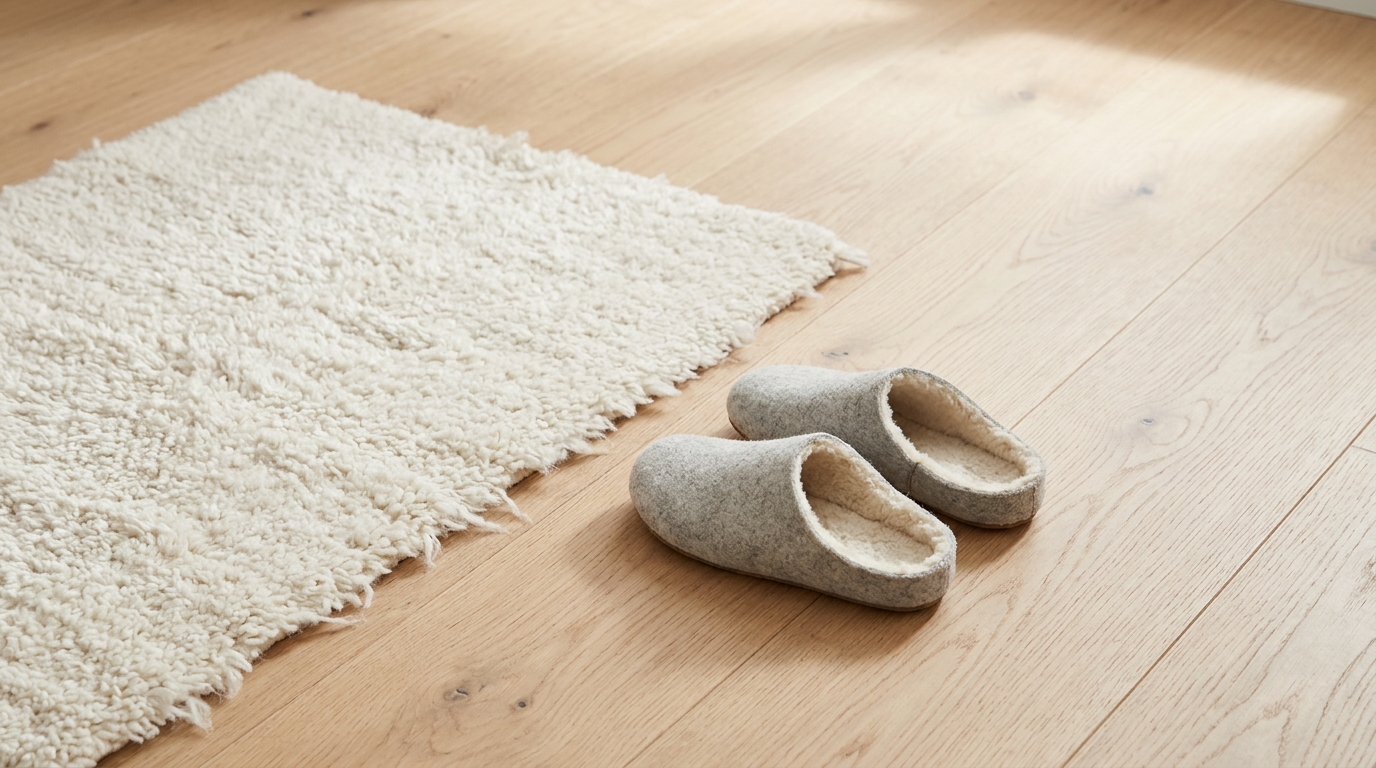
The fastest fix is also the simplest: wear supportive shoes or slippers indoors. A house shoe with a firm sole, a little arch support, and a cushioned heel is enough. What you want to avoid is walking barefoot on hard floors for hours, and the other extreme, completely flat flip-flops or slippers with no support at all. Health experts advise people with heel pain to avoid going barefoot on hard surfaces.
Arch-support insoles help a lot of people, especially if you have flat feet or high arches. They hold the arch up so the plantar fascia does not have to do all the work, and they spread the pressure across the whole foot instead of dumping it on the heel. Give them a couple of weeks — your feet need time to adjust. Calf stretches matter too, because tight calves pull on the heel and force the foot to flatten more.
If the pain is sharp first thing in the morning, try a gentle stretch before you get out of bed: pull your toes back toward your shin and hold for ten seconds. It loosens the plantar fascia before it takes your weight.
A daily routine for happier feet indoors
Start the morning in supportive slippers, not bare feet. Before you stand up, do that quick toe stretch in bed, then put your house shoes on before you walk to the kitchen — the first steps of the day are when the plantar fascia is stiffest, and hard floors are at their worst. If you work from home, keep your supportive shoes on all day rather than slipping them off at your desk.
Build in a couple of stretch breaks. Mid-morning and mid-afternoon, do a minute of calf stretches against a wall, and roll a tennis ball under each foot for a minute or two. It takes almost no time and it keeps the fascia loose.
If you love being barefoot, you do not have to give it up completely — but build up gradually and pick your surfaces. And if your pain keeps coming back despite supportive shoes, or if it is getting worse, see a podiatrist rather than pushing through it.
Frequently asked questions
Is it bad to walk barefoot around the house?
It depends on your feet and your floors. If you have healthy feet and soft floors, short periods barefoot are usually fine. But on hard floors, walking barefoot for hours can strain the plantar fascia and cause heel and arch pain.
Why do my heels hurt when I walk barefoot?
Without a shoe, your heel takes the full impact of each step on a hard surface, and the plantar fascia gets stretched with every step. That strain causes the classic sharp heel pain, worst with your first steps in the morning.
Should I wear shoes indoors if I have flat feet?
Yes, that is one of the easiest things you can do. Supportive house shoes or slippers with arch support stop your arches collapsing on hard floors.
Can walking barefoot cause plantar fasciitis?
It can trigger it or make it worse, especially on hard surfaces. The plantar fascia gets stretched without support, and repeated strain can lead to the small tears and inflammation that define plantar fasciitis.
Who should never walk barefoot?
People with diabetes or nerve damage in their feet should avoid walking barefoot, even indoors. Reduced feeling means you might not notice a cut, blister, or burn, and poor circulation means it can heal slowly or become infected. Always wear shoes, and check your feet daily.
Sources
- Cleveland Clinic — Plantar Fasciitis: Causes, Symptoms, and Treatment
- Mayo Clinic — Plantar Fasciitis: Symptoms and Causes
- American Podiatric Medical Association — Heel Pain and Barefoot Walking
- NHS — Heel Pain: Causes and Treatment
This article is for information only and is not medical advice. If your foot pain is severe, sudden, or not improving, talk to a healthcare professional for a proper diagnosis.