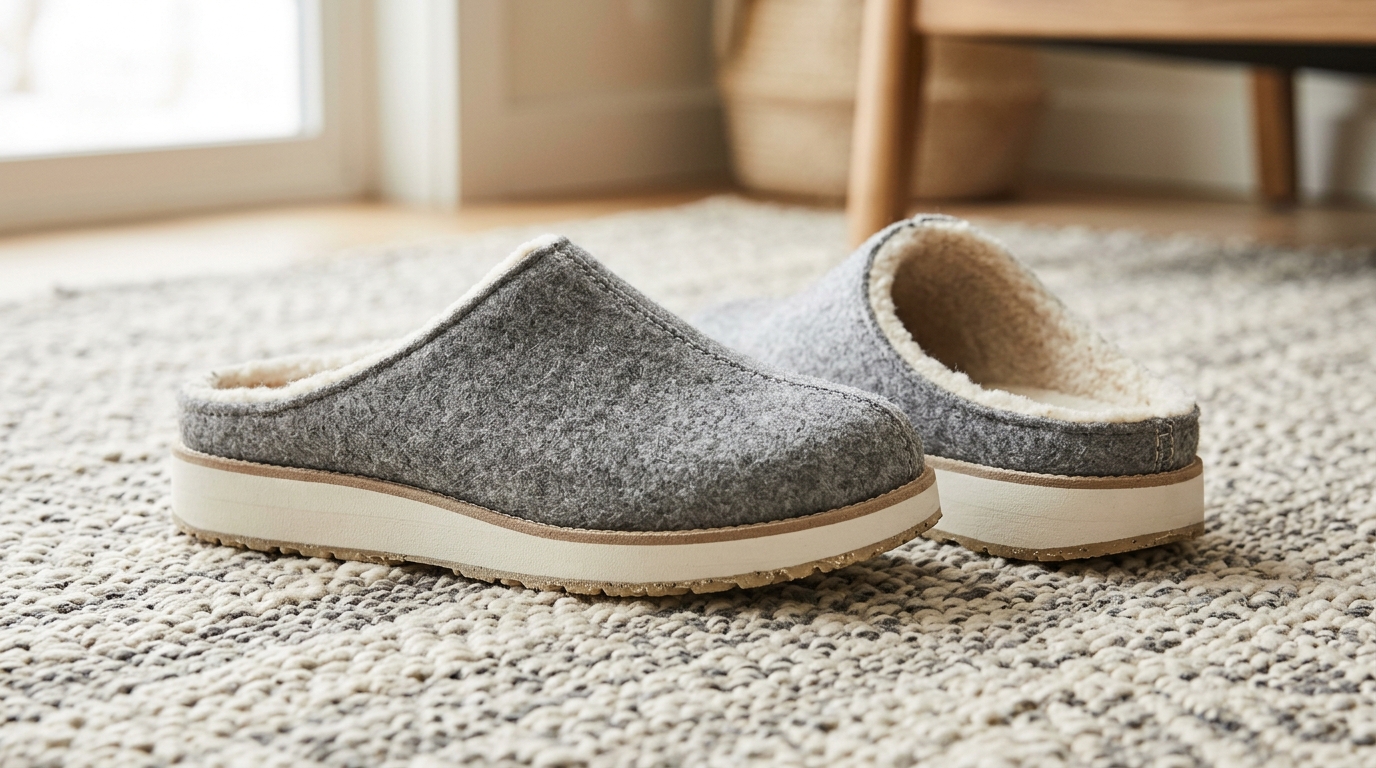
Quick Answer: Foot pain from slippers is usually down to flat, unsupportive soles. Most slippers have no arch support, no heel cushioning, and nothing holding your foot in place, so your feet work harder with every step around the house. Switching to a supportive house shoe with a contoured footbed, a low heel, and a back strap can make a real difference. If the pain is sharp, one-sided, or doesn’t ease within a week or two, get it checked.
See a doctor promptly if you notice:
- Sharp or severe pain that makes it hard to walk or bear weight
- Swelling, redness, or warmth in one foot that doesn’t settle after a few days
- Numbness or tingling in your feet, especially if you have diabetes
- A sore or blister on your foot that won’t heal
- Heel or arch pain that keeps coming back every morning, even in better shoes
Why Slippers Hurt Your Feet
You’d think your feet would be happiest at home, padding around in soft slippers. But for a lot of people, the opposite is true: their feet ache more indoors than out. Most slippers are designed for soft, cosy comfort — fluffy lining, a loose fit, a thin flat sole — not for how your feet actually work when you walk.
Every step asks your foot to absorb impact, spread your weight, and push you forward again. A good shoe helps with that job; a typical slipper doesn’t. With no arch support, no heel cushioning, and nothing holding your heel in place, your toes grip to keep it on and your arch sags with each step. Do that for hours a day and your feet will complain — especially if you work from home, spending hours on hard floors in slippers that offer about as much support as socks.
What It Is: The Most Common Causes
The most common cause of foot pain from slippers is plantar fasciitis, irritation of the plantar fascia, the thick band of tissue along the bottom of your foot. Flat slippers let your arch flatten with every step, which pulls on this band. The classic sign is heel pain that’s worst with your first steps in the morning, then returning after a long day on your feet.
Arch pain is another frequent complaint. Without support, the muscles and tendons in the midfoot tire out faster. If you have flat feet, it shows up even sooner, as a dull ache across the middle of your foot by the end of the day. If that sounds familiar, our guide to sore arches and their causes goes into the detail.
Slippers can also cause problems at the front of the foot. In backless slippers, your toes curl and grip to stop the slipper sliding off, straining the small muscles in your toes. Tight or narrow slippers squeeze your toes together, which can irritate bunions and cause corns. If your shoes at home feel cramped, the same advice in our guide to foot pain from tight shoes applies — your feet need room to spread.
Then there’s the heel. Thin, flat slipper soles barely cushion your heel on hard floors, so the fat pad under it gets compressed again and again.
What Helps: Choosing Better Slippers
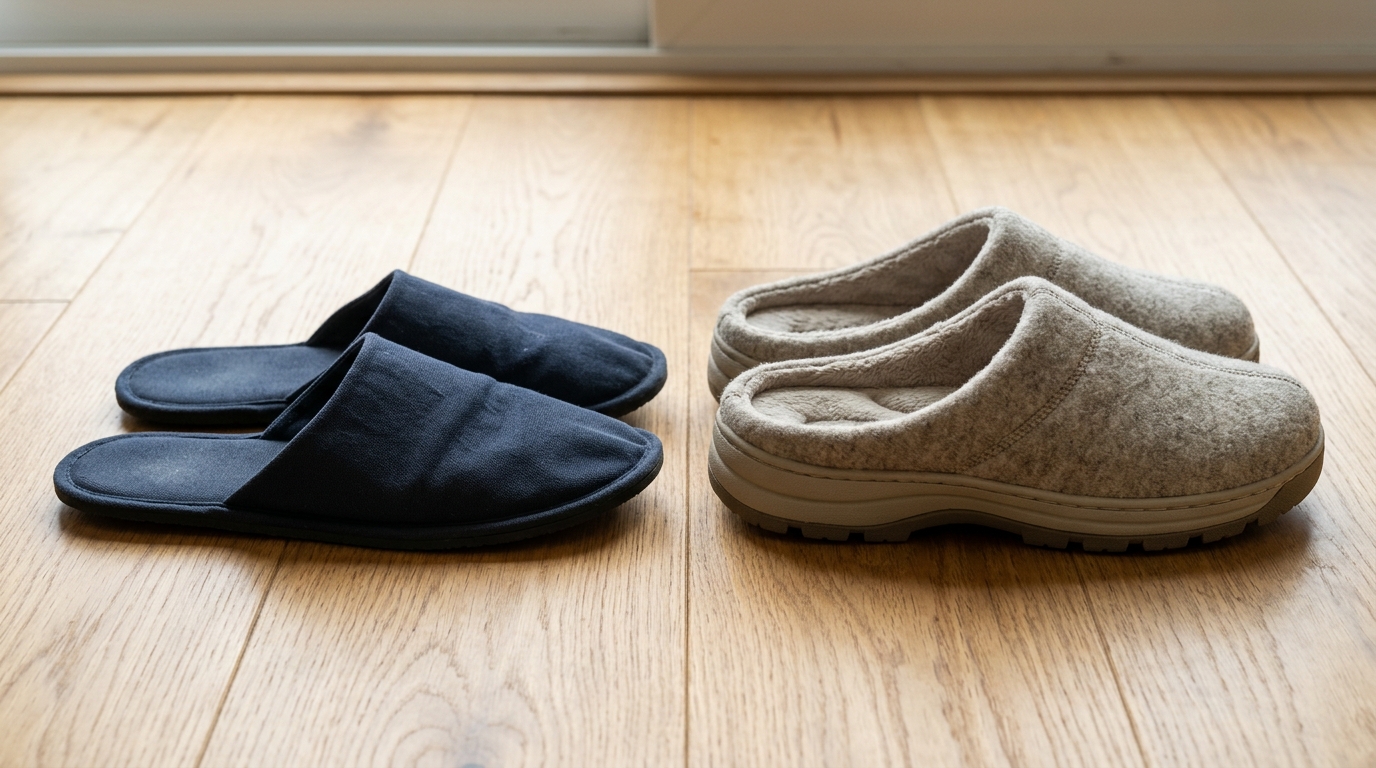
You don’t have to give up slippers — you just need a better pair. The Cleveland Clinic advises that house shoes should support your feet like outdoor shoes do: a contoured footbed, some heel cushioning, and a firm sole that doesn’t twist easily. Try the twist test before you buy: pick up a slipper and try to wring it like a towel. If it twists easily, it isn’t supporting your foot.
Look for a slipper with a back or a heel strap. Backless mules are the worst offenders for toe gripping, so a closed heel or adjustable strap makes a genuine difference, especially if you’re on your feet for hours.
Fit matters too. Your slippers should be snug enough to stay on without gripping, with room in the toe box for your toes to lie flat and spread slightly. If you wear orthotics, look for a removable footbed for your own insoles. And don’t wear the same pair forever: once the footbed has flattened or the heel has collapsed to one side, they’ve stopped supporting you.
Your Daily Routine at Home
Here’s a simple routine that can ease the pain and stop it coming back:
- Start the day supported: Put your supportive house shoes on before your first steps in the morning, when plantar fascia pain is at its worst.
- Stretch each morning: Before you get up, gently pull your toes back toward your shin and hold for 30 seconds per foot, then stretch your calves against a wall — tight calves put extra strain on the arch.
- Break up long standing: If you’re cooking or cleaning for a long stretch, sit down for a few minutes every half hour, or stand on a cushioned mat.
- Roll your arches in the evening: Roll each foot over a tennis ball or a frozen water bottle for a few minutes. It massages the arch and eases the day’s tension.
- Check your slippers monthly: Look at the footbed and the heel. If they’re compressed or leaning, replace the pair before the pain comes back.
FAQs
Are slippers bad for your feet?
Not all of them. But most cheap, flat, backless slippers offer no arch support or heel cushioning, so wearing them all day on hard floors can cause heel, arch, and toe pain. A supportive house shoe with a contoured footbed and a heel strap is far better.
Why do my feet hurt more at home than outside?
It’s usually the footwear. Outside you wear structured shoes; at home you switch to flat slippers on hard floors, and your feet lose that support for hours. The change in footwear, not your home, is what makes the difference.
Can slippers cause plantar fasciitis?
Slippers don’t cause plantar fasciitis on their own, but flat, unsupportive ones can irritate the plantar fascia and worsen the pain — especially first thing in the morning. Supportive house shoes and stretching usually help, but persistent heel pain should be checked.
Should I wear shoes inside instead of slippers?
You don’t have to wear outdoor shoes indoors, but you should wear something supportive — a well-made house shoe with arch support and a closed heel does the same job. Going barefoot on hard floors all day can strain your feet too, so some support indoors is better than none.
What kind of slippers are best for foot pain?
Look for a contoured, supportive footbed, heel cushioning, a firm sole that resists twisting, and a back or strap to hold your heel in place. Make sure the toe box is roomy enough for your toes to lie flat, and replace the pair when the footbed flattens.
Sources
- American Podiatric Medical Association — footwear and foot health guidance
- Cleveland Clinic — foot pain causes and supportive footwear advice
- Mayo Clinic — plantar fasciitis causes, symptoms, and self-care
This article is for general information only and is not medical advice. Talk to your doctor or a podiatrist about your own feet.