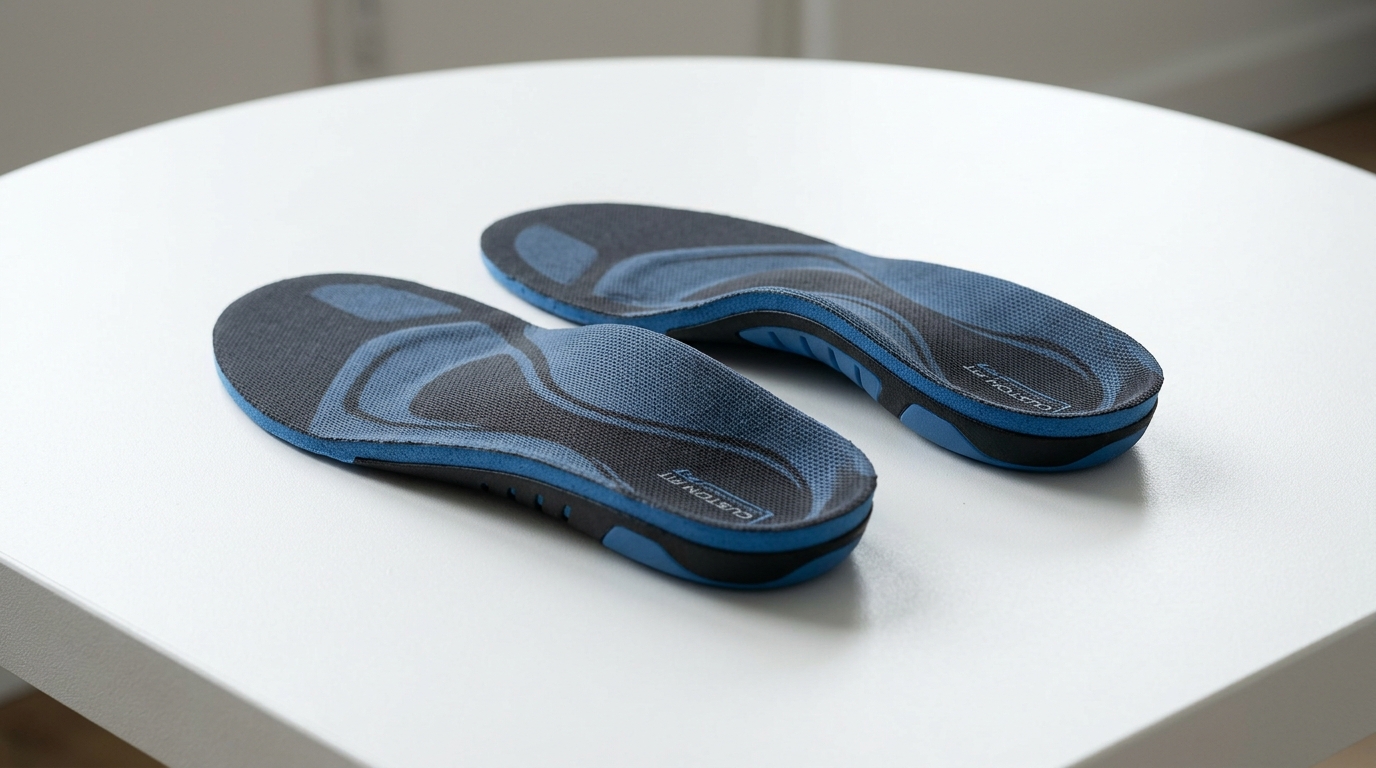
Quick Answer: In short, foot pain from orthotics is common while your feet adjust — new inserts change how your weight is distributed, and that can cause soreness in the arch, heel, or top of the foot for the first one to two weeks. The pain should fade as you break them in gradually. If it gets worse, stays sharp, or lasts longer than a few weeks, go back to your provider — the orthotics may need adjusting.
See a doctor promptly if you notice:
- Sharp, severe, or worsening pain
- New pain in one spot on a bone, or pain that makes walking difficult
- Numbness, tingling, or pins and needles in your foot
- Blisters, redness, or sores where the orthotic presses
- Pain still there after two to three weeks of gradual break-in
Why New Orthotics Can Hurt at First
Orthotics are meant to help your feet — so it feels wrong when they hurt. But a little discomfort in the early days is very common. Your feet have spent years moving in a certain way, and an orthotic changes that pattern: it lifts your arch, shifts where your weight lands, and asks muscles and joints to work in a slightly different position.
Think of it like new glasses: your eyes need a few days to adjust, and your feet need the same grace period.
What It Is: The Most Common Causes
The most common cause is simply the break-in period. Your arch is supported in a new way, so the muscles along the bottom of your foot have to work differently — often showing up as an ache in the arch or heel, especially at the end of the day. It usually peaks in the first few days, then gradually fades.
A poor fit is the next likely culprit. An orthotic that’s too rigid, too high, or too long for your shoe can press on the wrong places and cause pain on the top of the foot or along the inside of the arch. This is more common with over-the-counter inserts, made for an average foot shape rather than yours.
Going from no support to full support too quickly is another trigger. Wear new orthotics all day and your feet haven’t had a chance to adapt — which is why podiatrists recommend a gradual break-in, a couple of hours on day one, building up slowly.
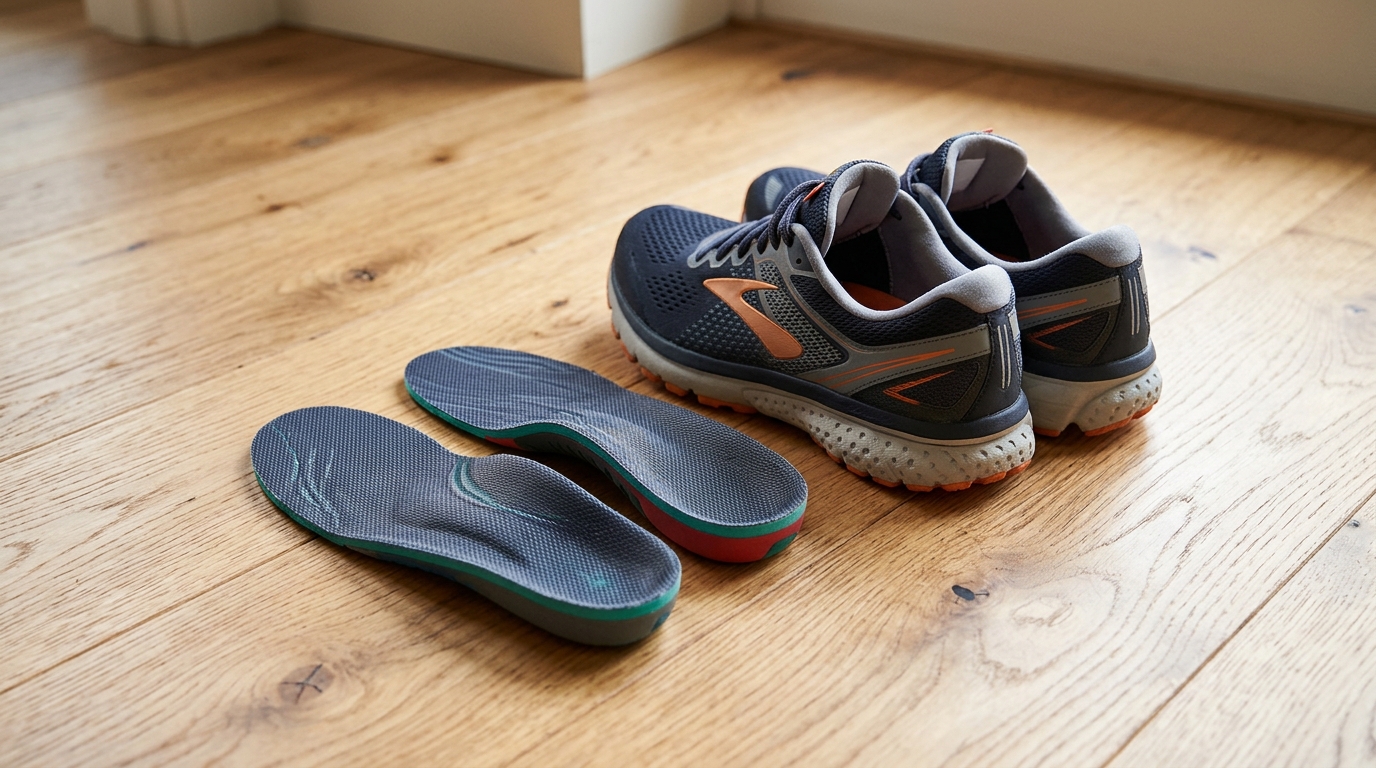
Sometimes the problem is the shoe, not the orthotic. An insert needs a shoe with enough depth and a removable insole to sit properly, and cramming one into a shallow or tight shoe can squeeze your foot and cause pain on the top of the foot or around the toes. Not sure whether your shoes are the issue? Our guide to foot pain from new shoes covers the signs.
What Helps: Breaking Them In the Right Way
The best thing you can do is break your orthotics in gradually. The American Podiatric Medical Association advises wearing them for just a few hours a day at first, then adding an hour or so each day until you’re wearing them full time — most people find the soreness fades within a week or two.
If the pain is in the arch, check where the support sits: the highest point of the orthotic’s arch should be just in front of your heel, under the middle of your arch. If it feels like it’s poking you, the insert may be the wrong size or shape.
Stretching can also help: stretch your calves and roll the bottom of your foot over a tennis ball for a few minutes a day to loosen the muscles working harder in their new position. The Cleveland Clinic notes that stretching the calf and plantar fascia reduces strain on the arch, where orthotic soreness often shows up. Over-the-counter pain relief can help through the first few days, used as directed.
What Helps: When to Go Back to Your Provider
If the pain isn’t fading, go back to the person who made or fitted your orthotics. For custom orthotics, adjustments are often free or included in the price, and a small adjustment can make a big difference. Don’t trim or bend a custom orthotic yourself — that can damage it and void any adjustment guarantee.
Your provider can also check the prescription and whether your shoes have enough depth — if they’re too tight or too shallow, even a perfectly made orthotic will feel uncomfortable. If arch pain is your main complaint, our guide to sore arches explains the other common causes worth ruling out.
Your Daily Routine While Breaking In Orthotics
Here’s a routine for the first two weeks:
- Start short: Wear them for one to two hours on day one, adding about an hour each day until you’re wearing them all day.
- Stretch daily: Do a calf stretch against a wall and roll your foot over a tennis ball for a few minutes each morning and evening.
- Wear the right shoes: Use shoes with a removable insole and enough depth, and avoid tight or shallow shoes while you’re breaking them in.
- Rest when sore: If your feet ache at the end of the day, take the orthotics out and ice the sore area for 15 minutes.
- Follow up: Book a check-in after two weeks, or sooner if the pain is sharp or not improving — and tell your provider whether it’s getting better or worse.
FAQs
Is it normal for orthotics to hurt at first?
Yes, mild soreness in the arch or heel is normal for the first one to two weeks, and it should gradually fade as you break them in. Sharp, severe, or worsening pain is not normal and should be checked.
How long should I wear new orthotics each day?
Start with one to two hours on day one and add about an hour each day — most people can wear them full time within one to two weeks. Jump straight to all-day wear and sore feet are much more likely.
Can orthotics make foot pain worse?
They can, if they don’t fit well or they’re worn too much too soon. If pain gets worse over the first two weeks, go back to your provider for an adjustment.
Should I wear orthotics in all my shoes?
Ideally yes, once you’ve broken them in — but only in shoes with enough room, since a shallow or tight shoe won’t let the orthotic sit properly. Some people keep a second, slimmer pair for dress shoes.
When should I see a doctor about pain from orthotics?
See your provider promptly if the pain is sharp or severe, if you have numbness or tingling, if blisters or sores develop, or if it’s still there after two to three weeks of gradual wear.
Sources
- American Podiatric Medical Association — orthotics guidance
- Cleveland Clinic — orthotics and arch pain information
- Mayo Clinic — foot pain causes and when to seek care
This article is for general information only and is not medical advice. Talk to your doctor or a podiatrist about your own feet.