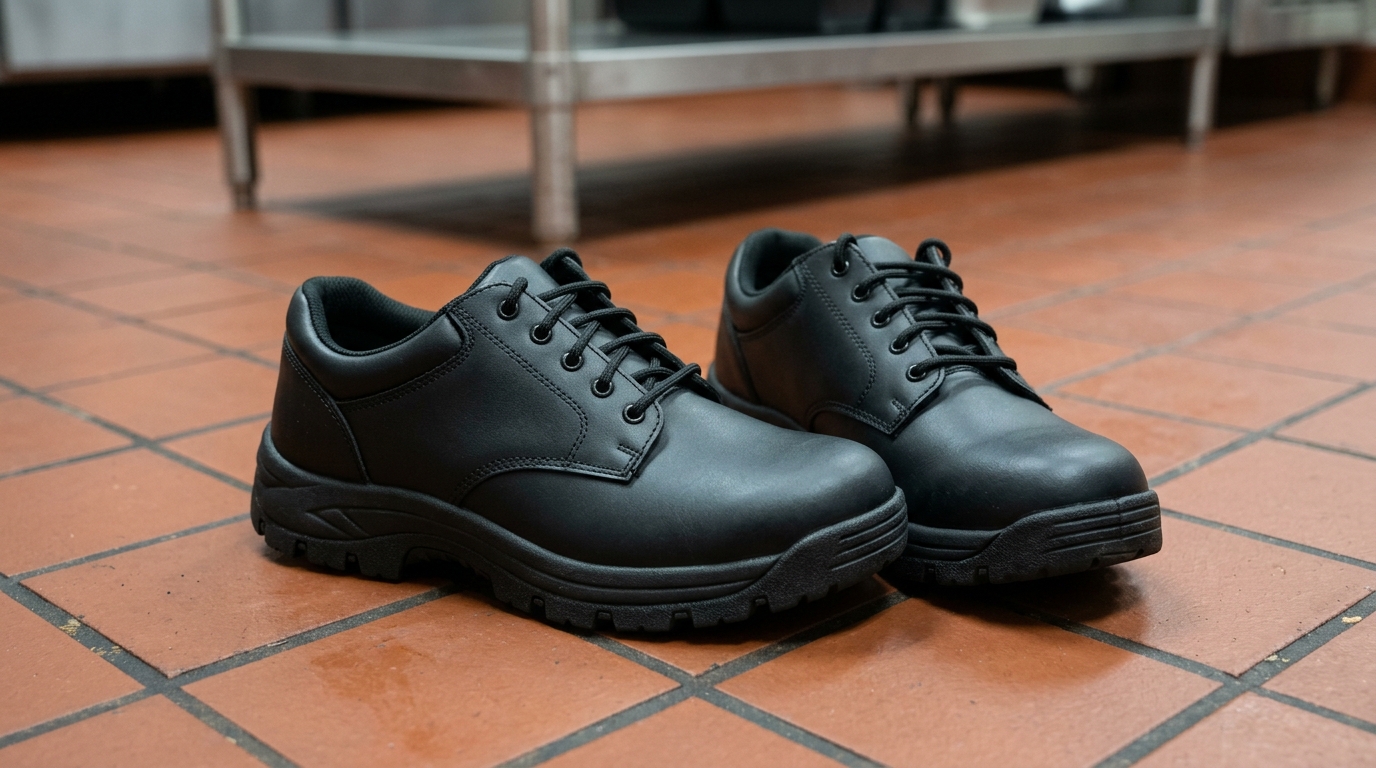
Quick Answer: In short, foot pain from waitressing usually comes from walking and standing for a whole shift on hard, often slippery restaurant floors while carrying trays and turning quickly between tables. Your arches, heels, and the balls of your feet take the load with every step, and by the end of the night they’re tired and inflamed. It usually eases with rest, grippy supportive shoes, and calf stretching. If the pain is sharp or doesn’t fade after a couple of days off, get it checked by a doctor or podiatrist.
See a doctor promptly if you notice:
- Sharp or severe pain in the heel, arch, or one spot on a bone
- Swelling, redness, or warmth that doesn’t settle after a day or two of rest
- Numbness, tingling, or a burning feeling in your feet or toes
- Pain that makes walking or putting weight on your foot difficult
- A blister, cut, or sore that won’t heal
Why Waitressing Can Hurt Your Feet
Waitressing looks sociable from the dining room. From the feet’s point of view, it’s an endurance event. You walk miles in a single shift, stand for long stretches at the pass, all on hard tile or polished wood that gives nothing back.
Restaurant floors are the first problem. They’re hard, often greasy or wet, and stay slippery no matter how many times they’re mopped. Every step needs a little extra grip, which means your feet tense up and your toes grip inside your shoes to keep you steady. That constant gripping tires the small muscles in your feet and leaves your arches aching after a shift.
Then there’s the load. A tray full of plates or drinks adds weight to every step, and carrying it on one side throws your balance off, so one foot takes more of the load than the other. Turning quickly between tables and stopping suddenly to avoid a colleague put twisting pressure through your ankles and the balls of your feet. And when the rush hits, there’s no time to sit down — that’s when foot pain from waitressing turns from a dull ache into pain with every step.
What It Is: The Most Common Causes
Plantar fasciitis is one of the most common complaints among servers. The plantar fascia is the band of tissue along the bottom of your foot, and hours of walking and standing stretch and irritate it. The classic sign is heel pain with your first steps in the morning, which eases as you move, then returns by the end of a long shift.
Metatarsalgia — pain in the ball of your foot — comes from all the pivoting and pushing off. Every quick turn between tables loads the front of your foot, and carrying a tray adds weight to the same spot. Tight or flat shoes make it worse, and the balls of your feet can feel bruised by the end of the night.
Blisters and sore toenails are the smaller miseries that add up fast. Damp socks — common after spills — make skin blister much faster. Shoes a half size too small jam your longest toe forward every time you stop suddenly. Our guide to sore feet after standing covers the same all-day standing soreness — waitressing adds slippery floors, tray carrying, and constant quick turns on top of it.
What Helps: Getting Through the Shift
The biggest single change is your footwear — and in this job, grip matters as much as cushioning. Look for slip-resistant shoes with a cushioned sole, arch support, and a roomy toe box. Replace your work shoes when the tread is worn smooth or the cushioning feels flat. Our best shoes for servers guide covers the features that matter most on a restaurant floor.
Wear moisture-wicking socks and keep a spare pair in your bag. A fresh pair halfway through the shift cuts blister risk dramatically.
Use your breaks properly. Sit down and get your feet up for even ten minutes — elevating them helps the swelling drain and rests your arches. Do a few ankle circles before you stand up again, and slow down on wet floors even during a rush — short, careful steps protect you from the sudden twist that turns a tired foot into an injured one.
What Helps: Recovery After Your Shift
When you get home, get out of your work shoes and into something soft and supportive. Soak your feet in cool water for ten minutes if they’re swollen, or roll each foot over a tennis ball for a few minutes.
Stretch your calves every evening. Stand facing a wall, step one foot back, and press the heel into the floor until you feel a gentle pull — hold it for thirty seconds on each side. Tight calves are a main driver of heel pain, and this two-minute habit makes a real difference over a few weeks. Rest your feet on your days off, too.
Your Daily Routine for Happier Feet on Shift Days
Here’s a routine for shift days:
- Stretch your calves and arches before your shift: A wall calf stretch and a few ankle circles take two minutes.
- Put on dry, moisture-wicking socks: Fresh socks and a spare pair in your bag keep your feet drier and blister-free.
- Check your shoes each week: Slip-resistant tread, cushioned soles, and arch support — replace them when the grip is gone.
- Use every break to sit and elevate: Even ten minutes with your feet up gives your arches a rest.
- Recover after every shift: Roll sore feet over a tennis ball and stretch your calves.
FAQs
Is foot pain from waitressing normal?
Mild soreness in the arches or heels after a long shift is common and usually fades with rest, stretching, and better shoes. Sharp or persistent pain is not normal and should be checked.
Why do my feet hurt so much after a waitressing shift?
You walk miles and stand for hours on hard, slippery floors while carrying trays and turning quickly. Your toes grip to keep you steady, and the load builds through the shift until every step hurts.
Can waitressing cause plantar fasciitis?
Yes — long hours of walking and standing on hard floors can irritate the plantar fascia, especially with tight calves and unsupportive shoes. Rest, stretching, and supportive footwear usually help, but heel pain lasting more than a couple of weeks should be checked by a doctor.
What shoes are best for waitressing?
Slip-resistant shoes with a cushioned sole, arch support, and a roomy toe box work best. Avoid flat, worn-out shoes and smooth soles on a greasy floor — grip matters as much as comfort.
When should I see a doctor about foot pain from waitressing?
See a doctor promptly if the pain is sharp or severe, if swelling doesn’t settle after rest, if you can’t put weight on your foot, or if a sore won’t heal.
Sources
- Mayo Clinic — plantar fasciitis causes and symptoms
- Cleveland Clinic — foot pain from standing all day
- American Podiatric Medical Association — foot care for workers
This article is for general information only and is not medical advice. Talk to your doctor or a podiatrist about your own feet.