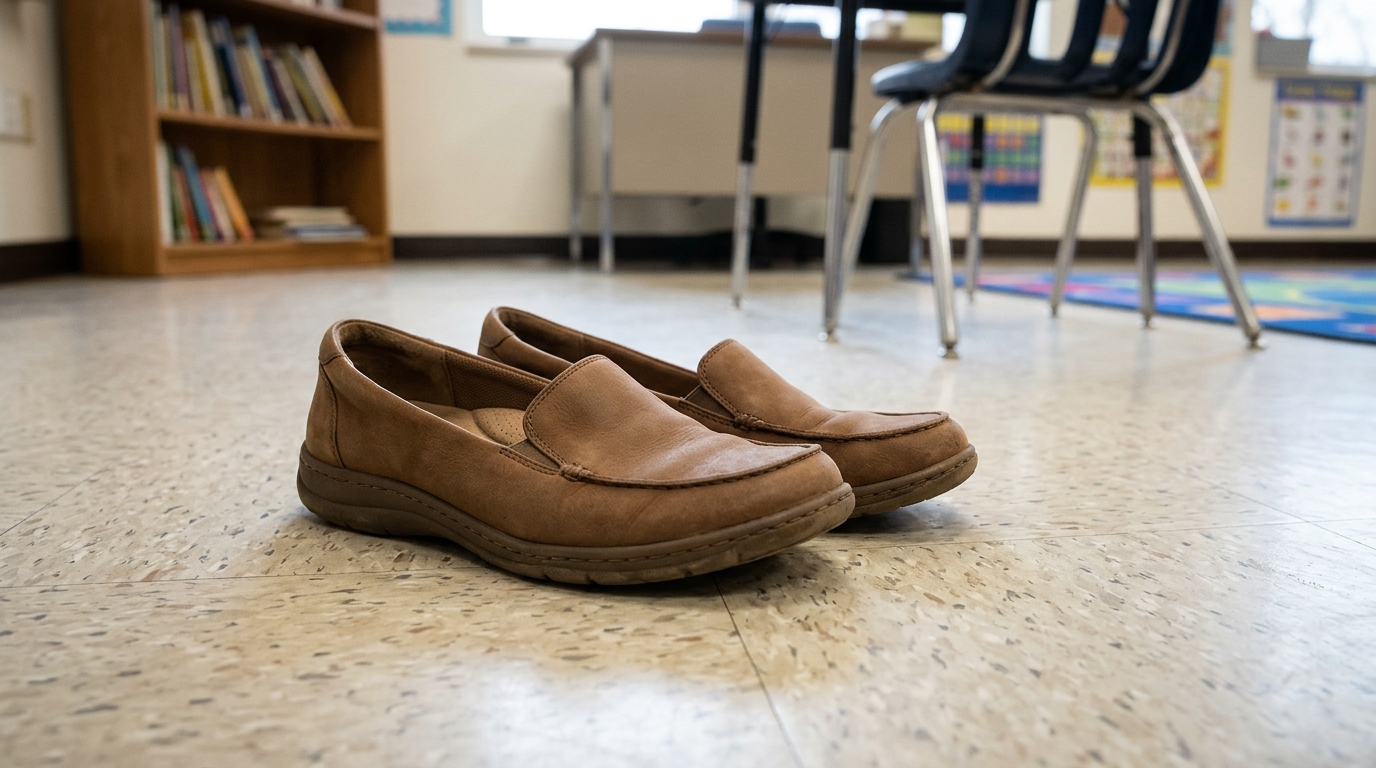
Quick Answer: In short, foot pain from teaching usually comes from standing on hard classroom floors for hours each day, walking between desks and pacing while you talk. The unforgiving surface sends impact through your heels and arches, and flat or unsupportive shoes make it worse. It usually eases with rest, better shoes, and supportive insoles. If it stays sharp or lasts more than a couple of weeks, get it checked by a doctor or podiatrist.
See a doctor promptly if you notice:
- Sharp or severe pain in the heel, arch, or a single spot on a bone
- Pain that makes walking or standing through a class difficult
- Swelling, redness, or warmth that doesn’t settle within a day or two
- Numbness, tingling, or a burning feeling in your foot or toes
- Pain that keeps coming back every school day despite rest and better shoes
Why Teaching Can Hurt Your Feet
Teaching looks like a sit-down job from the outside, but ask any teacher and they’ll tell you otherwise. You’re on your feet most of the day — standing at the front of the room, walking between desks, patrolling the hallways and supervising lunch. A school day adds up to hours of standing and walking, and almost all of it happens on the hardest surfaces a building can offer: tile, linoleum, and polished concrete.
Those hard floors are the problem. There’s no give in tile or linoleum, so every step sends a small shock straight through your heels and arches. And many teachers wear flat shoes or dress shoes that look the part but offer almost no arch support. Our guide to foot pain from standing on concrete explains how hard, unforgiving surfaces amplify the strain — and most classroom floors are just as hard as concrete.
What It Is: The Most Common Causes
Standing still is surprisingly hard on your feet. When you stand at the board for twenty minutes, the same muscles hold you upright the whole time. Your arches gradually flatten under your body weight, and by the end of a long lesson your heels and arches ache from the constant load.
Walking the classroom adds up too. A teacher can cover several miles in a school day — between desks, down corridors, up and down stairs, across the playground. Each of those steps lands on a hard floor, and the repetition wears your feet down hour by hour.
Heel pain is one of the most common complaints. The stop-start rhythm of teaching — stand, walk, stand again — sends a jolt through your heels with every restart, and if your calves are tight, your heels take even more of the load. That first-step pain in the morning is a classic sign the plantar fascia is irritated. Our guide to best shoes for teachers covers the footwear options that actually hold up through a full school day — the right pair can change how your feet feel by the last bell.
Tight calves make everything worse. Standing all day shortens your calf muscles, and tight calves pull on the heel and the arch with every step. Without stretching, the ache often creeps up into the knees and lower back by week’s end.

What Helps: Shoes and Insoles That Work With Your Feet
The first fix is your shoes. Look for supportive shoes with a cushioned sole and real arch support — not flat ballet flats or thin dress shoes. Your shoes should feel snug around the heel and midfoot but leave a thumb’s width of space in front of your longest toe. The Cleveland Clinic notes that arch support can ease the strain on the plantar fascia during long periods of standing and walking.
Add supportive insoles if your arches ache by the afternoon. They’re one of the best investments a teacher can make — they spread the load across your whole foot instead of letting the arch take it all, and they add the cushioning that flat shoes lack.
Wear moisture-wicking socks and keep a spare pair in your desk drawer. Dry feet stay comfortable far longer than damp ones.
What Helps: Recovery After the School Day
After the last bell, get out of your work shoes and into something soft and supportive as soon as you can. Ice the sore spot for ten to fifteen minutes if it’s swollen or tender, and roll the bottom of your foot over a tennis ball for a few minutes to loosen tight tissue.
Rest your feet if the ache is still there the next morning — teaching through sore feet changes how you walk and stand, and that compensation turns a small ache into a real injury. If a full week on your feet leaves you limping, take the weekend to recover properly.
Your Daily Routine for Happier Feet in the Classroom
Here’s a routine to keep your feet comfortable through a full school week:
- Stretch your calves and arches every morning: A wall calf stretch and a few ankle circles before school take two minutes and keep your heels and arches loose.
- Strengthen your feet: Toe spreads, towel scrunches, and single-leg balance build the small muscles that support your arches.
- Check your shoes before school: Cushioned soles, arch support, and dry socks — and keep a spare pair of socks in your desk.
- Move during class when you can: Shift your weight, walk between desks, and sit for a few minutes while students work independently.
- Recover after every school day: Roll sore feet over a tennis ball, ice anything swollen, and swap into supportive shoes at home.
FAQs
Is foot pain from teaching normal?
Mild soreness in the arches or heels after a long school day is common and usually fades with rest and better shoes. Sharp or persistent pain is not normal and should be checked.
Why do my arches hurt after teaching all day?
Standing on hard classroom floors keeps your arches loaded for hours, and flat or unsupportive shoes make the strain worse. Walking between desks adds miles of impact on top.
Can teaching cause plantar fasciitis?
Teaching can irritate the plantar fascia, especially with tight calves and unsupportive shoes. Rest, calf stretching, and supportive insoles usually help — persistent heel pain should be checked by a doctor.
What shoes are best for teaching?
Supportive shoes with a cushioned sole and real arch support work best — avoid flat ballet flats and thin dress shoes. Add supportive insoles if your arches ache by the afternoon.
When should I see a doctor about foot pain from teaching?
See a doctor promptly if the pain is sharp or severe, if swelling doesn’t settle, if you can’t stand through a class, or if it keeps coming back despite rest and better shoes.
Sources
- Mayo Clinic — plantar fasciitis causes and symptoms
- Cleveland Clinic — arch pain and calf tightness information
- American Podiatric Medical Association — foot strengthening exercises
This article is for general information only and is not medical advice. Talk to your doctor or a podiatrist about your own feet.