Why standing all day hurts more than walking
This surprises people, but standing still is harder on your feet than walking the same number of hours. When you walk, your calf muscles pump blood back up and pressure shifts across your foot with each step. When you stand, the load sits in the same places continuously — the balls of your feet, your heels, your arches — and blood pools in your lower legs because the calf pump isn’t running. By hour six, your feet are swollen, your arches are tired, and the fat pads under your heels are compressed flat.
Hard floors make it worse (concrete is the worst, followed by tile), thin-soled shoes make it worse, and extra body weight adds load to every step and every standing minute. None of this means your feet are damaged — it means they’re tired, the same way your back is tired after a long day. But tired feet left unrecovered night after night can turn into real problems: plantar fasciitis, Achilles irritation, and chronic arch pain all start as “just sore feet.”
The evening routine (20 minutes, in order)
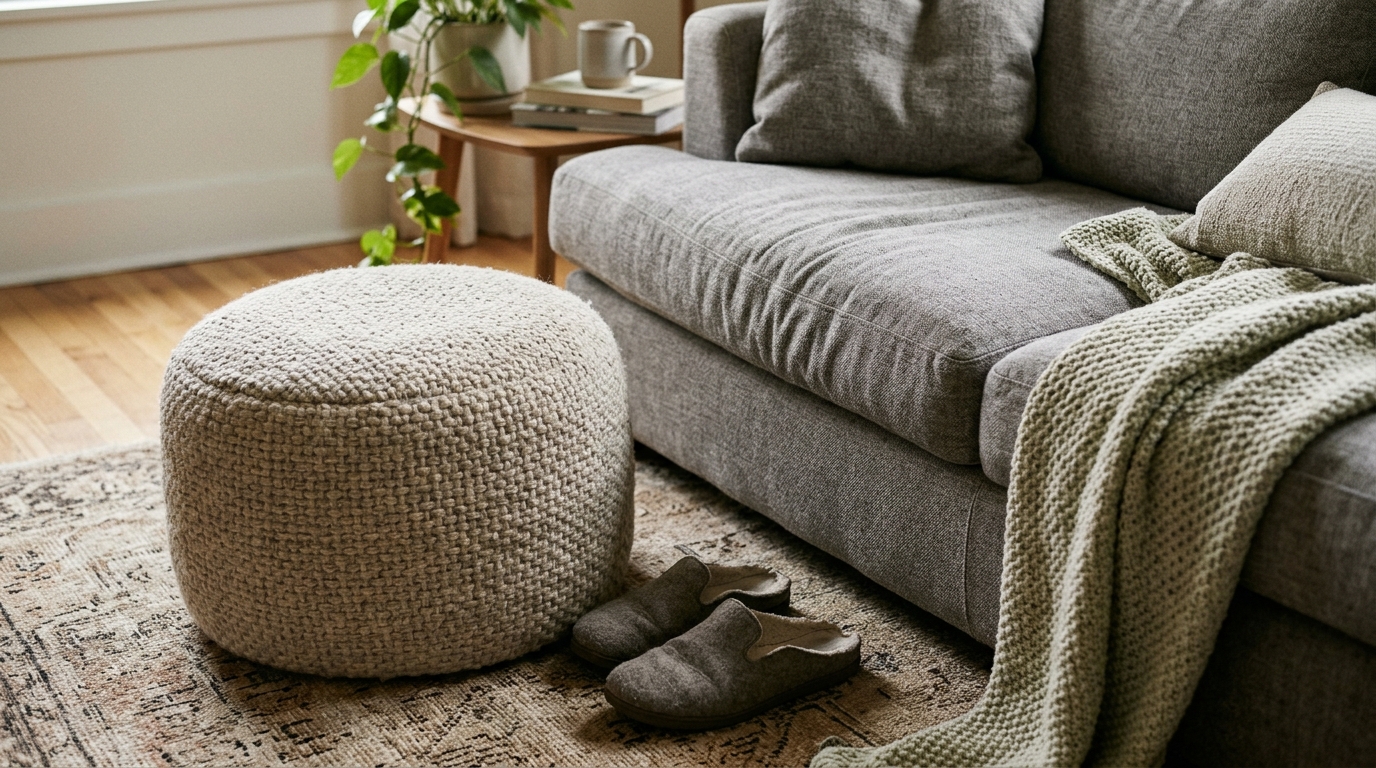
1. Get off them and get them up. As soon as you’re home, lie down and prop your feet above heart level for 10 to 15 minutes. Pillows on the couch work. This drains pooled fluid faster than anything else and takes the pressure off swollen tissues. Do this before you start cooking dinner or running errands — every minute standing after work adds to the bill.
2. Cool them down. A basin of cool (not ice-cold) water for 10 minutes, or a bag of frozen peas wrapped in a towel on the soles for 10 minutes, calms inflammation and feels immediately better. If your feet are just tired rather than inflamed, a warm soak feels nicer — but for swelling and throbbing, cool wins.
3. Stretch the chain. Your feet don’t hurt in isolation — tight calves pull on the Achilles, which pulls on the plantar fascia. Do a wall calf stretch (30 seconds each leg, twice), then pull your toes gently back toward your shin for 15 seconds each foot. It takes two minutes and it changes how your feet feel the next morning.
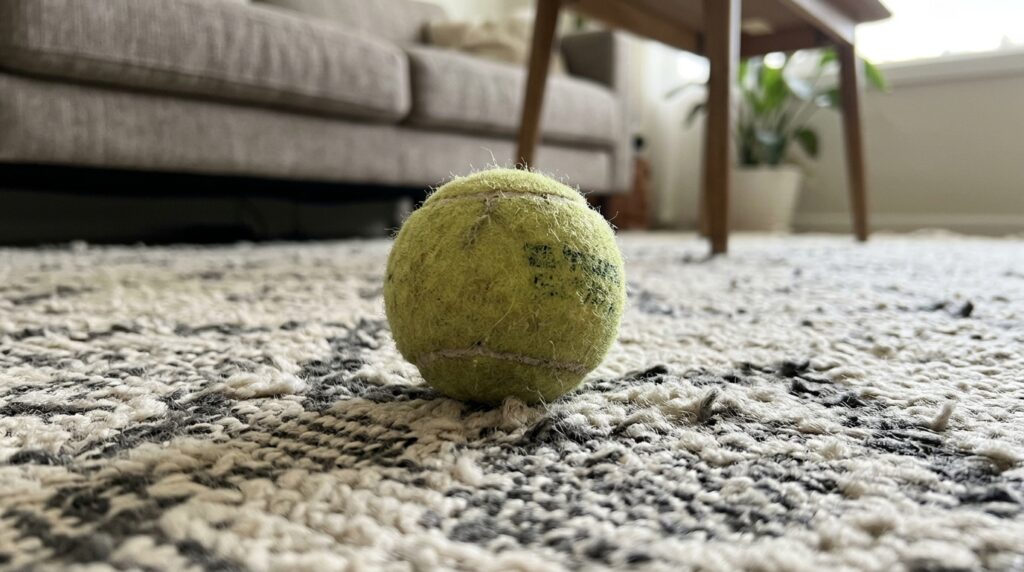
4. Roll them out. A tennis ball, a golf ball, or a frozen water bottle under the arch, rolled slowly from heel to toes for two minutes per foot, massages the plantar fascia and the small muscles of the sole. Press firmly but not painfully — if you find a spot that makes you wince, linger there for 20 seconds, breathe, and move on.
5. Moisturize and rest. A thick foot cream massaged in after rolling is both skin care and a second round of massage. Then give your feet the evening off: slippers or socks, not barefoot on hard floors, which just reloads them.
Fixing the daytime side
Evening relief is damage control; the real fix happens during the day. The single biggest upgrade for standing workers is footwear: cushioned, supportive shoes with a roomy toe box, plus insoles that match your arch type. Anti-fatigue mats at a fixed workstation genuinely help — studies on standing workers consistently show reduced leg and foot discomfort with them. If you stand in one spot, shift your weight every few minutes, rise onto your toes ten times an hour, and take sitting breaks whenever you can. Compression socks (15–20 mmHg) reduce end-of-day swelling for many standing workers, especially on concrete.
And lose the flat, unsupportive shoes. Ballet flats, thin flip-flops, and worn-out sneakers with collapsed heels are the worst offenders for standing work — they offer no shock absorption and no arch support, so your feet do all the work themselves.
FAQ
Why do my feet hurt more at the end of the week?
Because fatigue accumulates. Feet recover overnight but not fully if every day is a full load day. Weekend rest, better shoes, and the evening routine all reduce the weekly buildup.
Is it better to soak in hot or cold water?
Cold for swelling, throbbing, or inflammation; warm for general stiffness and relaxation. If your feet are both swollen and stiff, start cool for 10 minutes, then finish with a warm towel.
Do compression socks really help standing workers?
For swelling and end-of-day heaviness, yes — graduated compression helps blood return from the legs. They’re not a substitute for good shoes, but they complement them well.
When does “sore feet” become plantar fasciitis?
When the pain localizes to the heel and arch, is sharp rather than achy, and is worst with the first steps in the morning. General end-of-day soreness that fades overnight is fatigue; morning heel pain that lingers is a sign to get checked.
Should I see a podiatrist just for sore feet?
If soreness is daily, worsening, or not improving with better shoes and the evening routine after two weeks, yes — a podiatrist can check your gait, arch type, and footwear, and catch problems early.
Sources
- Mayo Clinic — Plantar fasciitis; Foot pain after standing
- American Podiatric Medical Association — Standing all day: foot care guidance
- Cleveland Clinic — Foot pain: causes and relief
- Occupational health literature — Anti-fatigue mats and standing worker discomfort (ergonomics reviews)
Medical disclaimer: This article is for general information only and is not medical advice. One-sided swelling, calf pain, sharp localized pain, or pain that doesn’t improve with rest should be evaluated by a clinician.