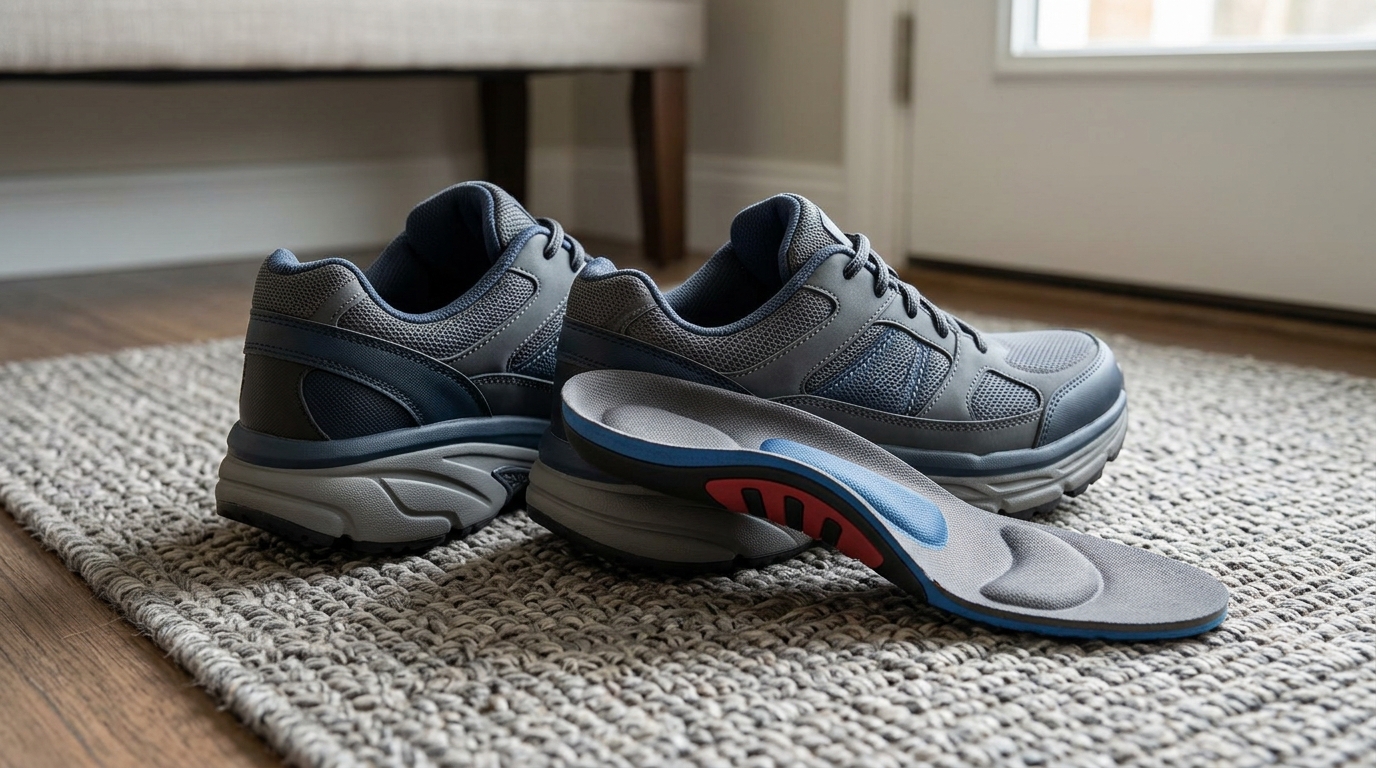
Sore arches causes range from overuse and flat feet to tight calves, unsupportive shoes, and conditions like plantar fasciitis. The arch is the springy structure along the inside of your foot, and when it’s overloaded — by long days standing, a sudden increase in activity, or shoes with no support — it aches, stiffens, and can make every step feel like work. Most arch soreness eases with rest, stretching, supportive footwear, and arch supports, but pain that lingers for weeks, or that comes with swelling or a change in your foot’s shape, should be checked by a clinician.
See a doctor promptly if you notice any of these:
- Arch pain that doesn’t improve after two to three weeks of rest and supportive shoes
- Swelling along the inside of the ankle or arch, or bruising with no clear injury
- A visible change in your arch — it looks flatter than it used to, or one foot differs from the other
- Pain so severe you can’t bear weight, or pain after a fall or twisting injury
- Arch pain plus numbness, tingling, or a foot wound that won’t heal, especially with diabetes
What sore arches are and why they happen
Your arch is the curved structure running along the inside of your foot, from your heel to the ball of your foot. It’s held up by bones, ligaments, and a thick band of tissue called the plantar fascia, and it works like a spring: it flattens slightly when your foot hits the ground to absorb shock, then springs back to push you forward. When that system gets overloaded, irritated, or weakened, the arch itself starts to ache.
The most common cause is simple overuse. If you suddenly walk much farther than usual, start a running program, take a job that keeps you on your feet all day, or gain weight, the arch has to absorb more load than it’s used to, and it protests. Shoes make a big difference here: flat, flimsy shoes with no arch support — think thin ballet flats, flip-flops, or worn-out sneakers — force the arch to do all the work alone, and it tires out fast.
Foot shape plays a role too. Flat feet, where the arch sits low or collapses under weight, put extra strain on the tendons and fascia that support the arch. High arches have the opposite problem: they don’t flatten enough to absorb shock, so pressure concentrates on the heel and ball of the foot, and the arch itself can ache from the tension. Tight calf muscles are another hidden contributor — when your calves are stiff, your foot compensates by rolling inward more than it should, which drags on the arch with every step.
Then there are specific conditions. Plantar fasciitis, irritation of the band under the foot, often causes arch pain alongside heel pain, worst with the first steps in the morning. Posterior tibial tendon dysfunction — irritation or weakening of the tendon that holds the arch up — can cause aching along the inside of the ankle and arch, and over time the arch can visibly flatten.
What helps sore arches
The first step is reducing the load. Rest from the activity that triggered the soreness — even a few days of shorter walks and no running — gives irritated tissue a chance to settle. Ice can help too: rolling your foot over a frozen water bottle for ten minutes, a couple of times a day, often eases that deep arch ache.
Support is the real fix for most people. The Cleveland Clinic recommends supportive shoes with firm arch support and a cushioned sole for arch-related pain, and notes that over-the-counter arch supports or custom orthotics can help when shoes alone aren’t enough.
Stretching and strengthening matter just as much. Tight calves are a major driver of arch pain, so a daily wall calf stretch — heel on the floor, leaning in until you feel a gentle pull, held for 30 seconds per leg — can make a real difference within a couple of weeks. Toe exercises help too: try scrunching a towel with your toes, or picking up marbles with your bare feet, to wake up the small muscles that support the arch. The Mayo Clinic notes that for plantar fasciitis, consistent stretching of the calf and the plantar fascia itself is one of the most effective conservative treatments. If your arch pain keeps returning despite good shoes, supports, and stretching, a podiatrist can check for tendon problems or other causes that need more targeted treatment.
A daily routine for happier arches
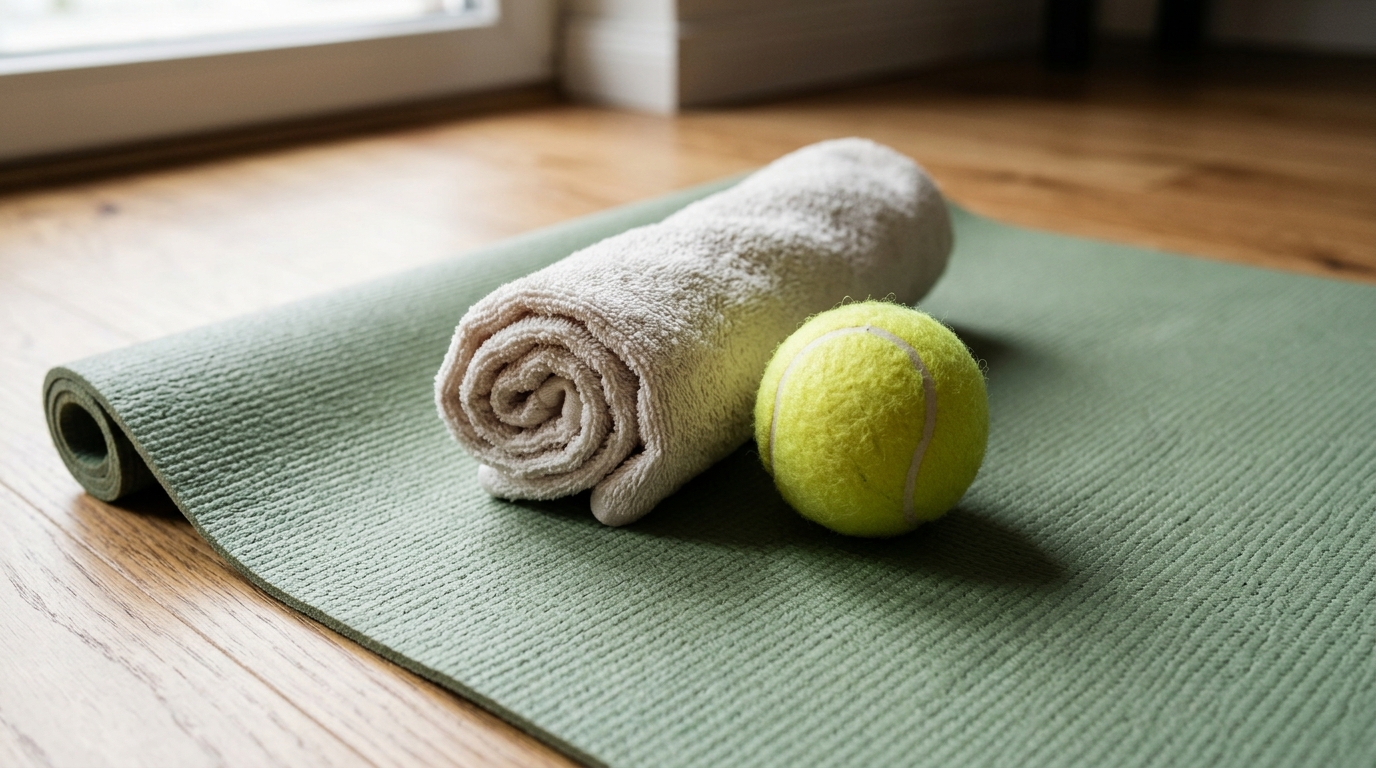
Start the morning with a gentle stretch before you even stand up. Sit on the edge of the bed, loop a towel around the ball of your foot, and pull gently toward you for 30 seconds per foot — this loosens the fascia before it takes your body weight.
During the day, wear shoes with real arch support, and use your insoles or orthotics consistently — support only works if it’s actually in your shoes.
In the evening, stretch your calves again and roll your foot over a tennis ball or frozen bottle for a few minutes while you relax.
Frequently asked questions
Are sore arches always caused by flat feet?
No. Flat feet are one common cause, but overuse, unsupportive shoes, tight calves, high arches, and conditions like plantar fasciitis can all make your arches sore.
Do arch supports really help, or are they a gimmick?
For most people with arch pain, they genuinely help. A well-fitted arch support reduces the strain on the plantar fascia and tendons by propping up the arch and controlling inward rolling. Over-the-counter supports work for many people; custom orthotics are worth considering if the pain persists or your foot shape is unusual.
How long does arch pain usually take to improve?
Mild overuse soreness often eases within a week or two of rest, stretching, and better shoes. Plantar fasciitis and tendon irritation can take longer — several weeks to a few months of consistent care. If there’s no improvement after three weeks, or the pain is getting worse, get it checked.
Should I exercise with sore arches?
Low-impact activity is usually fine and often helpful. Walking on soft surfaces, cycling, and swimming keep you moving without pounding your arches. Avoid running, jumping, and barefoot workouts on hard floors until the soreness settles, and always stretch your calves before and after.
Can sore arches be a sign of something serious?
Usually not — most arch pain is overuse or support-related. But a suddenly flattening arch, swelling along the inside ankle, or pain that doesn’t ease with rest can signal tendon problems or a stress fracture, and those need a clinician’s assessment rather than just better shoes.
Sources
- Cleveland Clinic — Plantar Fasciitis: Causes, Symptoms and Treatment
- Mayo Clinic — Flatfeet: Symptoms and Causes
- American Academy of Orthopaedic Surgeons — Posterior Tibial Tendon Dysfunction
This article is for information only and is not medical advice. If your arch pain lingers for weeks, your arch shape changes, or you notice swelling or numbness, talk to a healthcare professional.