Foot stress fracture symptoms usually start as pain in one specific spot on the foot — often the top of the foot, the heel, or the ball of the foot — that appears during activity and fades with rest. At first the ache may only show up near the end of a run or a long walk, but as the injury progresses it can appear earlier, linger after activity, and eventually hurt even at rest. You may also notice swelling over the painful spot, tenderness when you press it, and bruising in some cases. Unlike general soreness, stress fracture pain is localised: you can usually point to one exact place that hurts.
See a doctor promptly if you notice any of these:
- Pain that is severe, sudden, or follows a direct injury or fall
- Swelling, bruising, or a foot that looks deformed
- Inability to bear weight on the foot
- Pain that persists at rest or worsens despite two weeks of rest
- You have diabetes, poor circulation, osteoporosis, or a foot wound alongside the pain
What a foot stress fracture is and why it happens
A stress fracture is a tiny crack in a bone caused by repetitive force rather than a single impact. In the foot, the metatarsals — the long bones leading to the toes — are the most common site, followed by the heel bone and the navicular bone in the midfoot. Each step loads these bones, and when the load repeatedly exceeds what the bone can repair, a small crack forms.
Stress fractures are classic overuse injuries. They are common in runners who increase mileage too quickly, in military recruits, in dancers, and in people who suddenly take up a high-impact activity. They are also more likely when bones are weakened by low calcium or vitamin D, eating disorders, osteoporosis, or certain medications. Worn-out shoes, hard surfaces, and flat feet or high arches that change how load is distributed can all add to the risk.
The key feature is the pattern. Early on, the pain appears only during activity and settles with rest, which makes it easy to mistake for ordinary soreness. As the crack deepens, the pain starts earlier in the activity, lasts longer afterwards, and may eventually be present at rest or at night. Swelling over the spot is common, and pressing the exact location is usually tender. That localised, pinpoint tenderness is the classic clue.
Stress fractures do not always show on an initial X-ray. Early cracks can be invisible for two to three weeks, which is why a clinician may order an MRI or bone scan if the history strongly suggests a stress fracture despite a normal X-ray.
What helps a foot stress fracture
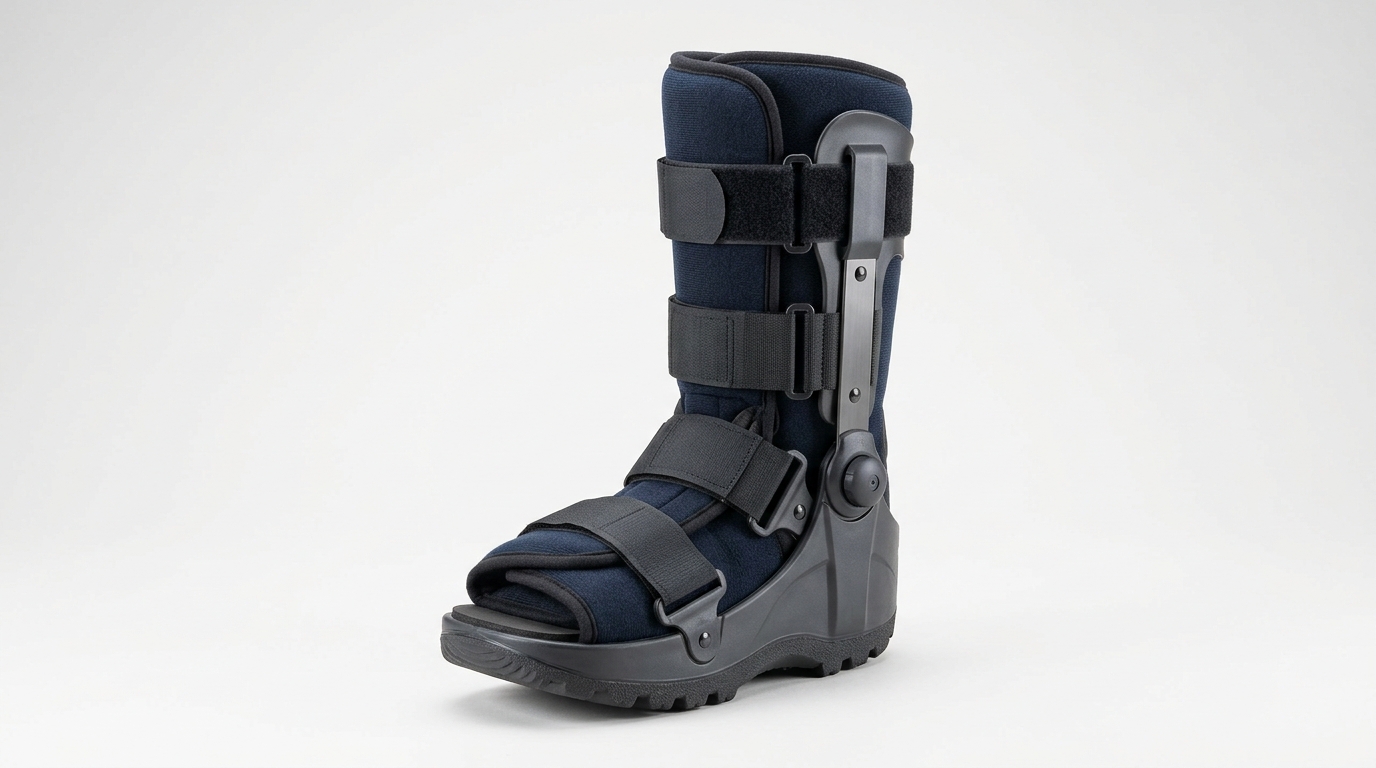
The main treatment is rest from weight-bearing activity. That is frustrating for active people, but continuing to load a stress fracture can turn a small crack into a complete break, which takes far longer to heal. Depending on the location and severity, a clinician may recommend a walking boot, crutches, or simply avoiding running and jumping while walking in supportive shoes.
Icing the painful area for 15 to 20 minutes a few times a day can ease pain and swelling, and over-the-counter pain relief may help in the short term. The American Academy of Orthopaedic Surgeons notes that most stress fractures heal within six to eight weeks with rest and protected weight-bearing, though navicular fractures and some fifth-metatarsal fractures are slower and sometimes need longer immobilisation.
While you recover, it is worth addressing the cause. Check your shoes, review your training load, and make sure your diet provides enough calcium and vitamin D. A gradual return to activity is essential: when pain has fully settled, build mileage slowly rather than jumping back to your previous level, and stop immediately if the pinpoint pain returns.
If pain persists beyond the expected healing time, or if it worsens despite rest, get re-assessed. A fracture that is not healing, or a different diagnosis such as tendinitis or a tumour, needs to be ruled out.

A daily routine for stress fracture recovery
In the morning, put on your walking boot or supportive shoes before standing, and plan your day to minimise time on your feet. Avoid barefoot walking on hard floors.
During the day, use crutches if you have been advised to, and ice the painful spot if it aches. Keep activity low-impact: swimming or upper-body exercise can maintain fitness without loading the foot.
In the evening, check the swelling and tenderness, and note whether the pain is trending down. If it is not improving after two weeks of proper rest, book a follow-up.
Frequently asked questions
How do I know if foot pain is a stress fracture?
Stress fracture pain is usually localised to one exact spot, worsens with activity, and eases with rest early on. Swelling and pinpoint tenderness over the spot are typical clues, but imaging is often needed to confirm it.
Can I walk with a foot stress fracture?
Short, comfortable walks in a boot or supportive shoes may be allowed, but running, jumping, and long walks should stop until a clinician clears you. Continuing to load the bone risks a complete break.
How long does a foot stress fracture take to heal?
Most heal within six to eight weeks with rest and protected weight-bearing. Some locations, like the navicular, can take longer.
Do stress fractures always show on X-ray?
No. Early stress fractures are often invisible on X-ray for two to three weeks. An MRI or bone scan can detect them sooner.
Can I prevent stress fractures?
Building training load gradually, wearing supportive shoes, eating enough calcium and vitamin D, and cross-training to vary impact all reduce the risk.
Sources
- American Academy of Orthopaedic Surgeons — Stress Fractures of the Foot and Ankle
- Mayo Clinic — Stress Fractures: Symptoms and Causes
- Cleveland Clinic — Stress Fracture: Symptoms, Causes and Treatment
This article is for information only and is not medical advice. If your foot pain is severe, localised, or not improving, talk to a healthcare professional for a proper diagnosis.