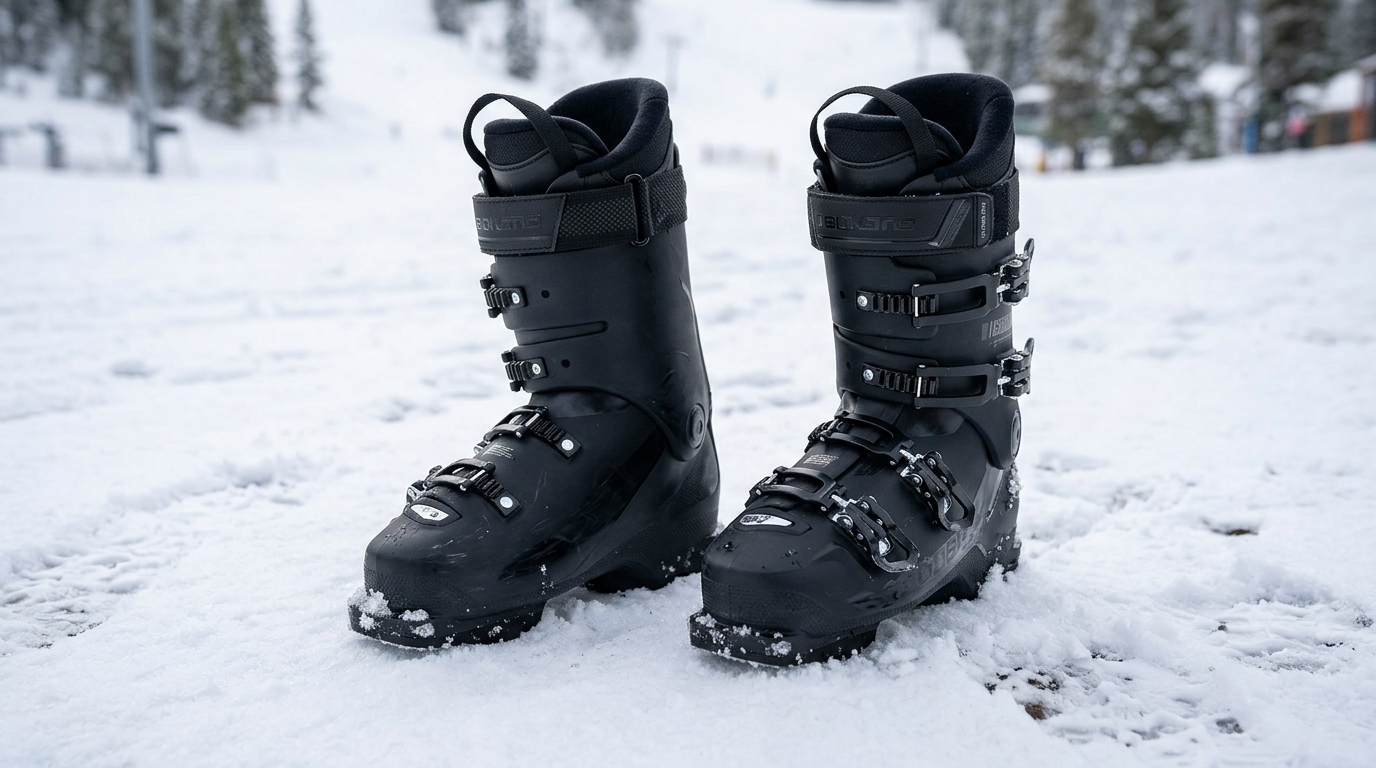
Quick Answer: Most foot pain from ski boots comes from a boot that doesn’t match your foot shape — too narrow, too tight across the instep, or a liner pressing on one spot. Loosening the buckles on the lift, a heat-molded liner or custom footbed, and a professional boot fit can ease most of it. Pain that lingers after you take the boots off is worth getting checked.
See a doctor promptly if:
- Your toes stay numb or tingly for more than a day after skiing.
- You have a blister that looks infected — spreading redness, warmth, or pus.
- You feel a sharp pain in the foot or ankle during a turn or a fall.
- You have diabetes or poor circulation and a sore won’t heal.
You’ve been on the mountain for two hours, the snow is perfect, and all you can think about is your feet. If that sounds familiar, you’re not alone — foot pain from ski boots is one of the most common complaints on the slopes. The good news is that most boot pain is fixable, and it usually starts with understanding what’s going on inside that stiff plastic shell.
Why Ski Boots Hurt Your Feet
A ski boot is designed to hold your foot and lower leg firmly so your skis respond to small movements. But “firm” and “painful” aren’t the same thing, and the line between them is thinner than most people think.
First, the fit. Many people buy the same size as their street shoe — which is almost always wrong. A ski boot should feel snug, not crushing. If the shell is too narrow, your forefoot gets squeezed every time you flex forward. If the boot is too big, your foot slides around and your toes slam into the front.
Second, pressure points. Your foot isn’t a smooth oval — it has bony bumps and an arch that’s high or low. A stock liner presses evenly, so it presses hardest on the spots that stick out most. That’s why pain often shows up in the same place every time: over the top of the foot, inside the ankle, or near your little toe.
Third, cold and stiffness. A brand-new liner is firm, and cold plastic doesn’t flex. On a freezing morning, a boot that felt fine in the shop can feel like a vice on the first run. Cold also reduces blood flow to the feet, which makes numbness and aching worse — and a boot that’s too tight makes that worse still.
What Actually Helps
The single best thing you can do is get a proper boot fit from a shop that specializes in ski boots — not just a rental counter. A good fitter measures your foot’s length, width, and volume, and can heat-mold the liner to your foot. The American Podiatric Medical Association notes that footwear matching your foot shape is one of the most effective ways to reduce foot pain, and ski boots are no exception.
If your boots are new, give the liners time to break in. Most liners pack out slightly over the first few days of skiing, so a boot that feels a touch tight in the shop may feel right by day three. But “a touch tight” is the limit — sharp pain or numbness on day one usually doesn’t get better on its own.
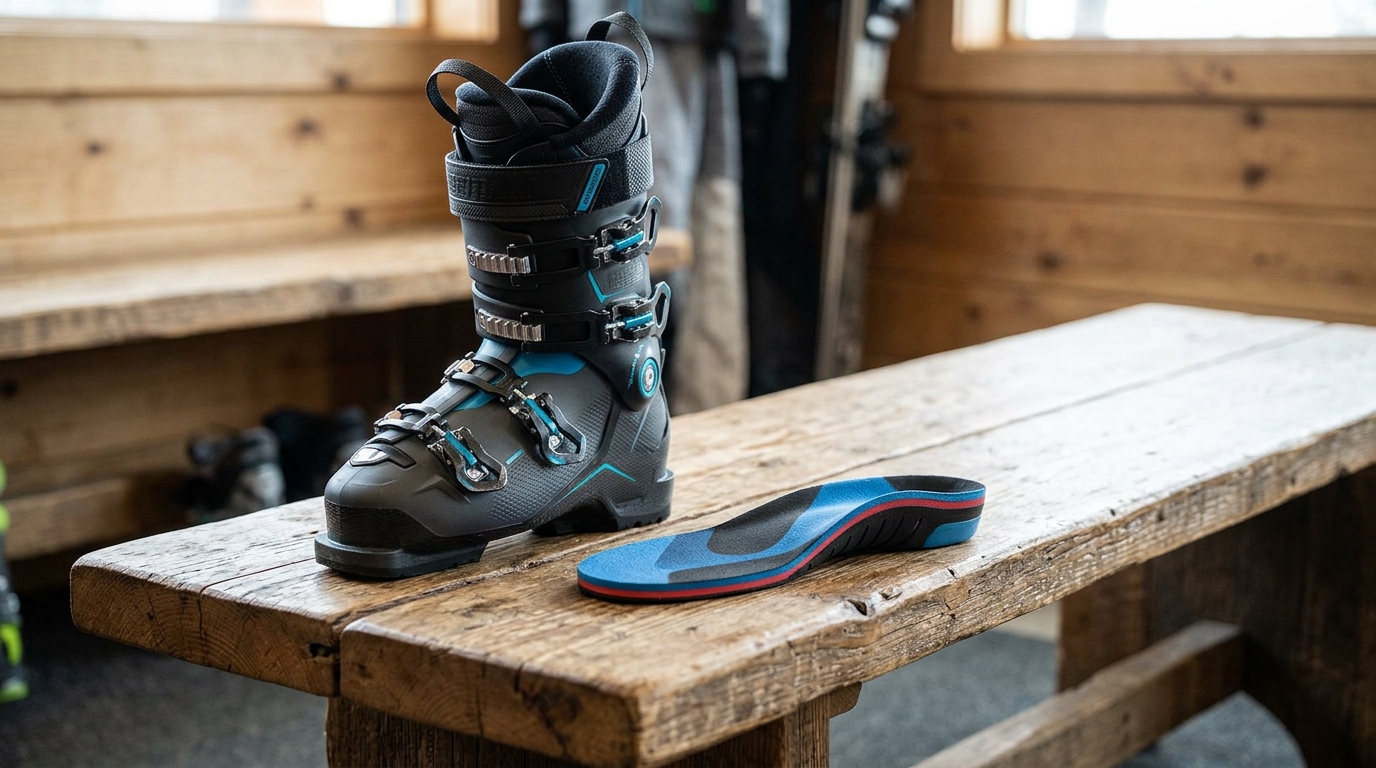
Custom footbeds are the next step up. These molded insoles support your arch and spread pressure evenly across the bottom of your foot. Podiatrists recommend them for skiers with flat feet or high arches, because a stock insole is flat and offers almost no support. A custom footbed can also stop your foot from sliding forward and jamming your toes.
Buckle strategy helps more than people realize. You don’t need every buckle cranked to the max. Loosen the two lower buckles on the lift and tighten them only when you’re about to ski down — that keeps blood moving all day. Don’t try to fix a pressure point with thicker socks; that usually makes the squeeze worse. A thin, well-fitting ski sock is what boot fitters recommend, and for a stubborn hot spot, a fitter can stretch the shell in that one place, a normal process called “punching out.”
Warmth matters too. Keep your boots inside overnight, not in a cold car, and use a boot dryer — warm plastic flexes more easily, and warm feet hurt less. The Cleveland Clinic notes that keeping feet warm and dry helps prevent cold-weather numbness and aching.
A Simple Routine for Pain-Free Ski Days
Before you leave the lodge, put your boots on indoors and walk around for a few minutes. Flex forward as if you were skiing and notice any sharp spots now. Make sure your socks are smooth — no wrinkles or bunched fabric over the toes.
On the first lift ride, loosen the two lower buckles a notch and tighten them again at the top. If a hot spot forms, adjust the buckle right away — early pain is much easier to fix.
At lunch, take your boots off. Let your feet air out, wiggle your toes, and change into dry socks if yours are damp. Even ten minutes out of the boots resets your feet for the afternoon. After skiing, dry your liners properly — pull them out of the shells if you can, or use a boot dryer — so they aren’t cold and stiff the next morning. If the pain keeps coming back in the same spot, see a boot fitter and describe exactly where it hurts.
FAQs
Should ski boots hurt at first?
A little pressure is normal, especially with new liners, but sharp pain or numbness is not. A boot should feel snug and supportive. If it hurts enough to distract you from skiing, the fit needs adjusting.
How tight should ski boot buckles be?
Tight enough that your heel stays put when you flex forward, but loose enough that you can still wiggle your toes slightly. The two lower buckles control forefoot pressure, so keep them snug rather than cranked.
Will custom footbeds stop my foot pain?
They can help a lot with flat feet or high arches, because they support your arch and spread pressure evenly. They won’t fix a shell that’s the wrong width, though.
Why do my toes go numb in ski boots?
Numb toes usually mean the boot is squeezing the top of your foot or the forefoot is too narrow, which cuts off circulation. Loosening the buckles, wearing thinner socks, and getting the shell checked for width can all help.
When should I see a boot fitter instead of just breaking boots in?
If the pain is in the same spot every time, your toes go numb regularly, or you’ve skied three or four days with no improvement, see a fitter. A shell adjustment or a different boot model will do more than another week of hoping.
Sources
- American Podiatric Medical Association (APMA) — foot health and footwear guidance
- Mayo Clinic — foot pain causes and self-care
- Cleveland Clinic — foot pain and cold-weather foot care
This article is for general information only and is not medical advice. Talk to your doctor or a podiatrist about your own feet.