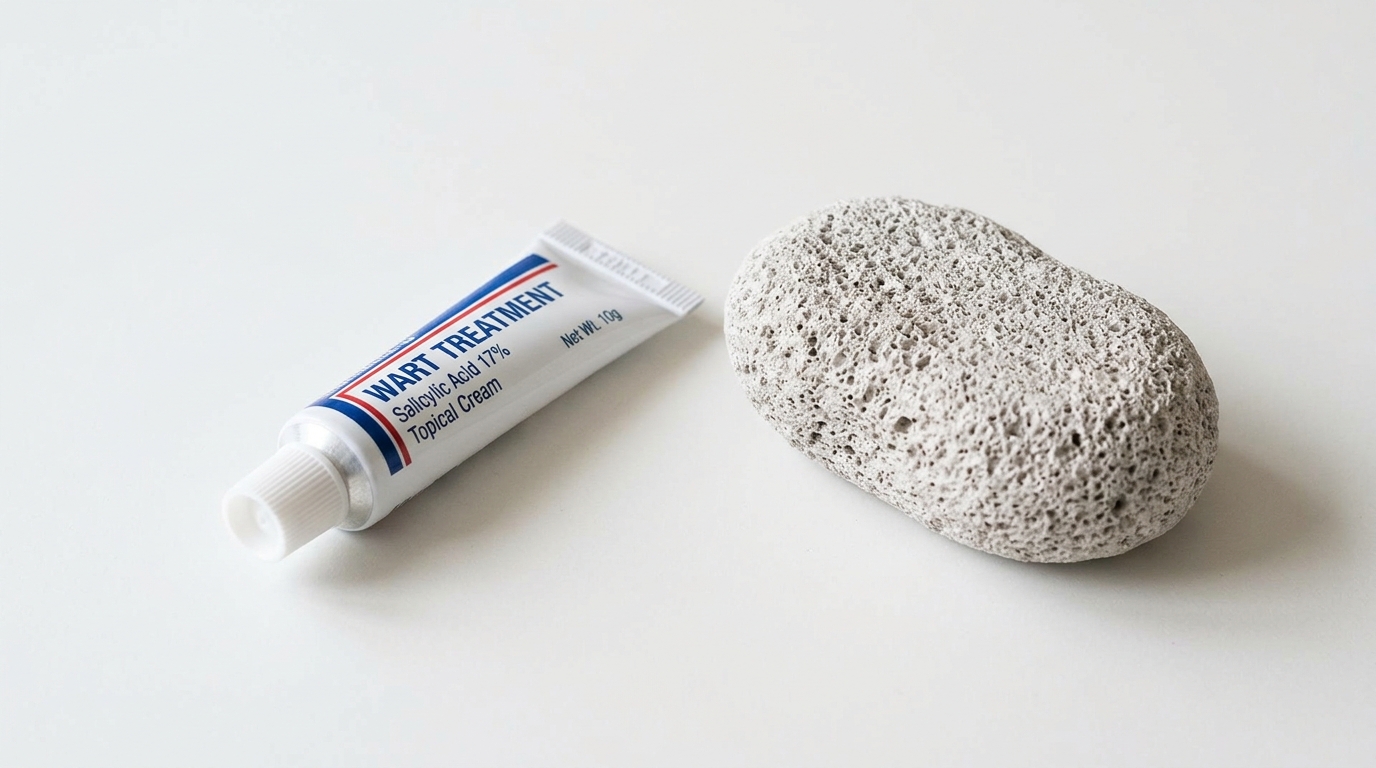
Quick Answer: Early plantar wart symptoms usually show up as a small, rough patch on the sole of your foot, often on the heel or the ball where pressure is greatest. It may feel tender when you walk, look grainy with tiny black dots inside, and sit flat rather than raised. Unlike a callus, it hurts more when you squeeze it from the sides than when you press straight down on it.
See a doctor promptly if:
- You have diabetes or poor circulation and find any sore, wart, or broken skin on your foot.
- The wart bleeds, changes color, grows quickly, or keeps coming back after treatment.
- Walking becomes painful enough to change how you move.
- You are not sure whether the spot is a wart, a callus, or something else.
What a Plantar Wart Is
A plantar wart is a wart on the sole of your foot, and early plantar wart symptoms come from the human papillomavirus (HPV) getting in through a tiny cut or crack. The virus thrives in warm, damp places like pool decks and locker rooms, so warts often show up after a summer of barefoot walking. Once the virus settles in, it makes the skin grow faster than it should, and that extra growth becomes the wart.
Your body weight presses them inward as you walk, so instead of growing outward like a wart on your hand, a plantar wart grows into the sole — which is why it can feel like walking on a small pebble. They are common in children and teenagers, but adults get them too.
How to Spot One: The Key Symptoms
Most people first notice a rough, grainy patch on the sole, often on the heel or the ball of the foot. Look closely and you may see tiny black dots — small clotted blood vessels, and one of the most reliable signs that this is a wart rather than a callus. The skin lines that normally run across your sole tend to stop at a wart’s edge, while they carry straight across a callus.
Pain is the other giveaway. A plantar wart usually hurts when you put weight on it, and the pain often feels sharper when you squeeze the spot from the sides than when you press directly down on it. That is the opposite of a callus, which tends to hurt more under direct pressure. Some small warts are painless, but a tender rough patch on your sole is a strong suspect.
Plantar Wart or Callus? How to Tell the Difference
The two look alike at a glance. A callus is your skin’s response to friction — a smooth, thickened patch that protects the foot. A wart is a viral growth, and it behaves differently in a few telling ways.
- Black dots: A wart often has tiny black dots inside; a callus does not.
- Skin lines: Normal skin lines run across a callus but stop at a wart’s edge.
- Squeeze test: A wart usually hurts more when squeezed from the sides; a callus hurts more under direct pressure.
- Texture: A wart feels rough and grainy; a callus feels smooth and hard.
- Location: Warts often appear on the heel or ball of the foot; calluses show up wherever shoes rub.
If you still are not sure, do not try to cut the spot away yourself — a podiatrist can tell in seconds, and guessing wrong can leave a slow-healing wound.
What Helps: What Podiatrists and Clinics Recommend
Many plantar warts go away on their own, but that can take months, and a painful wart is worth treating sooner. The Mayo Clinic notes that over-the-counter salicylic acid treatments, applied regularly over several weeks, can help remove a wart by gradually peeling away the infected skin. Keep the area dry, cover it in shared showers, and don’t share towels or shoes while it’s active.
Whatever you do, do not try to cut, burn, or dig a wart out at home — that risks infection and scarring, and it usually leaves part of the wart behind. The Cleveland Clinic advises seeing a clinician if a wart is painful, spreads, or does not respond to home care, since in-office options like freezing may help. And if you have diabetes or poor circulation, skip home treatment altogether and let a professional handle it.
Prevention is straightforward. Wear flip-flops in locker rooms and around pools, keep your feet clean and dry, change damp socks, and moisturize cracked heels so the virus has fewer openings.
Your Daily Routine While a Wart Heals
If you are treating a wart at home, a simple routine keeps things moving and protects the people around you:
- Wash and dry: Wash your feet daily and dry them well, especially between the toes.
- Apply treatment: Once a day after a warm soak, as the product directs.
- Cover it up: Keep the wart covered with a clean bandage, especially in shared spaces.
- Change socks often: Fresh, dry socks reduce the dampness the virus likes.
- Wear shoes in public: Flip-flops by the pool and in the gym shower are your best friends.
- Check progress weekly: Look for the wart shrinking and the black dots fading; if nothing changes after several weeks, see a clinician.
Be patient — warts are stubborn, and treatment can take weeks to show real change. If the wart keeps growing, multiplies, or walking stays painful, get professional help rather than switching to a stronger home remedy.
FAQs
Are plantar warts contagious?
Yes — through direct contact or by walking barefoot where an infected person has walked, like a pool deck or locker room. The virus needs a tiny break in the skin to get in, so wearing shoes in shared spaces helps a lot.
How do I tell a plantar wart from a callus?
Look for tiny black dots, check whether the skin lines stop at the patch’s edge, and try the squeeze test — a wart usually hurts more when squeezed from the sides. A callus is smooth, with skin lines running across it, and hurts more under direct pressure.
Will a plantar wart go away on its own?
Often, yes. Many warts clear up as your immune system responds, though it can take months. If the wart is painful, spreading, or not changing after a few weeks of home care, it is worth seeing a podiatrist.
Can I cut a plantar wart off myself?
No. Cutting or digging at a wart risks infection and scarring, and it usually leaves part of the wart behind so it grows back. Stick to salicylic acid or see a clinician for in-office treatment.
Should I see a doctor for a plantar wart?
See a doctor promptly if you have diabetes or poor circulation, if the wart bleeds or changes color, if walking is painful enough to change your gait, or if you are not sure what the spot is.
Sources
- Mayo Clinic — plantar warts, symptoms, causes, and treatment
- Cleveland Clinic — plantar warts, diagnosis and treatment options
- American Podiatric Medical Association — warts and foot health guidance
- NHS — warts and verrucas, symptoms and self-care
This article is for general information only and is not medical advice. Talk to your doctor or a podiatrist about your own feet.