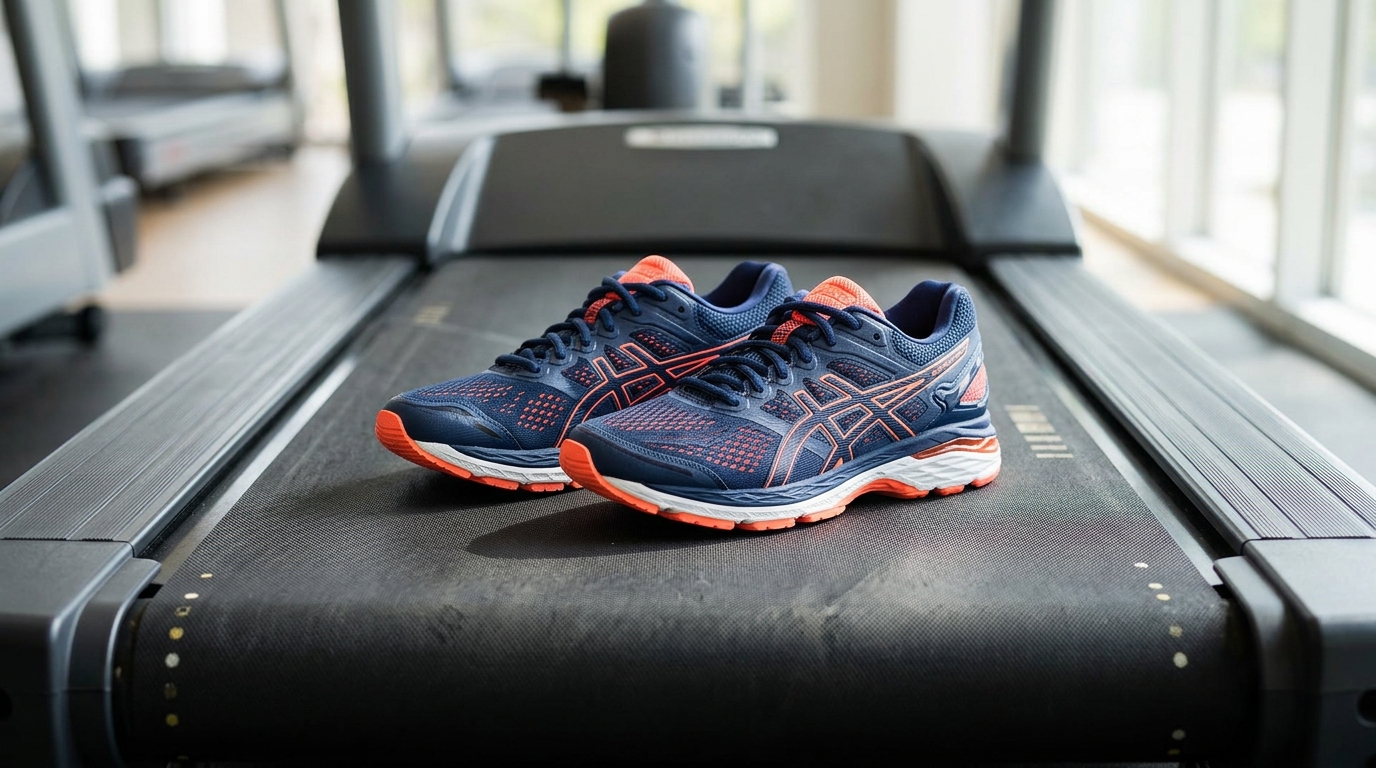
Quick Answer: The usual causes of foot pain from treadmill running are worn-out shoes, running too much too soon, a steep incline, or a stride that doesn’t suit the belt. The treadmill’s surface is the same every step, so small problems repeat hundreds of times. Swap in supportive shoes, ease off the incline, and cut back mileage for a week — most mild treadmill foot pain settles quickly once you fix the cause.
See a doctor promptly if:
- Sharp, sudden pain, or pain after a pop or twist
- You can’t put weight on the foot
- There’s swelling that doesn’t go down within a few days
- Numbness, tingling, or a foot that turns pale or blue
- Pain that keeps coming back, or lasts more than two weeks
Why the Treadmill Can Hurt Your Feet
Running on a treadmill feels like running outside, but your body does a few things differently on the belt — and your feet pay for the difference. Outdoors, the ground varies and your feet adjust to every surface; on a treadmill, every step lands on the same flat surface, at the same pace. If anything about your stride, shoes, or setup is slightly off, it repeats thousands of times in a single session — which is why foot pain from treadmill running often shows up in people who run outside without any trouble.
The belt also does some of the work for you, pulling your foot backwards and changing how your muscles fire. Some runners overstride to compensate, reaching too far forward and loading the heel and arch with every step. Others grip the belt with their toes, which can leave the toes aching and the small foot muscles cramping. The treadmill is still a good training tool — it just punishes sloppy habits faster than the road does, because there’s no variation to hide behind.
Common Causes
Worn-out shoes. This is the single most common cause. Running shoes lose their cushioning long before they look worn out — the foam inside compresses with use, and once it’s gone, every foot strike sends more impact through your feet. Podiatrists generally recommend replacing them after a few hundred miles, and treadmill miles count just the same as road miles.
Too much, too soon. The treadmill makes it easy to add mileage — the weather’s fine, why not go another ten minutes? But your feet, tendons, and bones adapt slowly, and a sudden jump in distance or frequency is a classic recipe for overuse pain in the arch or heel.
Too much incline. A steep incline changes your foot strike and pushes more load onto the forefoot and Achilles tendon. A little incline is fine and mimics outdoor running, but whole runs at a high gradient ask a lot of your feet. The American Podiatric Medical Association notes that incline training increases stress on the Achilles and the ball of the foot, so build up gradually.
Wrong shoes for your feet. Running in old trainers, flat casual shoes, or shoes meant for another sport can all cause trouble. You need a shoe that matches your gait and arch type, with room for your toes to spread as they swell.
Your stride — and what’s underneath it. Overstriding, landing heavily on your heels, or running too close to the front of the belt all add stress, and holding the handrails twists your posture and changes how your feet land. Sometimes the treadmill just exposes a problem that was already there — plantar fasciitis, metatarsalgia, or flat feet that need support.
What Helps
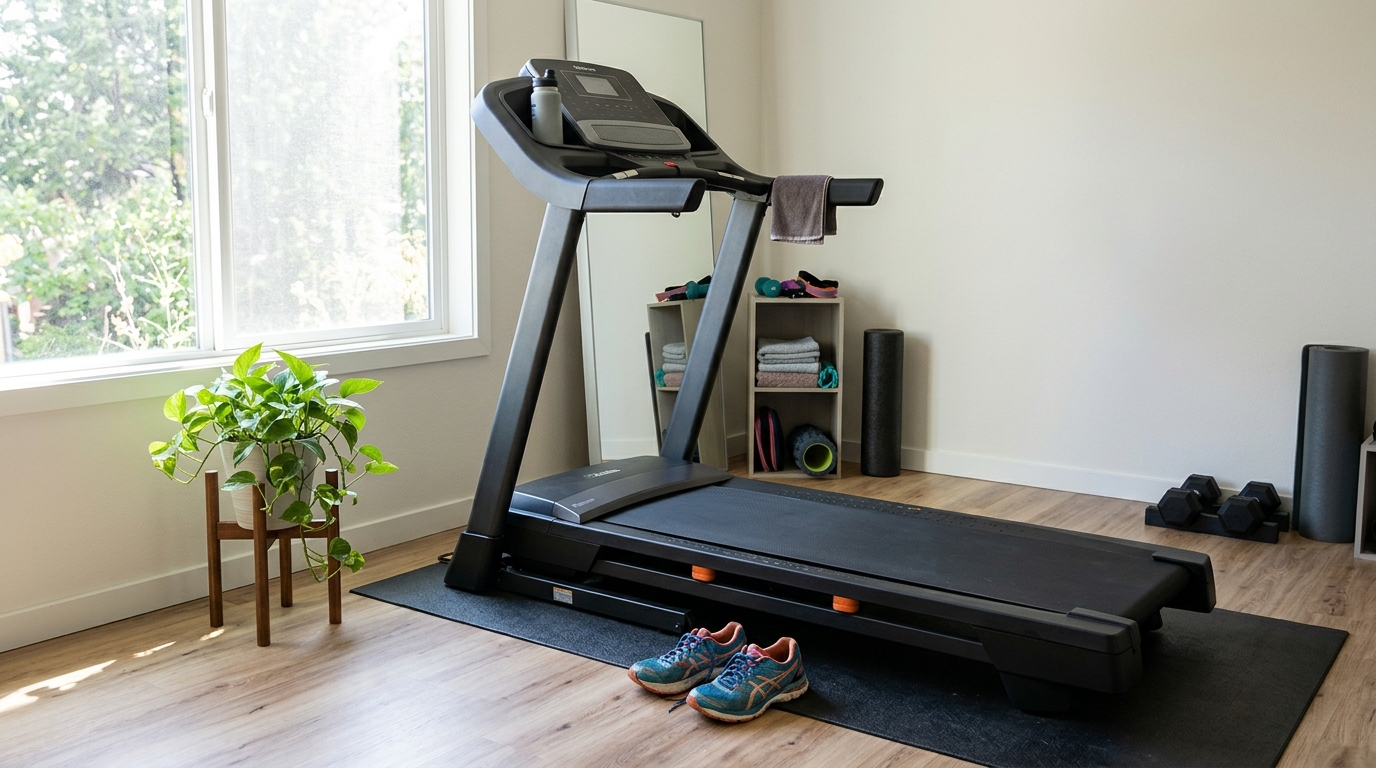
Start with your shoes — if they’re old, replace them. A proper fitting at a running store can help; many stores will watch you run and recommend a shoe. Podiatrists recommend shoes that match your arch type and running style, and the American Podiatric Medical Association notes that a good fit with adequate toe room matters as much as cushioning.
Next, look at your incline: if you’ve been running at a steep gradient, bring it down to a gentle one or two percent and build it back slowly over weeks, not days. Then check your form — aim for shorter, quicker strides with your feet landing underneath your body. Keep your hands off the rails; if you need them for balance, slow the belt down instead.
For soreness after a run, rest is the most honest fix. Icing a sore heel or arch for ten minutes can ease the ache, and gentle calf stretches help, since tight calves pull on the Achilles and the plantar fascia. Rolling the sole of your foot over a tennis ball can also help — keep the pressure gentle. If the pain is in a specific spot and keeps returning, supportive insoles may help, especially with flat feet or high arches.
A Simple Routine to Keep Your Feet Happy on the Treadmill
Before your run, spend five minutes warming up: walk briskly, then do a few calf stretches and ankle circles. Cold muscles and stiff ankles make your feet work harder from the first step.
During the run, keep the incline modest and your stride short, and check in with your feet every ten minutes — if you’re gripping with your toes or landing heavily, slow down and reset. Afterward, walk to cool down, stretch your calves and the soles of your feet, and change out of sweaty socks promptly. Increase mileage by no more than about ten percent a week, and give your feet a rest day or two each week.
FAQs
Is it normal for your feet to hurt after treadmill running?
Mild soreness after a hard or long run is common, especially if you’re new to running. But sharp pain, or pain that lasts more than a couple of days or keeps coming back, is a sign something needs changing — usually your shoes, mileage, or incline.
Should I run on a treadmill with plantar fasciitis?
Many people with plantar fasciitis can run on a treadmill if they keep the incline low, wear supportive shoes, and stretch their calves well. If it flares up during or after every run, take a break and talk to a podiatrist.
Does treadmill running cause flat feet?
No — running doesn’t flatten your arches. But if you already have flat feet, the treadmill’s repetitive surface can make unsupported arches ache sooner — supportive shoes or insoles usually help.
Are treadmill shoes different from road running shoes?
Not really — the same well-fitting running shoes work on a treadmill. Some runners prefer a lighter shoe indoors, but what matters most is cushioning, fit, and matching your arch type.
How long should I rest if my feet hurt after a treadmill run?
For mild overuse soreness, a few days of rest or low-impact activity like walking or cycling is often enough. If it hasn’t eased after a week, or returns the moment you run again, see a doctor or podiatrist.
Sources
- American Podiatric Medical Association (APMA)
- Mayo Clinic — Plantar Fasciitis
- Cleveland Clinic — Metatarsalgia
- NHS — Running injuries
This article is for general information only and is not medical advice. Talk to your doctor or a podiatrist about your own feet.