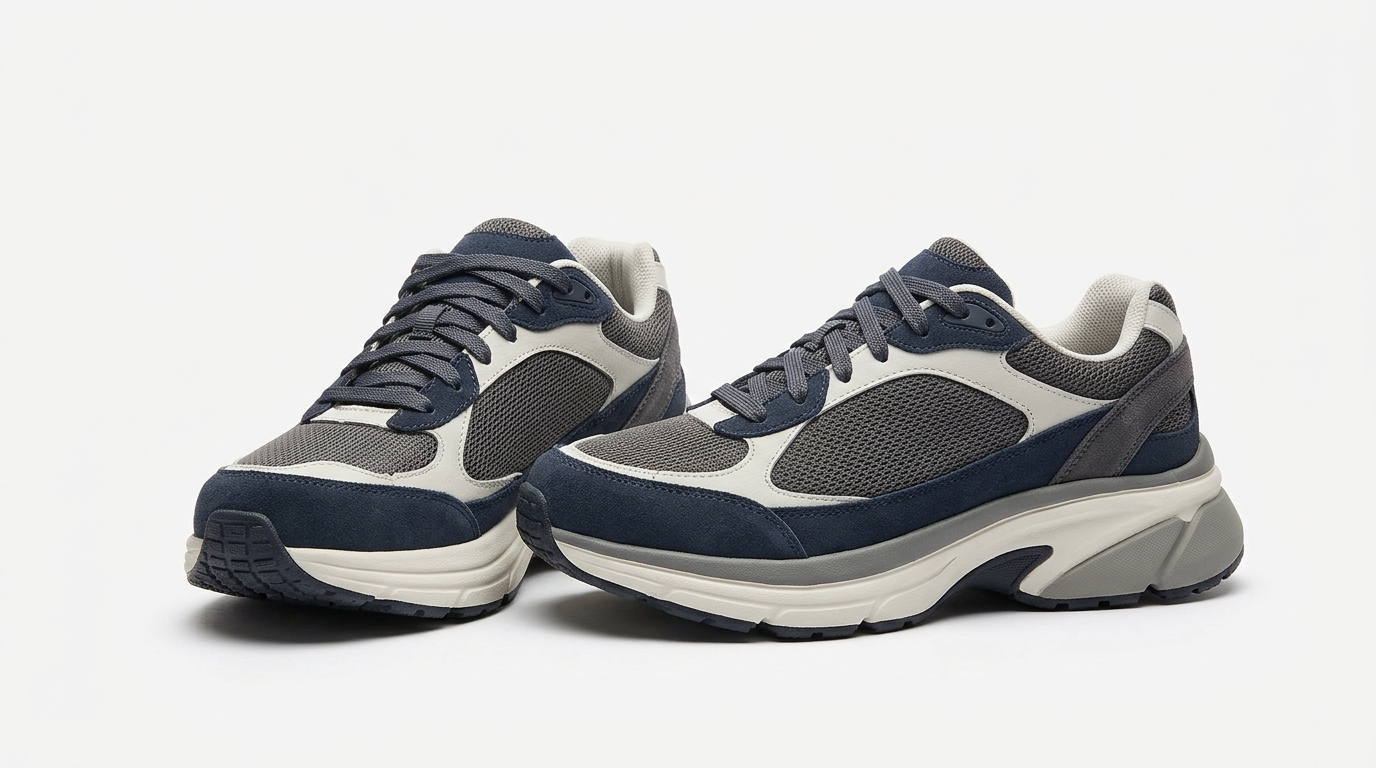
Quick Answer: The best shoes for wide feet have a roomy toe box that lets your toes spread, genuine wide (2E) or extra-wide (4E) sizing, and soft, flexible uppers that don’t pinch. Look for a removable insole, and try shoes on late in the day when your feet are at their largest.
See a doctor promptly if:
- You have a corn or callus that breaks open or won’t heal.
- You notice a bunion that’s getting bigger or more painful.
- Your toes stay numb or tingly after you take your shoes off.
- You have diabetes or poor circulation and any foot wound appears.
You’ve found a pair you love, put them on, and within an hour your feet ache at the sides. If you have wide feet, shoe shopping can feel like the whole industry forgot you exist. Plenty of good shoes are made for wide feet, though — you just need to know what to look for.
What “Wide Feet” Actually Means
Wide feet simply means your forefoot is broader than average for your shoe length. It’s not a flaw — foot width varies just as much as height does, and it’s often hereditary. Some people have wide feet from birth; others develop them as arches settle or weight changes. Pregnancy and aging can both widen the foot, which is why shoes that fit at twenty-five may feel tight at fifty.
The problem is that most shoes are built on a standard-width last — the foot-shaped form the shoe is made around. If your foot is wider than that last, the shoe squeezes your forefoot and the pressure lands on the joints at the base of your toes. Over time, that squeezing can contribute to bunions, corns, and hammertoes. Podiatrists point out that cramped toe boxes are a common cause of forefoot pain, and the fix is often as simple as giving your toes room.
One common mistake is going up a size to get more width. A longer shoe gives you a little more room, but it moves the bend of the shoe away from where your foot flexes, and your heel can slip. The right move is a shoe made in a wide width, not a longer regular shoe. The best shoes for wide feet start with a wide last — the whole shoe is built wider, not just stretched.
What to Look For
Start with the toe box. This is the front of the shoe, and it’s where wide feet feel the squeeze first. A good wide shoe has a toe box that’s deep and roomy, with space for your toes to lie flat and spread a little. You should be able to wiggle your toes freely when the shoe is laced up. If the shoe tapers to a point, your little toe will suffer no matter what the width label says.
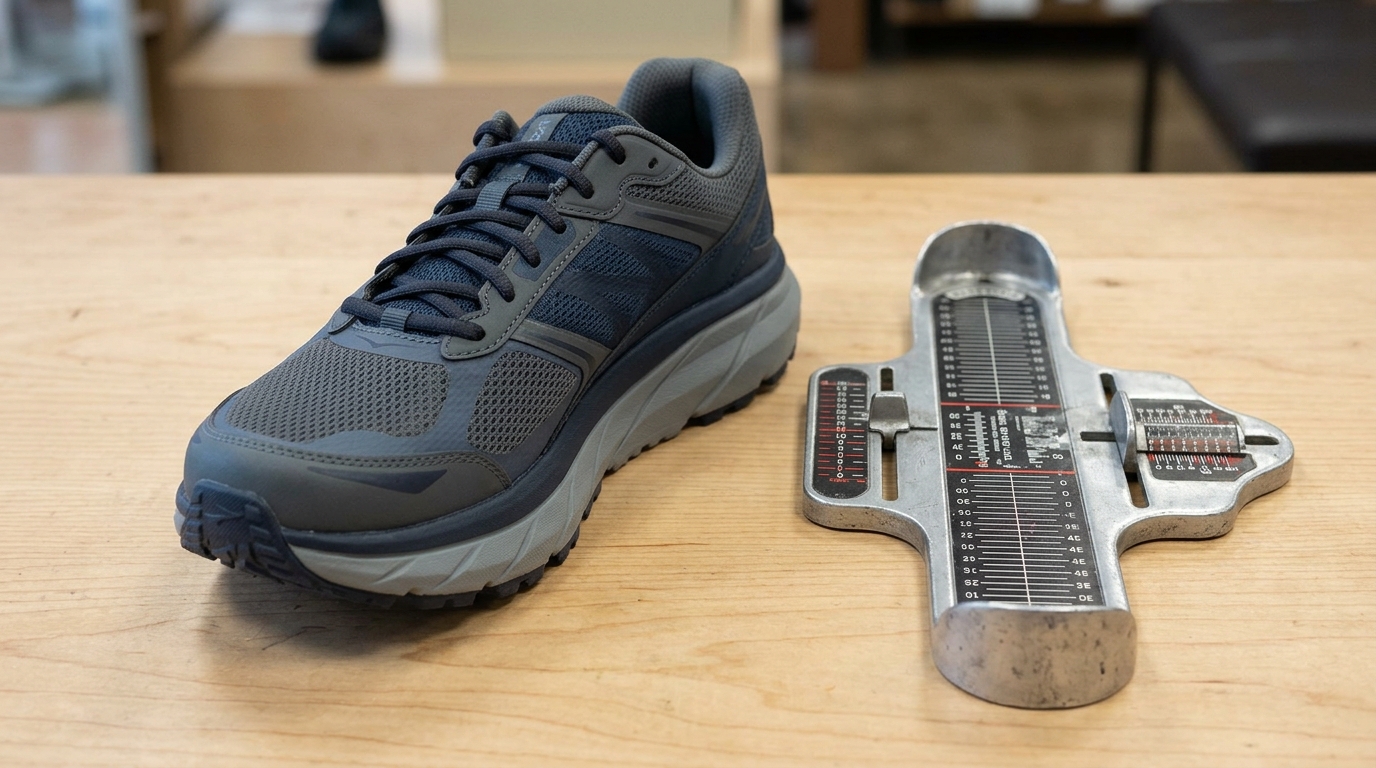
Check the width sizing. In the US, wide is usually 2E for men and D for women, and extra-wide is 4E for men and 2E for women. The American Podiatric Medical Association notes that shoes matching your actual width reduce pressure on the forefoot and help prevent corns and bunions.
Look for soft, flexible uppers. Stiff leather or rigid synthetic panels won’t give, so they press into your foot all day. Mesh, soft suede, and flexible knit uppers adapt to your foot shape. If the shoe has a seam running across the widest part of your forefoot, that’s a red flag — seams don’t stretch, and they’ll rub.
A removable insole is worth having. It lets you swap in your own orthotic or a cushioned insole without making the shoe tighter, and taking the stock insole out gives you a few extra millimeters of room. Pay attention to the heel, too: a wide shoe should still hold your heel snugly. If the heel slips when you walk, the shoe is too wide in the back or too long, and you’ll grip with your toes to keep it on. The Mayo Clinic advises that a good fit means the heel stays put while the forefoot has room.
Finally, consider the closure. Laces give you the most control, because you can loosen them across the forefoot and tighten them at the ankle. If you love slip-ons, look for an elastic gusset or a stretch panel.
A Practical Routine for Buying and Breaking In Wide Shoes
Try shoes on in the late afternoon or evening, when your feet are at their largest after a day of standing and walking. Bring the socks you’d normally wear with them — thick socks change the fit completely.
When you try a pair on, stand up and walk around the shop on a hard floor, not just carpet. Your toes should not touch the front when you take a step, and the widest part of your foot should line up with the widest part of the shoe. If it doesn’t, the shoe is the wrong shape for you, whatever the size says. Buy for your bigger foot — almost everyone has one foot slightly larger than the other.
Break new shoes in gradually. Wear them around the house for a couple of hours before taking them out for a full day. Leather uppers soften and mold to your foot; mesh and knit won’t change much, so they need to fit well from the start. If a shoe hurts in the shop, it will hurt at home too — “breaking in” should never mean enduring pain. And keep a simple rule: if a pair regularly leaves red marks across your forefoot, it’s the wrong shoe, no matter how much you like the look.
FAQs
What width letter means wide?
For men, wide is usually 2E and extra-wide is 4E. For women, wide is usually D and extra-wide is 2E. Brands vary a little, so always try the shoe on rather than trusting the letter alone.
Should I size up if I have wide feet?
Not if you can find a true wide width. Sizing up gives you length you don’t need and can cause heel slip. A wide-width shoe in your normal length is almost always a better fit.
Are wide shoes only for people with foot problems?
No. Wide feet are just a variation in foot shape, like being tall. Plenty of people with perfectly healthy feet need wide shoes — it’s about matching the shoe to your foot, not about having a medical condition.
What shoe styles work best for wide feet?
Shoes with a roomy, rounded toe box, soft flexible uppers, and laces tend to work best. Running shoes, walking shoes, and roomy loafers are usually good bets; narrow dress shoes and pointed flats are the hardest to fit.
Can a shoe be stretched to fit wide feet?
A cobbler can stretch leather shoes a little. But stretching won’t turn a narrow shoe into a wide one — if you need more than a small amount of give, start with a wide width.
Sources
- American Podiatric Medical Association (APMA)
- Mayo Clinic — choosing shoes that fit
- Cleveland Clinic — footwear advice
This article is for general information only and is not medical advice. Talk to your doctor or a podiatrist about your own feet.