Quick Answer: Foot pain from basketball often comes from hard landings, quick cuts, and sudden stops that stress the heels, arches, and ankles. The usual culprits are plantar fasciitis, ankle sprains, and overuse. Rest, ice, supportive court shoes, and a gradual return to play usually help — but sharp pain, swelling, or pain that keeps coming back needs a check.
See a doctor promptly if you notice:
- Sharp pain that makes it hard to walk or bear weight on the foot
- Swelling or bruising that doesn’t improve after a few days of rest
- Pain in one specific spot on a bone after a bad landing
- A twisted ankle that swells, bruises, or feels like it gives way
- Pain that keeps returning every time you play
Why Basketball Is Hard on Your Feet
Basketball asks a lot of your feet. Every game mixes jumping, landing, sprinting, sudden stops, and sideways cuts — and each loads your feet differently. A single jump shot can mean landing on one foot with several times your body weight. Your feet are built to handle impact, but a full game of repeated jumps and cuts adds up fast.
It can show up as a dull ache in the heel, a sharp pain in the arch when you push off, or soreness across the whole foot the morning after. It often builds over a season, but it can also start suddenly after one bad landing.
What It Is: The Most Common Causes
Plantar fasciitis is one of the most frequent causes. The plantar fascia is the thick band of tissue along the bottom of your foot, and basketball’s repeated jumping and landing pulls and pounds on it constantly. It often hurts most first thing in the morning. Our guide to plantar fasciitis stretches walks through the exercises that help most.
Ankle sprains are the classic basketball injury. When you land on someone else’s foot or roll your ankle on a cut, the ligaments on the outside of the ankle stretch or tear. A mild sprain means swelling and soreness for a few days; a bad one can leave the ankle unstable for weeks.
Heel pain can also come from a bruised heel, where the fat pad under the heel bone gets compressed by hard landings on a wooden court. Achilles tendon pain is another regular complaint — the tendon at the back of the ankle gets irritated by all the jumping and pushing off.
Stress fractures are less common but more serious. These are tiny cracks in a bone — often a metatarsal in the midfoot — caused by repeated impact. The pain is in one specific spot and gets worse with activity.
Turf toe can happen in basketball too. When you push off hard and the big toe bends too far upward, the joint at its base gets strained. Our guide to foot pain from jumping covers landing impact in more detail.
What Helps: Right After a Game
The first thing to do after a game is to rest the foot. Playing through the pain usually turns a minor irritation into something that needs weeks off. Give your feet a break from jumping and running for a few days, and switch to swimming or cycling to stay active.
Ice can help in the first couple of days. Ice the sore area for 15 to 20 minutes at a time, a few times a day, with a thin towel between the ice and your skin. Rolling your foot over a frozen water bottle ices the arch and heel at the same time.
Over-the-counter pain relief, used as directed, can ease pain and swelling in the short term. But it doesn’t fix the underlying problem, so don’t use it to keep playing through pain. If the ankle is swollen after a sprain, the classic RICE approach — rest, ice, compression, and elevation — is what doctors recommend in the first few days.
What Helps: Shoes and Court Gear
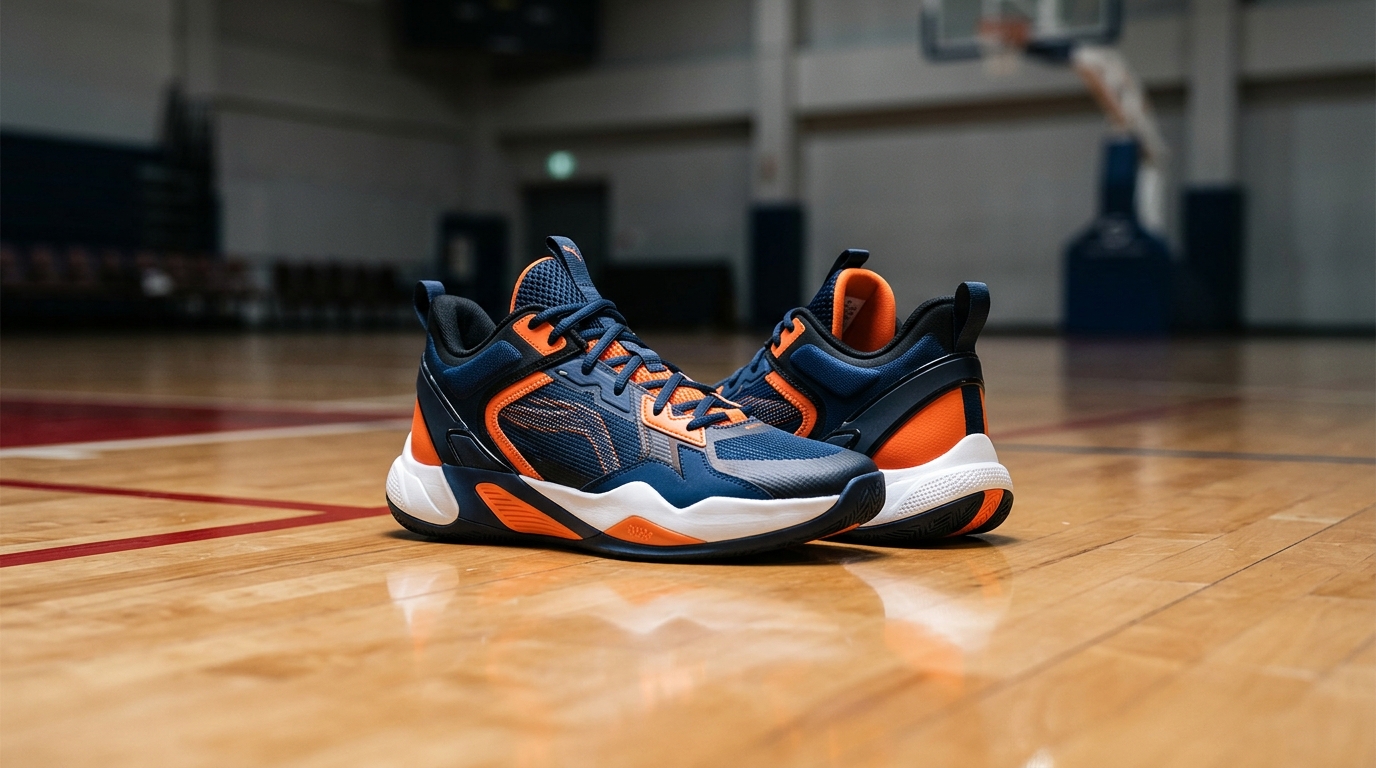
Your shoes matter more than most players realise. The Cleveland Clinic notes that well-cushioned, supportive shoes absorb some of the landing force that would otherwise go straight into your feet. Basketball shoes are built for the sideways movements and hard landings of the game — running shoes are made mainly for forward motion and don’t protect you the same way.
Replace your court shoes when the cushioning feels flat or the tread is worn down — worn shoes pass more impact to your feet and give you less grip. If you play regularly, that might be every few months. Some players also benefit from an over-the-counter insole for extra arch support, and thick, moisture-wicking socks reduce friction and help prevent blisters.
Your Recovery Routine
Here’s a practical routine for getting back on the court:
- Rest days: Take a few days off basketball when pain first appears, and avoid running, jumping, and long periods standing on hard floors.
- Daily stretch: Stretch your calves and the bottom of your foot morning and evening. A calf stretch against a wall, held for 30 seconds per leg, can ease tightness from playing.
- Ice after playing: After playing, ice the sore area for 15 minutes, even if it doesn’t hurt yet.
- Strengthen your ankles: Once the pain has eased, build ankle strength by balancing on one foot, doing slow calf raises, and writing the alphabet with your toes. Strong ankles are the best protection against the next sprain.
- Return slowly: When you go back, start with shooting drills and light practice rather than a full game, and build up over a week or two.
FAQs
Is foot pain after basketball normal?
Some mild soreness after a hard game is normal, especially if you haven’t played in a while. But sharp pain, pain in one specific spot, or swelling that doesn’t fade within a day or two isn’t normal and deserves attention.
How long does foot pain from basketball take to heal?
Mild overuse soreness often eases within a few days of rest. Plantar fascia irritation can take a few weeks of rest and stretching. A sprained ankle usually takes two to six weeks, and stress fractures take much longer.
Should I keep playing if my feet hurt?
You can usually stay active with low-impact exercise like swimming. Avoid basketball, running, and jumping until the pain has settled — playing through it usually makes the recovery longer, not shorter.
What shoes are best for basketball foot pain?
Court-specific basketball shoes with good heel cushioning, arch support, and ankle support. Replace them when the cushioning wears out, since worn shoes pass more impact to your feet and give you less grip.
When should I see a doctor about foot pain from basketball?
See a doctor promptly if the pain is sharp or severe, if you can’t bear weight, if swelling doesn’t improve, if your ankle feels unstable, or if the pain keeps returning every time you play.
Sources
- American Podiatric Medical Association — sports foot injury guidance
- Mayo Clinic — plantar fasciitis, ankle sprains, stress fractures
- Cleveland Clinic — foot pain and athletic footwear
This article is for general information only and is not medical advice. Talk to your doctor or a podiatrist about your own feet.