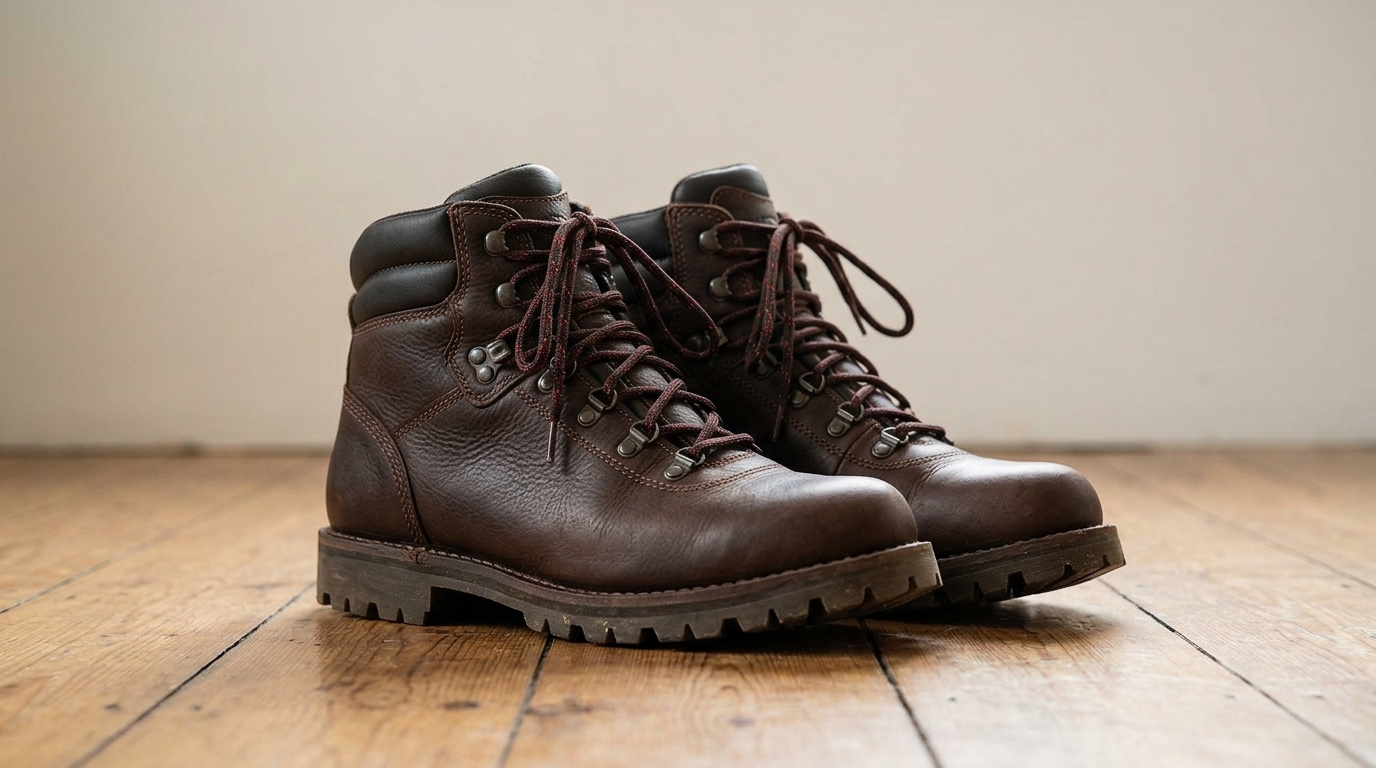
Quick Answer: In short, foot pain from hiking boots usually comes from the boots themselves, not the trail — stiff soles, a tight toe box, or boots that haven’t been broken in can squeeze your feet and overload your arches for hours. The ache is usually mild and fades with rest, better lacing, and a proper break-in. If the pain is sharp, lasts more than a couple of weeks, or comes with swelling, get it checked.
See a doctor promptly if you notice:
- Sharp or severe pain in the heel, arch, or one spot on a bone
- Pain that makes walking or bearing weight difficult
- Swelling, redness, or warmth that doesn’t settle in a day or two
- Numbness, tingling, or burning in your foot or toes
- Pain that keeps coming back on every hike
Why Hiking Boots Can Hurt Your Feet
Hiking boots are supposed to protect your feet. So why do they leave your arches aching and your heels raw? A boot is a stiff, heavy piece of equipment, and if it doesn’t fit properly, it fights you with every step.
Most of the trouble comes from the boot’s stiffness. A new boot barely bends, so your foot works much harder than it does in a trainer just to roll through a normal step. Add a heavy pack, rough ground, and several hours of walking, and the small muscles in your feet are exhausted long before the hike ends.
What It Is: The Most Common Causes
A poor fit is the number one cause. Boots that are too small crush your toes on downhills, while boots that are too big let your foot slide forward and bang into the toe box with every step. Both get worse the longer you walk. The American Podiatric Medical Association advises trying boots on later in the day, when your feet are slightly swollen, so the fit matches the trail.
Stiff soles are another frequent culprit. A rigid sole protects you from sharp rocks but stops your foot from flexing naturally. If the sole is too stiff for your stride, your arch and the ball of your foot take the strain — and by the end of the day, they ache.
Not breaking boots in is a classic mistake. Taking brand-new boots on a long hike invites blisters, sore heels, and aching arches. Leather and stiff synthetic boots need time to mould to your feet, and that doesn’t happen in a single day. If your feet also hurt on regular walks, our guide to foot pain from new shoes covers the same break-in problem in everyday footwear.
Then there’s the ankle support trade-off. High-cut boots steady your ankle on rough ground, but laced too tight or with a rubbing collar, they cause pain around the ankle and the top of the foot. Heavy boots add up too — every extra ounce counts over thousands of steps. For the trail itself — distance, terrain, and pace — see our guide to foot pain from hiking, which covers the activity side.
What Helps: Getting the Fit Right
The first fix is to check your fit properly. Leave about a thumb’s width between your longest toe and the front of the boot, and make sure your heel stays put — no slipping up and down. Try boots on with the socks you’ll hike in — thick hiking socks change the fit completely.
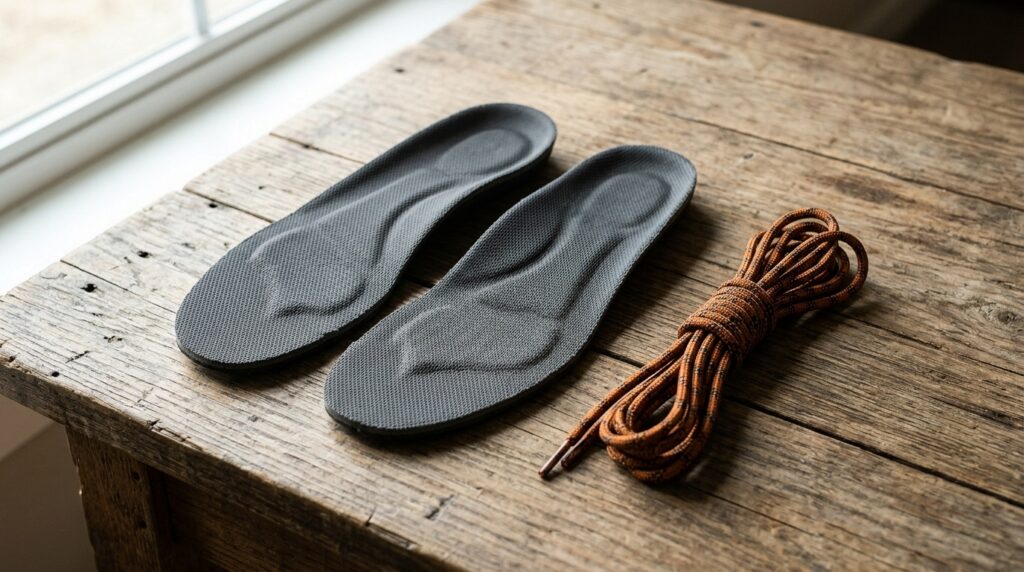
Lacing technique matters more than most people realise. If your heel slips, use a heel-lock lace (also called a runner’s loop) to hold it in place. If the top of your foot aches, skip a lace crossing over the sore spot to take the pressure off.
Consider an insole, too. The flat insole that comes with most boots offers almost no arch support, while a contoured insole matching your arch shape supports your foot through the whole step and takes a lot of strain off the plantar fascia. The Mayo Clinic lists poor footwear among the main causes of plantar fasciitis.
What Helps: Breaking Boots In and Hiking Smarter
Break boots in gradually. Wear them around the house for a few days, then on short walks, then on a half-day hike — only then take them on a full day out. Your feet and the boots need time to adjust.
Keep your feet dry on the trail. Wet socks cause blisters, and blisters change the way you walk, loading your feet unevenly. Carry spare socks and change them at lunch on a long hike.
Stretch your calves before and after a hike. Tight calves pull on the heel and the plantar fascia, and the Cleveland Clinic lists calf tightness among the most common reasons heel pain flares during walking and hiking. A 30-second wall stretch per leg is a simple habit that pays off.
Your Daily Routine for Happier Feet on the Trail
Here’s a routine to keep your feet comfortable in your boots:
- Wear new boots around the house, then on short walks, then on a half-day hike before any full day out.
- Leave a thumb’s width at the toes and lock your heel in place with a heel-lock lace — and always check the fit wearing your hiking socks.
- Swap the flat factory insole for a contoured one that matches your arch shape.
- Carry spare socks, change them at lunch on long hikes, and air your boots out overnight.
- Roll the bottom of each foot over a tennis ball for a few minutes after a hike, and rest a day if the ache is still there.
FAQs
Is foot pain from hiking boots normal?
Mild soreness in the arches or heels, especially in new boots or on a longer hike than usual, is common and usually fades as the boots break in and your feet get stronger. Sharp or persistent pain should be checked.
Why do my heels hurt in hiking boots?
Heel pain usually means the boot is too stiff, the heel is slipping, or the plantar fascia is overloaded. A heel-lock lace, a supportive insole, and a proper break-in usually help.
How long does it take to break in hiking boots?
Most boots need one to three weeks of wear — a few days around the house, then short walks, then half-day hikes. Leather takes longer. Never take brand-new boots on a full-day hike.
Should I wear hiking boots or trail shoes?
Boots suit rough, rocky terrain and heavy packs, where ankle support matters. For gentler trails and lighter loads, trail shoes are lighter and more flexible. Choose for the hike you’re actually doing.
When should I see a doctor about foot pain from hiking boots?
See a doctor promptly if the pain is sharp or severe, if swelling doesn’t settle, if you have numbness or tingling, or if the pain keeps coming back on every hike despite a good fit and a proper break-in.
Sources
- Mayo Clinic — plantar fasciitis causes and symptoms
- Cleveland Clinic — heel pain and calf tightness information
- American Podiatric Medical Association — hiking boot fit and foot care guidance
This article is for general information only and is not medical advice. Talk to your doctor or a podiatrist about your own feet.