Quick Answer: In short, foot pain from gardening usually comes from standing and kneeling on hard ground for hours in shoes that offer almost no support — garden clogs and old trainers let your arches collapse. The ache is usually mild and fades with rest, better footwear, and a few small changes. If the pain is sharp, lasts more than a couple of weeks, or comes with swelling, get it checked by a doctor or podiatrist.
See a doctor promptly if you notice:
- Sharp or severe pain in the heel, arch, or a single spot on a bone
- Pain that makes walking or putting weight on your foot difficult
- Swelling, redness, or warmth that doesn’t settle within a day or two
- Numbness, tingling, or a burning feeling in your foot or toes
- Pain that keeps coming back after every gardening session and isn’t improving
Why Gardening Can Hurt Your Feet
Gardening looks gentle — a bit of digging, some weeding, watering the tomatoes. But your feet tell a different story. You’re on them for hours on hard, uneven ground, bending, squatting, and kneeling in positions your feet weren’t designed to hold for long.
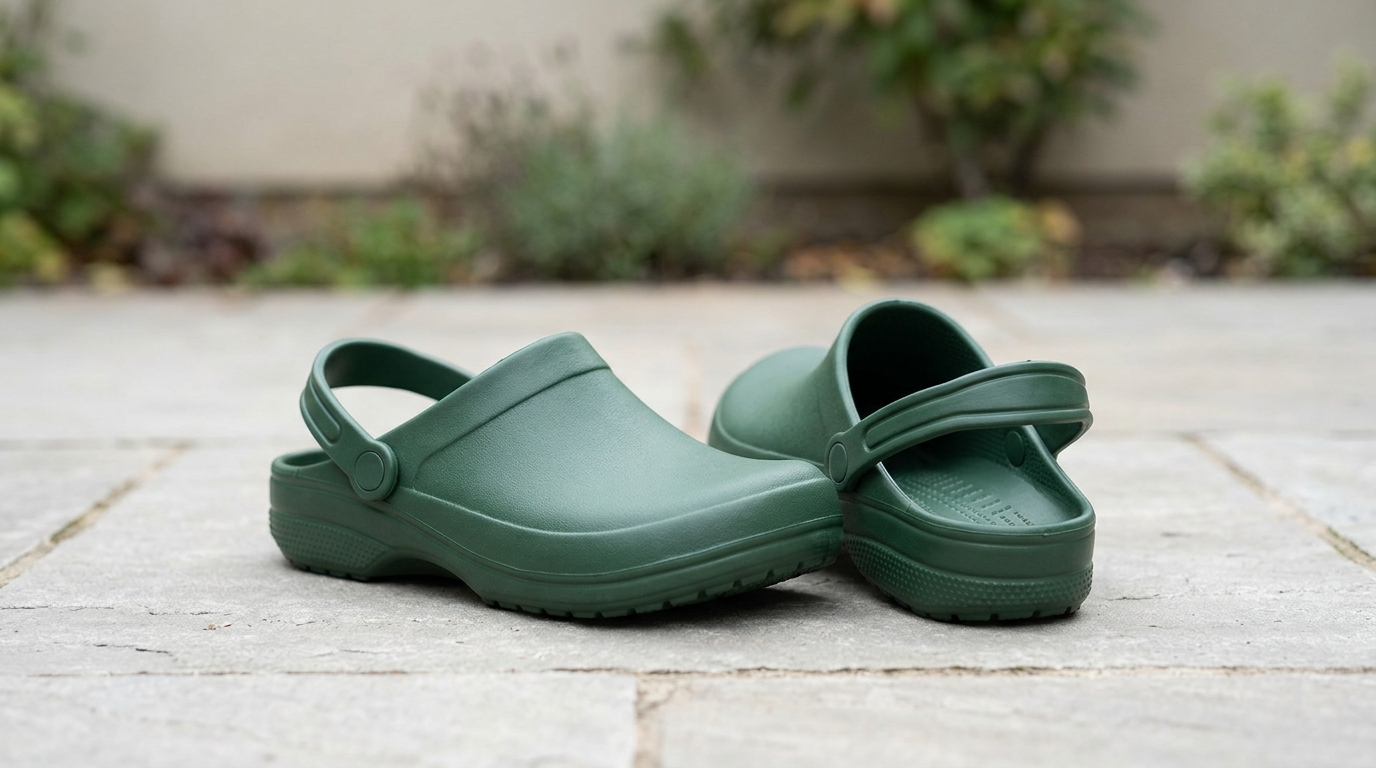
The real problem is that most of us garden in the worst possible shoes — slip-on clogs, worn-out trainers, or old sandals with flat soles and almost no arch support. After an hour or two, your arches ache, your heels throb, and by the time you come inside, every step hurts. It’s the same ache you’d feel after standing all day at work — our guide to foot pain from a standing desk covers it in a different setting.
What It Is: The Most Common Causes
Plantar fascia strain is the most common culprit. Standing on hard soil or concrete paths loads the band of tissue along the bottom of your foot for hours, and a tight or irritated fascia aches — often worst in the heel or arch the morning after a long session. The Mayo Clinic lists overuse and prolonged standing among the main causes of plantar fasciitis.
Hours kneeling on a hard path compress the tops of your feet and ankles, leaving the joints stiff and sore when you stand up again. Squatting to reach low beds folds your ankles and toes sharply and puts your full weight through the balls of your feet.
Then there’s the ground itself. Gardens are rarely flat. You’re stepping on stones, tree roots, edging, and soft soil that gives way under your heel. Every uneven step forces the small muscles in your feet to work harder to keep you balanced, and by evening they’re exhausted.
Finally, there’s simply doing too much in one go. A whole Saturday digging over beds after a quiet winter is a big jump in activity, and your feet haven’t had time to adapt. Foot pain from gardening is commonest at the start of the season, when enthusiasm runs ahead of fitness.
What Helps: Better Footwear for the Garden
The single biggest fix is your shoes. Swap the flat clogs for a supportive garden shoe or a sturdy trainer with a proper arch and a cushioned sole — something that holds your foot steady and absorbs the impact of standing on hard ground.
If you love your clogs, add a supportive insole — a contoured insole with real arch support turns a flat clog into a much kinder shoe. Feet swell in warm weather, so a shoe that’s snug in the morning can feel tight by midday.
Waterproof matters too. Wet feet in damp shoes get cold, stiff, and sore faster, so wear shoes that keep the moisture out when you’re watering or working after rain. Our guide to foot pain from work boots has useful advice on supportive footwear for long hours outdoors — much of it applies in the garden too.
What Helps: Working Smarter in the Garden
Use a kneeling pad or a low garden stool. A thick foam kneeler takes the pressure off the tops of your feet and your knees, and a stool lets you sit instead of squatting for weeding and planting.
Take a break every 30 minutes. Stand up, walk around, stretch your calves, and give your feet a rest. It’s tempting to push through “just one more bed,” but a five-minute break now saves an aching evening later.
Rotate your tasks. Instead of three hours of digging, alternate heavy jobs with lighter ones — prune, then water, then weed. Varying the movement keeps any one part of your foot from being overloaded.
Stretch your calves before and after gardening. Tight calves pull on the heel and the plantar fascia, and the Cleveland Clinic lists calf tightness among the most common reasons heel pain flares during activity. A 30-second wall stretch per leg is a simple habit that pays off.
Your Daily Routine for Happier Feet in the Garden
Here’s a routine to keep your feet comfortable while you garden:
- Put on garden shoes with a real arch and cushioned sole — never garden in flat clogs or flip-flops.
- Before you start, spend two minutes rolling your ankles, spreading your toes wide, and stretching your calves against a wall.
- Keep one by the beds and use it every time you work low — your feet and knees will thank you.
- Stand up, walk around the garden, and stretch before starting the next job.
- Roll the bottom of each foot over a tennis ball for a few minutes after gardening, and rest a day if the ache is still there.
FAQs
Is foot pain from gardening normal?
Mild soreness in the arches or heels after a long session, especially at the start of the season, is common and usually fades as your feet get used to the work. Sharp or persistent pain should be checked.
Why do my heels hurt after gardening?
Standing for hours on hard ground loads the heel and the plantar fascia, and flat garden shoes make it worse. Better footwear, regular breaks, and calf stretching usually help a lot.
Are garden clogs bad for your feet?
Most garden clogs have flat soles and almost no arch support, which lets your arches collapse over a long session. A contoured insole helps, but a supportive shoe is the better long-term fix.
Can gardening cause plantar fasciitis?
Gardening can irritate the plantar fascia, especially if it’s already tight or you jump into long sessions too quickly. Rest, supportive shoes, and calf stretching usually help — persistent heel pain should be checked.
When should I see a doctor about foot pain from gardening?
See a doctor promptly if the pain is sharp or severe, if swelling doesn’t settle, if you have numbness or tingling, or if the pain keeps coming back after every session despite rest and better shoes.
Sources
- Mayo Clinic — plantar fasciitis causes and symptoms
- Cleveland Clinic — heel pain and calf tightness information
- American Podiatric Medical Association — foot care and supportive footwear guidance
This article is for general information only and is not medical advice. Talk to your doctor or a podiatrist about your own feet.