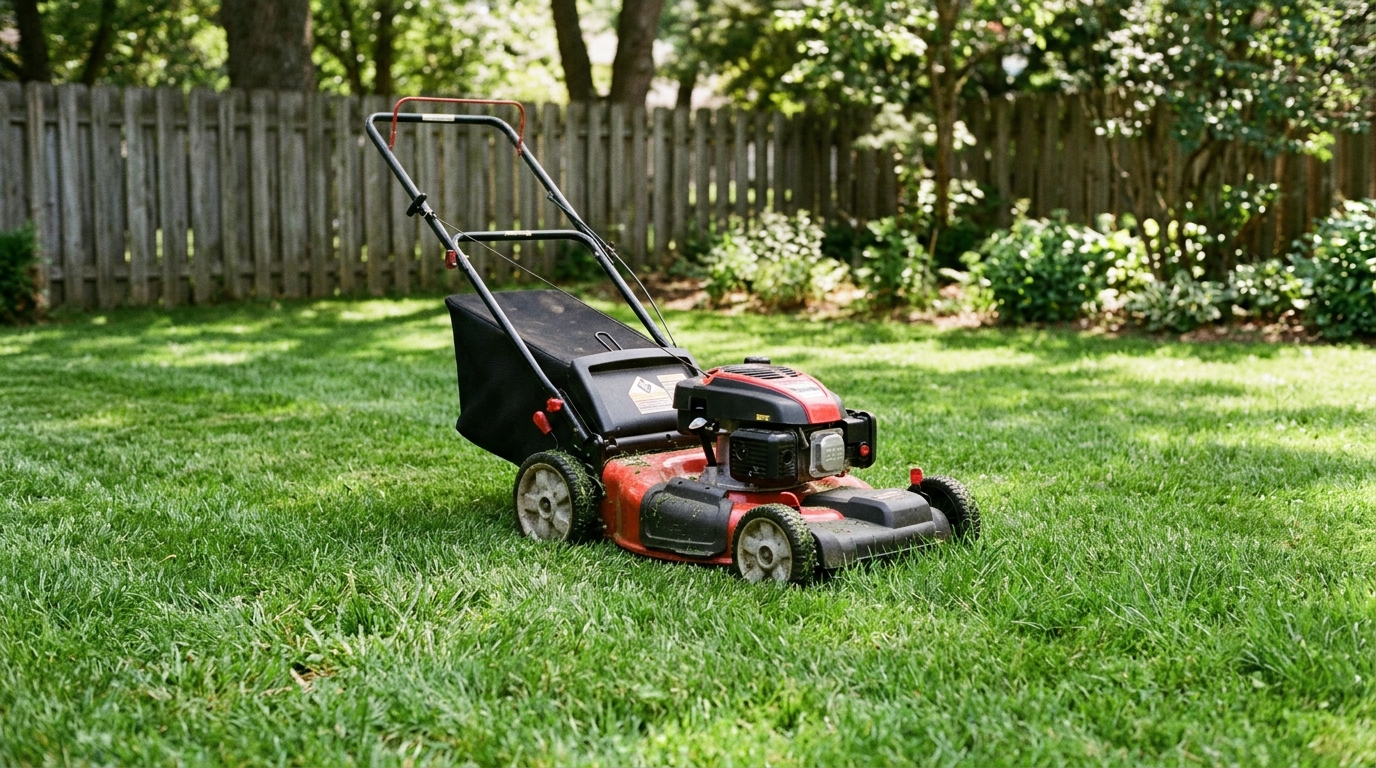
Quick Answer: In short, foot pain from mowing the lawn usually comes from pushing a heavy mower over uneven ground for an hour or more — every bump and slope sends a jolt through your heels and arches, and stiff work boots add to the strain. It usually eases with rest, better footwear, and stretching. If it stays sharp, lasts more than a couple of weeks, or comes with swelling, get it checked by a doctor or podiatrist.
See a doctor promptly if you notice:
- Sharp or severe pain in the heel, arch, or a single spot on a bone
- Pain that makes walking or putting weight on your foot difficult
- Swelling, redness, or warmth that doesn’t settle within a day or two
- Numbness, tingling, or a burning feeling in your foot or toes
- Pain that keeps coming back after every mow despite rest
Why Mowing the Lawn Can Hurt Your Feet
Mowing looks like light work — you’re just walking behind a machine, after all. But think about what your feet actually do. You push a heavy mower across bumpy, sloped ground for an hour or more, turning at every edge, stepping over roots and ruts, and bracing against the machine’s pull. Every step lands on uneven grass with almost no cushioning between your soles and the ground.
Your footwear makes it worse. Most people mow in old work boots or worn-out sneakers — stiff, flat shoes with little arch support and no shock absorption. And if the grass is wet, your feet slide inside the boot with every push, rubbing blisters into your heels and toes. Our guide to foot pain from gardening covers the same all-day yard soreness — mowing adds the weight of the machine and the constant pushing on top.
What It Is: The Most Common Causes
Uneven ground is the biggest culprit. Lawns are full of dips, roots, molehills and slopes, and your feet never land flat. Every step tilts your ankle one way or the other, and your arches work overtime to keep you stable while you push the mower forward.
Pushing itself loads your feet. A self-propelled mower pulls forward, so you lean into the handle and drive off the balls of your feet. That constant pressure strains the front of your foot and your arches, and on a slope the downhill foot takes even more of the load.
Heel pain is another frequent complaint. The stop-start rhythm of mowing — push, stop, turn, push again — sends a jolt through your heels with every restart, and hard dry ground offers no give. If your calves are tight, your heels take even more of the load, and that evening ache is the result.
Blisters and bruised toenails hurt too. Stiff boots rub hot spots into your heels, and a heavy steel toe jams your big toe forward every time you brace against a slope. Wet grass makes it worse — damp socks soften the skin, so blisters form faster. Our guide to foot pain from walking too much explains how miles of repetitive steps build up into lasting soreness — a big mow is the same pattern, with a machine to push.
What Helps: Footwear That Works With Your Feet
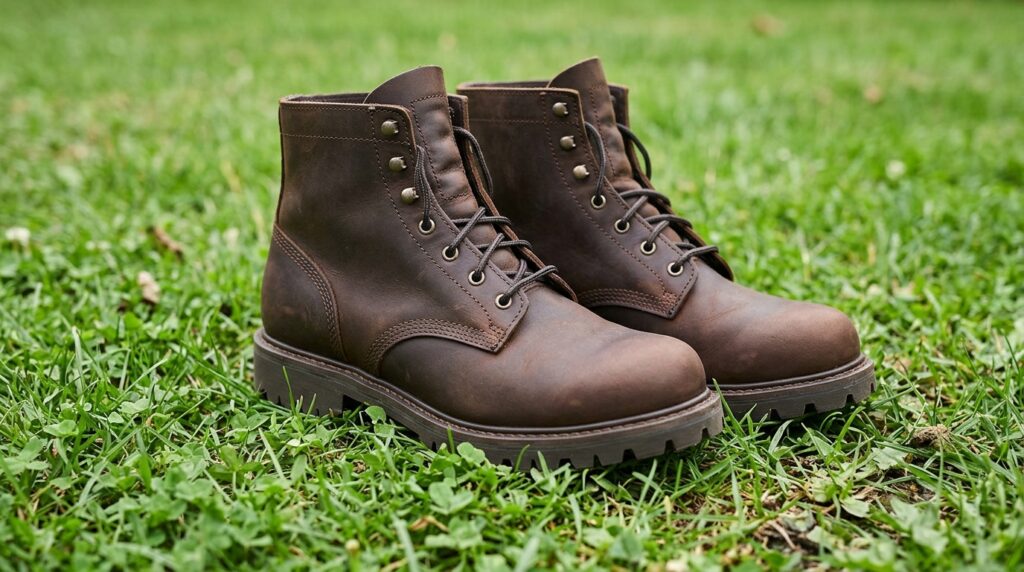
The first fix is your shoes. Mow in supportive athletic shoes or light work boots with a cushioned sole and real arch support — not flat, worn-out sneakers or stiff steel-toe boots. Your shoes should feel snug around the heel and midfoot but leave a thumb’s width of space in front of your longest toe. The Cleveland Clinic notes that arch support can ease the strain on the plantar fascia during long periods of standing and walking.
Wear moisture-wicking socks and change them if they get soaked. Dry feet blister far less than damp ones, and a fresh pair halfway through a big mow can save your heels.
Add supportive insoles if your arches ache after every mow. They spread the load across your whole foot instead of letting the arch take it all, and they add the cushioning that stiff boots lack.
What Helps: Recovery After a Mow
After a sore mow, get out of your boots and into something soft and supportive as soon as you can. Ice the sore spot for ten to fifteen minutes if it’s swollen or tender, and roll the bottom of your foot over a tennis ball for a few minutes to loosen tight tissue.
Rest your feet if the ache is still there the next morning — mowing through sore feet changes how you walk and push, and that compensation turns a small ache into a real injury. If your lawn is big, split the job across two days instead of powering through it in one long session.
Your Daily Routine for Happier Feet on Mow Days
Here’s a routine to keep your feet comfortable through mowing season:
- Stretch your calves and arches daily: A wall calf stretch and a few ankle circles each morning take two minutes and keep your heels and arches loose.
- Strengthen your feet: Toe spreads, towel scrunches, and single-leg balance build the small muscles that support your arches.
- Check your shoes before you mow: Cushioned soles, arch support, and dry socks.
- Take breaks on big lawns: Sit down, stretch, and change your socks halfway through.
- Recover after every mow: Roll sore feet over a tennis ball, ice anything swollen, and swap into supportive shoes.
FAQs
Is foot pain from mowing the lawn normal?
Mild soreness in the arches or heels after a long mow is common and usually fades with rest and better footwear. Sharp or persistent pain is not normal and should be checked.
Why do my arches hurt after mowing?
Pushing a mower over uneven ground keeps your arches working to stabilise every step, and stiff boots with little support make the strain worse. Slopes add even more load to the downhill foot.
Can mowing the lawn cause plantar fasciitis?
Mowing can irritate the plantar fascia, especially with tight calves and unsupportive shoes. Rest, calf stretching, and supportive insoles usually help — persistent heel pain should be checked by a doctor.
What shoes are best for mowing the lawn?
Supportive athletic shoes or light work boots with a cushioned sole and real arch support work best. Avoid flat, worn-out sneakers and heavy steel-toe boots, and always wear dry, moisture-wicking socks.
When should I see a doctor about foot pain from mowing the lawn?
See a doctor promptly if the pain is sharp or severe, if swelling doesn’t settle, if you can’t put weight on your foot, or if it keeps coming back despite rest and better shoes.
Sources
- Mayo Clinic — plantar fasciitis causes and symptoms
- Cleveland Clinic — arch pain and calf tightness information
- American Podiatric Medical Association — foot strengthening exercises
This article is for general information only and is not medical advice. Talk to your doctor or a podiatrist about your own feet.