Quick Answer: Diabetic foot care comes down to a daily routine: inspect your feet every day, wash in lukewarm water, dry thoroughly (especially between the toes), moisturize everywhere except between the toes, never walk barefoot, and wear well-fitting shoes and seamless socks. Because diabetes can reduce feeling in your feet, small injuries can go unnoticed and become ulcers — so daily checks and a yearly professional foot exam are the two habits that matter most.
See a doctor immediately if you notice: a cut, blister, or sore that doesn’t start healing within a day; redness, warmth, swelling, or pus; a bad smell or drainage; black or darkening skin; red streaks spreading from a wound; or fever. These can be signs of infection, which needs urgent care in diabetes. Never try to treat corns, calluses, or ingrown nails yourself with acids, blades, or medicated plasters.
Why diabetes puts feet at risk
Two diabetes complications combine to threaten feet. Peripheral neuropathy (nerve damage) reduces feeling, so you may not notice a stone in your shoe, a blister, or a burn. Peripheral artery disease (poor circulation) slows healing, so a small wound that would close in days can linger for weeks and become infected. Together, they explain why foot ulcers are one of the most serious diabetes complications — and why most are preventable with daily care.
The good news: the prevention routine is simple, takes about five minutes a day, and is the same advice podiatrists and diabetes guidelines repeat worldwide.
The daily diabetic foot care routine
- Inspect every day. Check the tops, soles, heels, and between the toes for cuts, blisters, redness, swelling, or color changes. Use a mirror for the soles, or ask someone to help. Daily checks catch small problems before they become ulcers.
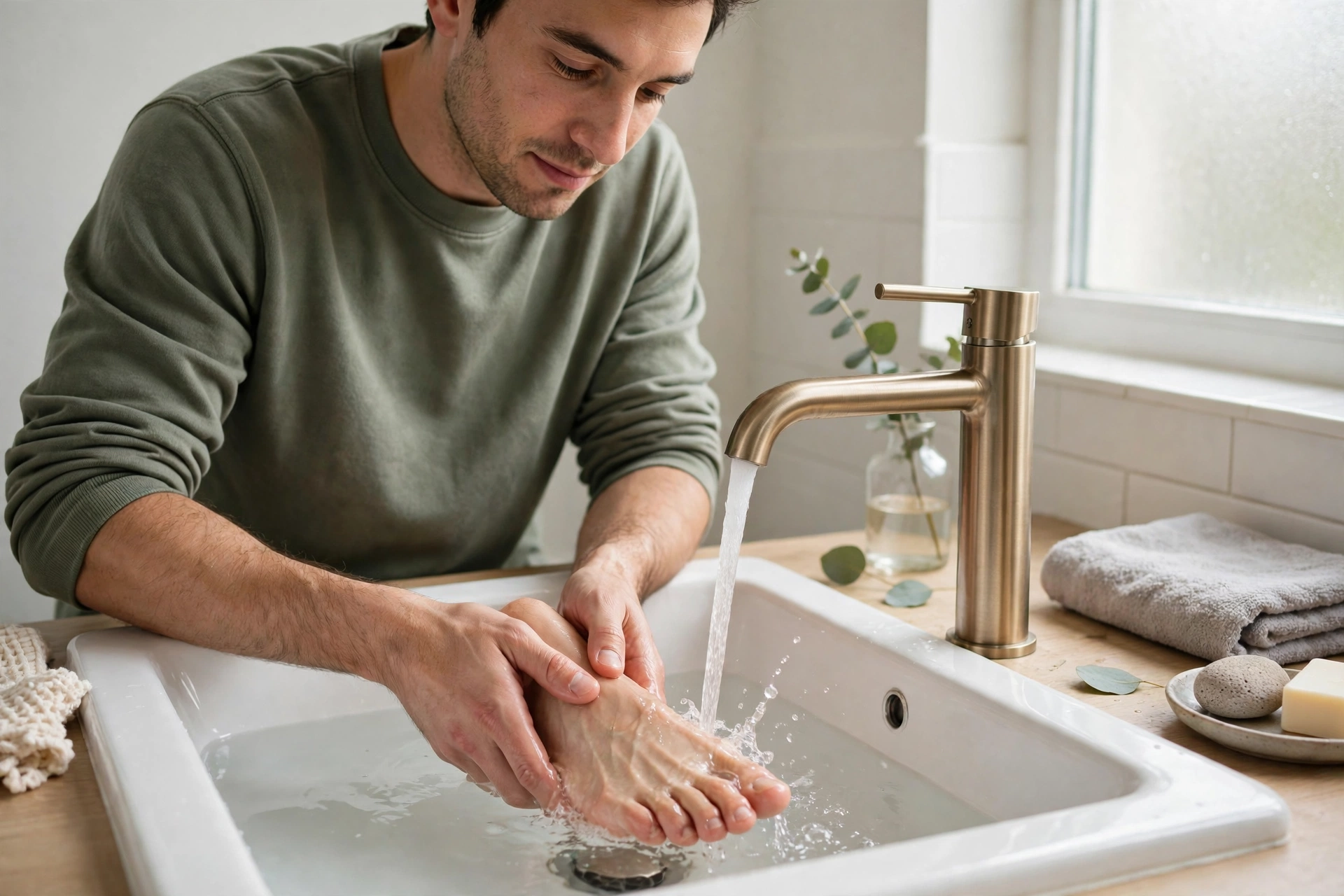
- Wash in lukewarm water. Wash daily with mild soap and lukewarm — never hot — water. Test the temperature with your elbow or a thermometer, since reduced feeling can hide a burn. Pat dry thoroughly, especially between the toes.
- Moisturize smartly. Apply lotion to the tops and soles to prevent cracking, but skip between the toes — moisture trapped there invites fungal infection. Urea-based creams are often recommended for dry diabetic skin.
- Trim nails straight across. Cut after bathing when nails are soft, and file sharp edges smooth. If you have neuropathy, poor vision, or thick nails, let a podiatrist handle nail care.
- Never go barefoot. Not even indoors. Reduced feeling means you may not notice stepping on something sharp or hot. Wear shoes or protective slippers at all times.
- Check inside your shoes daily. Shake them out and feel for pebbles, rough seams, or foreign objects before putting them on.
Footwear and socks that protect diabetic feet
- Well-fitting shoes with a wide toe box, soft uppers, cushioned insoles, and seamless interiors. Break new shoes in gradually — an hour or two at first — and check your feet afterwards.
- Seamless, moisture-wicking socks, preferably light-colored so bleeding or drainage shows up early.
- Therapeutic (diabetic) shoes for high-risk feet — neuropathy with callus, deformity, poor circulation, or a previous ulcer or amputation. Medicare Part B and many private plans cover one pair plus inserts per year for qualifying patients; ask your doctor about certification.
- Protect feet from temperature extremes. No hot soaks, heating pads, or hot water bottles on feet with reduced feeling — burns can go unnoticed.
Blood sugar, smoking, and professional care
Foot care isn’t only about feet. Keeping blood sugar in your target range is the main way to slow nerve and circulation damage. Smoking restricts blood flow to the feet and should be avoided. And get a comprehensive foot exam at least once a year — more often if you have neuropathy, poor circulation, deformity, or a previous ulcer. The exam usually includes the monofilament test, a thin nylon strand pressed against your sole to check whether protective sensation is intact.
What NOT to do
- Don’t soak feet routinely — soaking dries skin and raises burn risk.
- Don’t use over-the-counter corn/callus acids, medicated plasters, or blades.
- Don’t use pumice stones, electric removers, or metal rasps unless your podiatrist approves — and only gently, on intact skin.
- Don’t ignore a wound because it doesn’t hurt. In neuropathy, lack of pain is the danger, not a reassurance.
Frequently asked questions
How often should a diabetic check their feet?
Every day. Tops, soles, heels, and between the toes, using a mirror or a helper if needed.
Can diabetics use a pumice stone?
Only with podiatrist approval, and only gentle tools on intact skin with light pressure. People with neuropathy or poor circulation are often told to leave hard skin to a professional.
Should people with diabetes soak their feet?
Most podiatrists advise against routine soaking. If your provider allows it, keep water lukewarm, test with a thermometer, and limit it to a few minutes.
Why must diabetics never walk barefoot?
Reduced feeling means you may not notice stepping on something sharp or hot. Even a small puncture can become infected and heal slowly.
Does Medicare cover diabetic shoes?
Medicare Part B covers one pair of therapeutic shoes plus inserts per year for qualifying high-risk patients with diabetes — your doctor must certify the need.
Sources
- UCSF Department of Surgery — Diabetes and Prevention of Foot Problems
- Union Foot Care — The 8 Principles of Foot Ulcer Prevention for Diabetics
- American Diabetes Association guidance on therapeutic footwear for high-risk feet, via published prevention summaries
This article is for information only and is not medical advice. See our Medical Disclaimer.