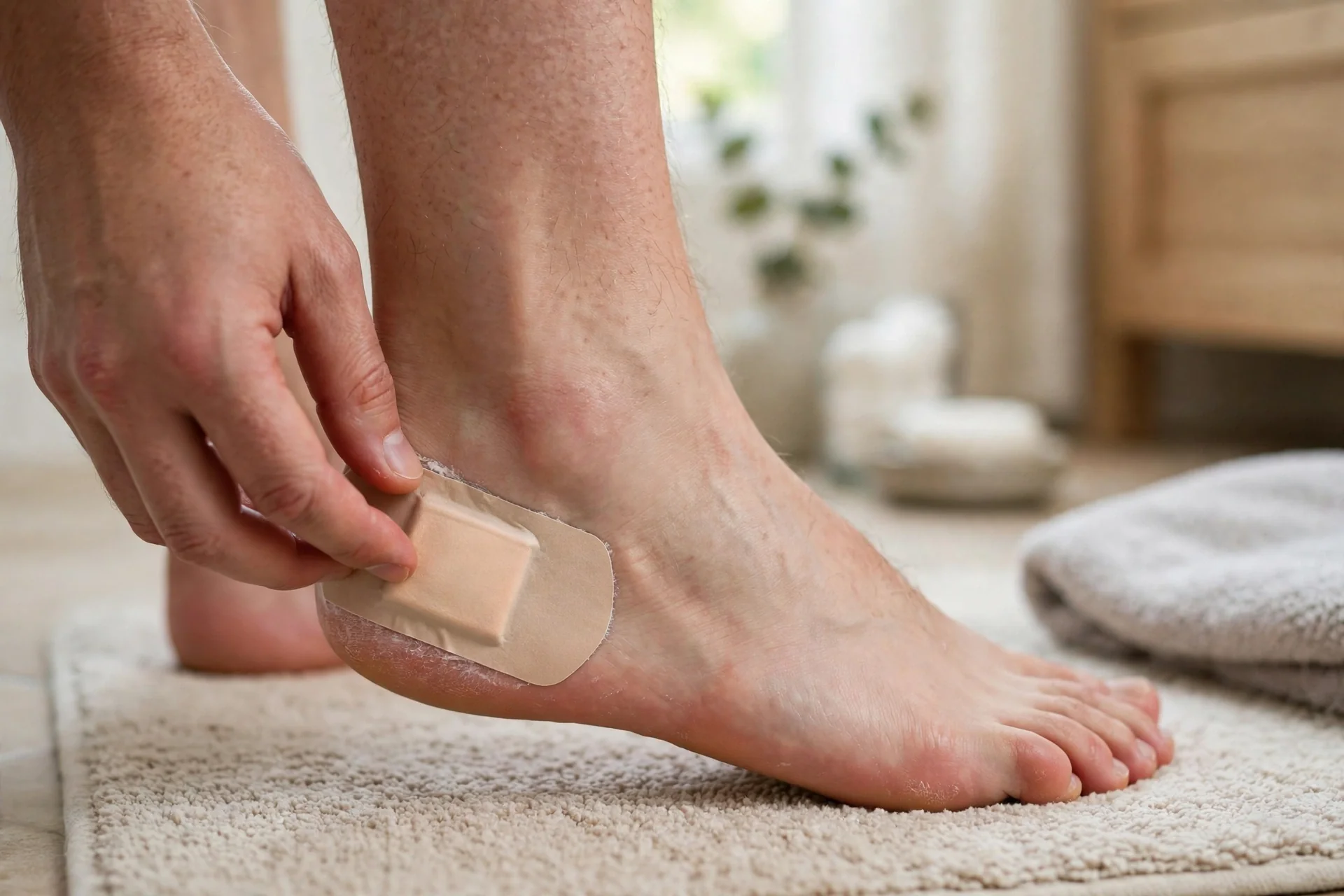
A blister forms when repeated rubbing separates the top two layers of skin and fluid fills the gap — a cushion your body builds to protect what is underneath. That is why the roof matters: it is a sterile cover. Popping it removes the protection and invites infection. The three keys to blisters are: know the cause (friction + heat + moisture), prevent them (fit, socks, hot-spot care), and protect them until healed.
When to see a doctor
See a clinician for a blister that is very large, very painful, or filled with blood or pus; for redness, warmth, swelling or streaking around it; for a blister that keeps returning in the same spot; or for any blister with diabetes, neuropathy or poor circulation — even small blisters can become dangerous there. A podiatrist can drain, clean and protect it safely and check whether footwear, orthotics or gait correction would prevent recurrence.
What causes foot blisters
- Friction: ill-fitting footwear, stiff new shoes, wrinkled socks, or a seam rubbing one spot.
- Heat and moisture: warm, damp feet blister faster — sweat softens skin and raises friction.
- Pressure points: foot deformities, calluses (blisters often form under a callus), and uneven lacing or tongues.
- Activity jumps: long walks, runs or hikes in unbroken-in shoes — the classic trigger.
Symptoms
- A raised, fluid-filled bubble on the foot, tender to touch and pressure
- A “hot spot” — warmth and soreness — before the blister fully forms
- Pain when walking or when shoes press the area
- If broken: raw skin, weeping, and risk of redness and infection
- If infected: increasing pain, warmth, swelling, pus or red streaks
What actually helps
- Leave intact blisters alone: cover with a bandage or hydrogel blister cushion and avoid shoes that rub the spot. Most clear in 3–7 days.
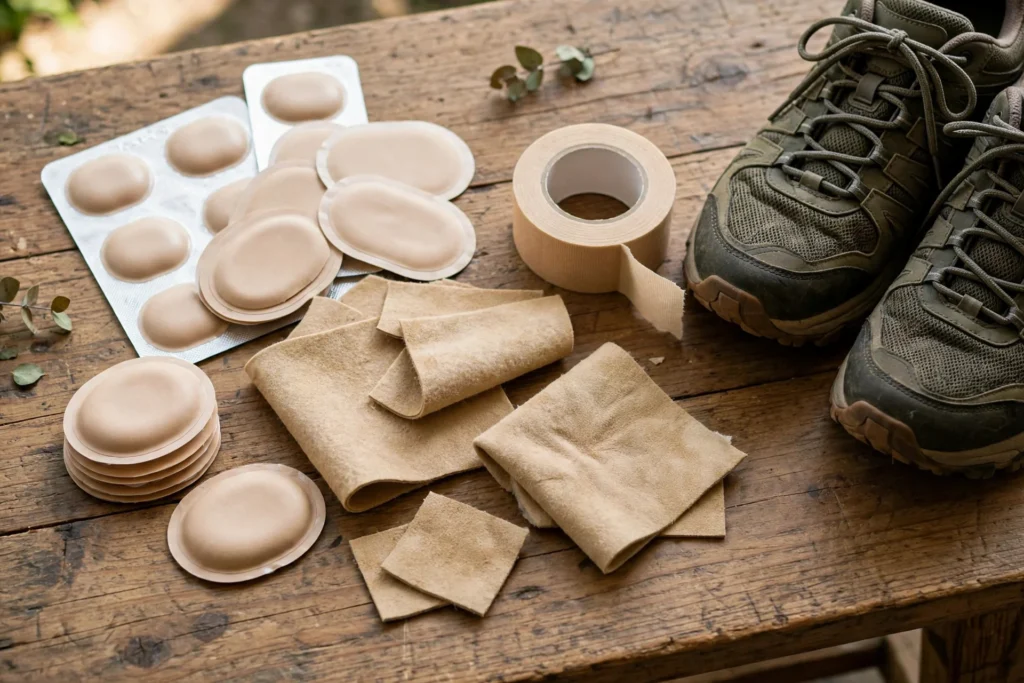
- Protect, don’t pop: cut a hole in foam or felt to make a doughnut around the blister, tape it in place, or use a soft gel dressing.
- If it breaks: wash with mild soap and water, keep the skin flap in place, apply antibiotic ointment, cover with a sterile non-stick dressing, and change it daily.
- Draining (only if necessary): for a large, painful blister in a bad spot — wash thoroughly, sterilize a needle, pierce one small hole at the edge, drain gently, keep the roof, ointment and cover. Most people should not do this themselves.
- Remove the friction source: fix the shoe fit, sock or lacing that caused it, or it will return in the same spot.
Prevention routine
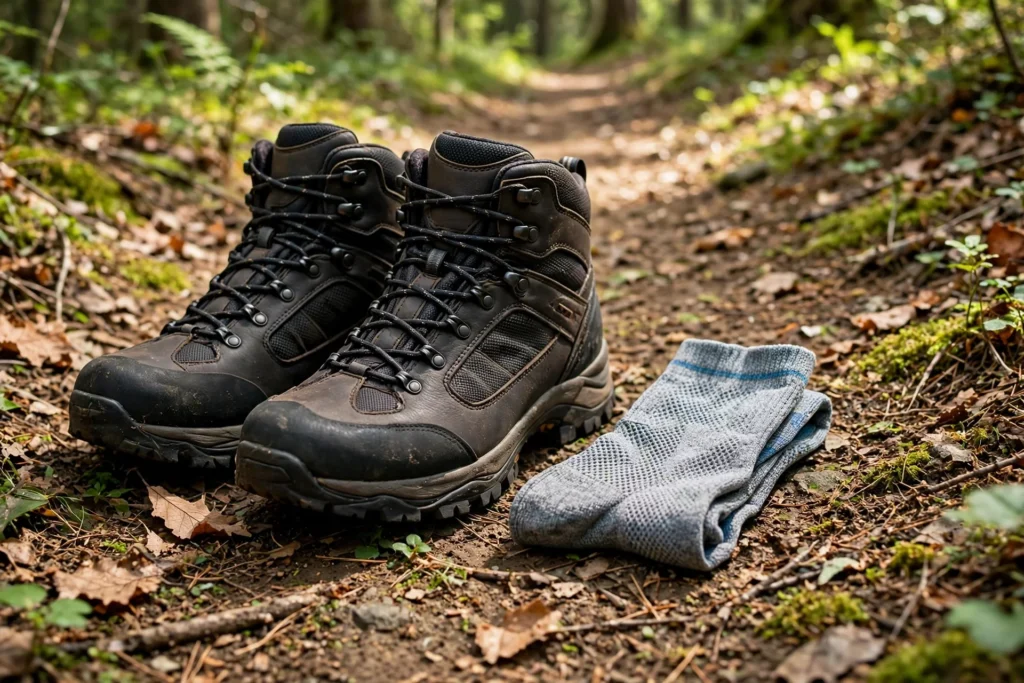
- Fit first: properly fitting shoes, broken in gradually — around the house and on short walks before long ones.
- Socks: moisture-wicking synthetics or wool, right size, changed daily; a thin liner sock under a hiking sock for long walks.
- Hot spots: stop at the first warmth or soreness — cover immediately with moleskin, tape or a blister patch.
- Lubrication: petroleum jelly or anti-friction balm on known trouble spots before activity.
- Keep feet dry: change damp socks, remove debris from shoes, and file calluses that blisters form under.
Frequently asked questions
Should I pop a foot blister?
Usually no. An intact blister heals fastest with its roof on. Drain only a large, painful one, sterilely, keeping the roof — and cover it afterwards.
How long do foot blisters take to heal?
Most clear in 3–7 days if friction stops. Broken blisters take slightly longer, especially if the roof is lost.
What is the best covering for a blister?
A hydrogel blister cushion or a doughnut of foam/felt around it, taped in place — protection without pressure directly on the blister.
Can I keep running or hiking with a blister?
With a protected, intact blister and the friction source fixed, often yes for short distances. Stop if pain worsens or infection signs appear.
Why do I keep getting blisters in the same spot?
Something keeps rubbing there — shoe fit, a seam, a callus, or gait. Fix that cause (fit, moleskin, orthotics assessment) or it will recur.
Sources
- Blisters — The Royal College of Podiatry
- How to Prevent & Treat Blisters — REI Expert Advice
- Blister Treatment and Prevention — Dr. Scholl’s
Footcarely is reader-supported. We don’t use affiliate links yet — when we do, this page will say so. This guide is general information, not medical advice. Infected or diabetic blisters deserve a clinician, not home draining.
Related: Athlete’s Foot · Foot Cramps · Foot Pain Map · Foot Problem Finder quiz