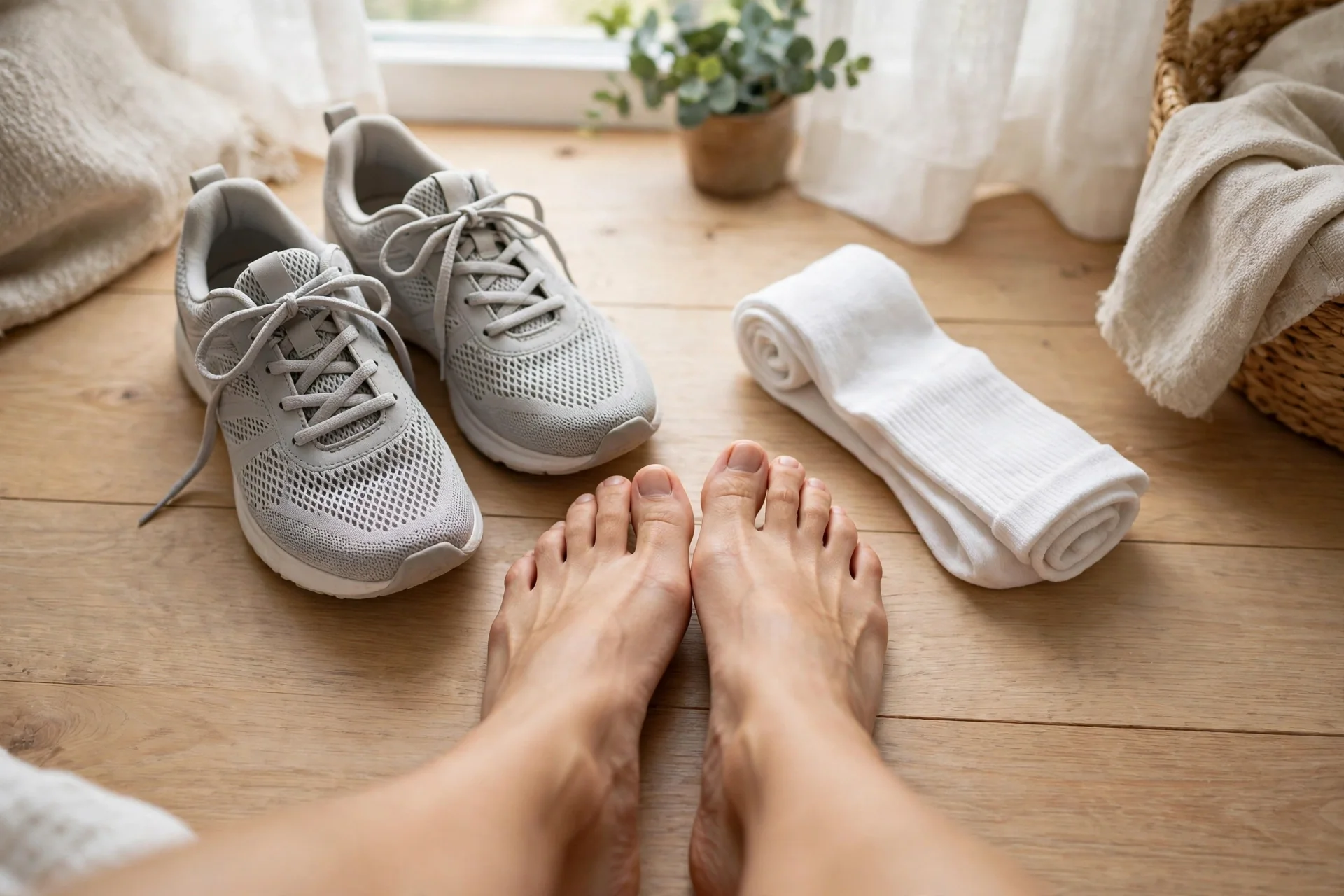
Each foot has around 250,000 sweat glands — more than anywhere else on the body. Trapped inside warm, closed shoes, that sweat becomes a feast for bacteria, mainly Staphylococcus and Brevibacterium, which release isovaleric acid (the cheese-like smell) and sulfur compounds. Fungal infection (athlete’s foot) adds its own odor. The fix is unglamorous but reliable: less moisture, fewer bacteria, drier shoes.
When to see a doctor
See a clinician if smell does not improve after a few weeks of proper self-care, if it is affecting your daily life, or if you notice pitting in the sole skin, sores, spreading redness, or signs of athlete’s foot that will not clear. A doctor can check for pitted keratolysis, fungal infection or hyperhidrosis and prescribe stronger antiperspirants or treatments.
What causes smelly feet
- Sweat + bacteria: the core mechanism — bacteria breaking down sweat and dead skin into volatile acids.
- Hyperhidrosis: excessive sweating, which can be triggered by heat, exercise, standing all day, being overweight, hormonal changes (puberty, menopause, pregnancy) or some medicines such as antidepressants.
- Occlusive footwear: synthetic shoes and socks that trap moisture and heat; wearing the same pair two days running.
- Fungal infection: athlete’s foot — scaling, itching and odor together.
- Poor hygiene habits: infrequent washing, not drying between toes, and never letting shoes dry out.
Symptoms
- Unpleasant odor noticeable when shoes and socks come off — in severe cases even with shoes on
- Damp, sweaty feet and socks by midday
- Sometimes itching, scaling (athlete’s foot) or small pits in the sole skin
- Odor that returns quickly even after washing, if shoes stay damp
What actually helps — the 4-step fix
- Step 1 — Wash and dry: wash daily with antibacterial soap, 30+ seconds between toes; dry thoroughly, including between toes (a cool hairdryer helps).
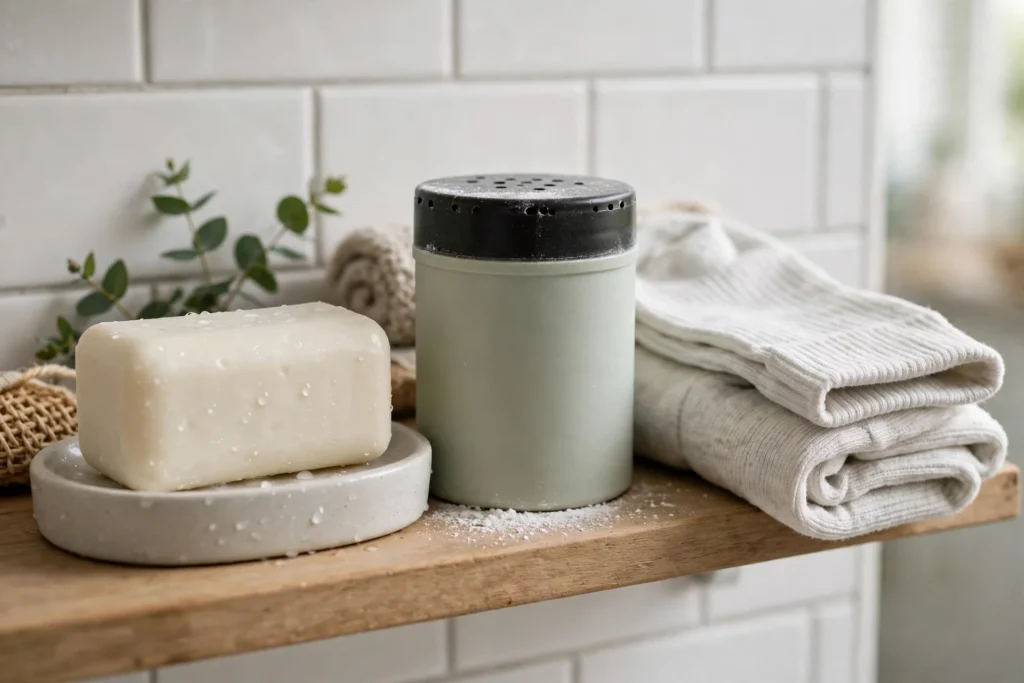
- Step 2 — Socks: moisture-wicking socks (merino wool or synthetic blends, not cotton), changed daily — twice on hot days.
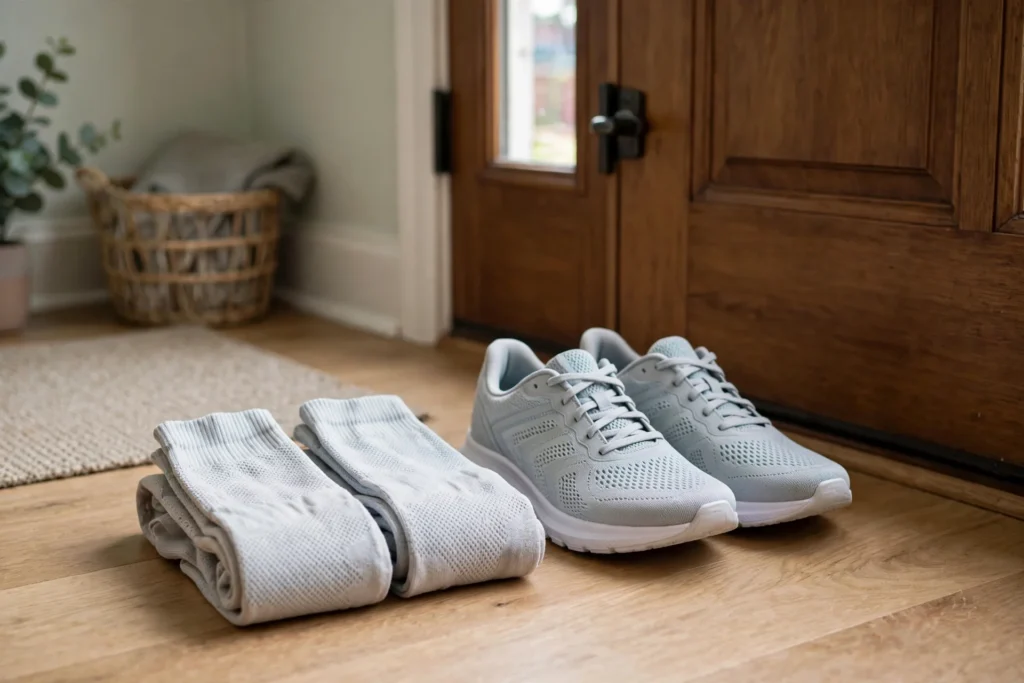
- Step 3 — Rotate shoes: alternate two pairs so each dries 24 hours; remove insoles to dry separately; cedar shoe trees or charcoal inserts help overnight.
- Step 4 — Antiperspirant at bedtime: a roll-on antiperspirant on the soles reduces sweat substantially; foot powder or antifungal powder during the day helps too.
- Extras: vinegar or black-tea soaks, benzoyl peroxide wash, and treating any athlete’s foot with antifungal cream or spray.
Daily routine for fresh feet
- Morning: wash with antibacterial soap, dry fully, fresh moisture-wicking socks, dry shoes.
- Through the day: change socks if feet get sweaty; avoid the same shoes two days in a row.
- Evening: air shoes out (insoles removed), antiperspirant on soles at bedtime if sweating is heavy.
- Weekly: file hard skin, keep toenails short and clean, wash insoles.
Frequently asked questions
Why do my feet smell even after washing?
Because the bacteria live in your shoes too. If shoes never dry out, clean feet go straight back into a bacterial home. Rotate shoes and dry them fully — washing alone is not enough.
Are smelly feet a sign of a medical problem?
Usually not — usually sweat plus bacteria. Persistent smell despite good care can mean athlete’s foot, pitted keratolysis or hyperhidrosis, all treatable.
Do cotton socks help or hurt?
Hurt, for this problem: cotton holds moisture against the skin. Moisture-wicking synthetics or merino wool keep feet drier.
Can I use regular antiperspirant on my feet?
Yes — a roll-on antiperspirant on the soles at bedtime is a standard, effective step. Stronger prescription antiperspirants exist if it is not enough.
How long until smelly feet improve?
Most cases clear noticeably within 2–3 weeks of the full routine — washing, drying, sock changes and shoe rotation together. One step alone rarely does it.
Sources
- Smelly Feet — NHS
- Bromodosis (Smelly Feet) — NHS 111 Wales
- Stinky Feet: Causes & Fixes — Michigan Foot Doctors
Footcarely is reader-supported. We don’t use affiliate links yet — when we do, this page will say so. This guide is general information, not medical advice. Smell that will not clear deserves a check for infection or heavy sweating.
Related: Athlete’s Foot · Foot Cramps · Foot Pain Map · Foot Problem Finder quiz