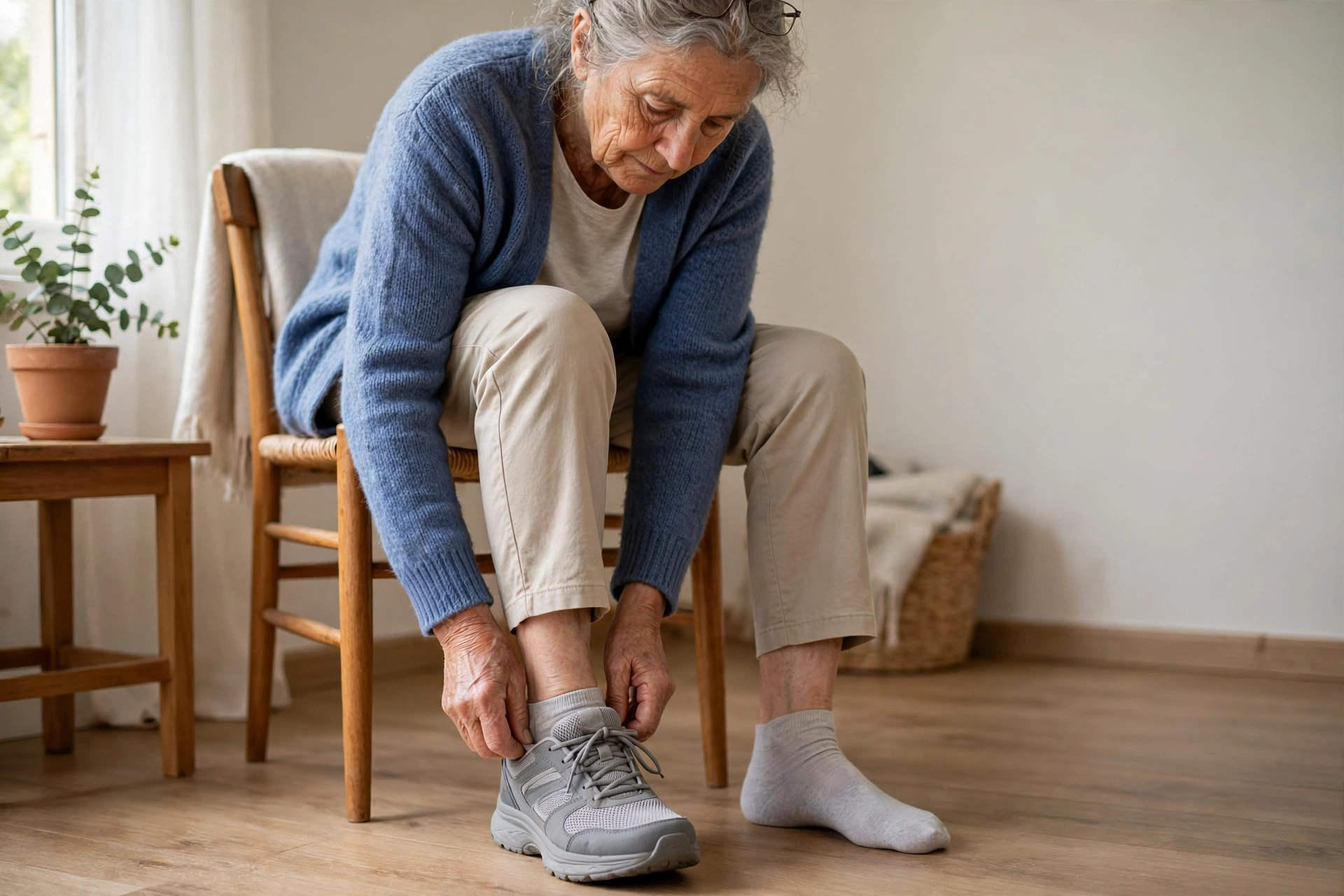
Quick Answer: If you have diabetes, your feet need five minutes of attention every single day. Look at them. Wash them in lukewarm water. Dry them properly, especially between the toes. Moisturize everywhere except between the toes. Never walk barefoot — not even to the bathroom at night. And get a professional to examine them at least once a year. That’s the whole routine, and it’s the difference between catching a small cut early and dealing with an ulcer later.
See a doctor right away if you notice: a cut, blister, or sore that hasn’t started healing within a day; redness, warmth, swelling, or pus; a bad smell or any drainage; skin turning black or dark; red streaks spreading from a wound; or a fever. With diabetes, these can turn serious fast — don’t wait to see if it gets better on its own. And never try to cut out corns or calluses yourself, or use acid treatments or medicated plasters on them.
Why diabetes is so rough on feet
Two things go wrong at once, and that’s what makes it dangerous. First, nerve damage dulls the feeling in your feet. You step on something sharp, or your shoe rubs a blister raw, and you don’t notice — there’s no pain signal to warn you. Second, poor circulation means that when something does go wrong, it heals slowly. A blister that would close in days on anyone else can sit there for weeks.
Put those together and you get ulcers — and most of them didn’t have to happen. The prevention routine is simple. It just has to actually happen, every day.
The daily routine, step by step
- Look at your feet. Every day. Tops, soles, heels, between the toes. Check for cuts, blisters, red spots, swelling, anything that looks different from yesterday. Can’t see the soles? Use a hand mirror, or ask someone. This one habit catches more trouble early than anything else.
- Wash in lukewarm water. Mild soap, lukewarm water — never hot. Here’s the catch: if you’ve lost feeling, you can’t trust your feet to tell you the water’s too hot. Test it with your elbow, or use a thermometer. Then dry thoroughly, especially between the toes, where trapped moisture causes fungal infections.
- Moisturize — except between the toes. Lotion on the tops and soles keeps skin from cracking. Skip the spaces between the toes; moisture there is exactly what fungus wants. Urea-based creams work well on dry diabetic skin.
- Cut nails straight across. After a bath, when they’re soft. File the sharp edges. But if you have poor feeling, poor eyesight, or thick nails, don’t do this yourself — let a podiatrist handle it. One nick can become a problem.
- Never go barefoot. Not in the house, not on the beach, not for a quick trip to the kitchen. You won’t feel the thing you step on, and by the time you see it, it may already be infected. Shoes or protective slippers, always.
- Shake out your shoes before you put them on. Every time. Pebbles, a rough seam, something that fell in there — your feet won’t warn you about it, so your hands have to.
Shoes and socks that actually protect you
Forget fashion for a minute. What you want: a shoe that fits properly, with a wide toe box so nothing squeezes, a soft upper, a cushioned insole, and no rough seams inside. Break new shoes in slowly — an hour or two at first — then check your feet afterwards for red marks.
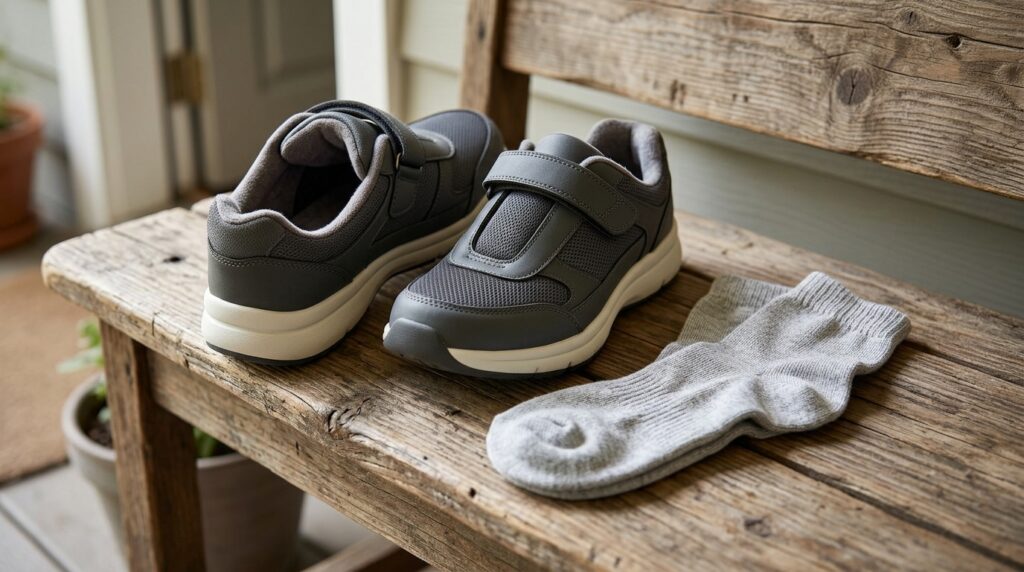
Socks should be seamless and moisture-wicking, and light-colored if you can manage it — that way, if there’s any bleeding or drainage, you’ll spot it on the sock before you spot it on your foot.
If your feet are high-risk — numbness plus callus, a deformity, poor circulation, or a previous ulcer — ask your doctor about therapeutic (diabetic) shoes. Medicare Part B and many private plans cover one pair plus inserts a year for people who qualify. Your doctor has to certify it, so bring it up at your next visit.
One more thing: keep your feet away from heat you can’t feel. No hot soaks, no heating pads, no hot water bottles on numb feet. Burns happen silently that way.
It’s not just about feet
Keeping your blood sugar in range is the main thing slowing down nerve and circulation damage in the first place — foot care starts there, not at the bathroom sink. Smoking narrows blood vessels to the feet too, so that’s another reason to quit if you haven’t.
And get your feet properly examined at least once a year — more often if you already have numbness, poor circulation, a deformity, or a past ulcer. The exam usually includes a simple test where they press a thin nylon strand against your sole. If you can’t feel it, that’s how they know protective sensation is gone.
Four things to never do
- Don’t soak your feet as a routine. It dries the skin out and raises the burn risk.
- Don’t use corn or callus acids, medicated plasters, or blades. Ever.
- Don’t attack hard skin with pumice stones or electric removers unless your podiatrist says it’s okay — and even then, gently, on unbroken skin only.
- Don’t ignore a wound because it doesn’t hurt. With neuropathy, no pain is the warning sign, not the reassurance.
Questions people actually ask
How often should I check my feet?
Every day. No exceptions, no “I’ll do it at the weekend.” Tops, soles, heels, between the toes.
Can I use a pumice stone?
Only if your podiatrist says so, and only lightly on intact skin. If you have numbness or poor circulation, most podiatrists would rather handle hard skin themselves.
Should I soak my feet?
Most podiatrists say no to routine soaking. If yours allows it, lukewarm water, a thermometer to check, and just a few minutes.
Why is walking barefoot such a big deal?
Because you won’t feel the cut, and a cut you don’t feel is a cut you don’t treat. Even a tiny puncture can get infected and heal slowly when circulation is poor.
Does Medicare cover diabetic shoes?
Part B covers one pair of therapeutic shoes plus inserts per year for qualifying high-risk patients — but your doctor has to certify the need.
Sources
- UCSF Department of Surgery — Diabetes and Prevention of Foot Problems
- Union Foot Care — The 8 Principles of Foot Ulcer Prevention for Diabetics
- American Diabetes Association guidance on therapeutic footwear for high-risk feet, via published prevention summaries
This article is for information only and is not medical advice. See our Medical Disclaimer.