How did it start? That’s your first clue
Think back. Did you roll it? A sprain — stretched or torn ligaments — is the single most common ankle injury, and it usually announces itself: a twist, a pop or a give-way feeling, then swelling and bruising on the outside of the ankle within hours. Mild sprains (grade 1) hurt but you can still walk; severe ones make weight-bearing nearly impossible.
No injury at all? Then you’re looking at a different list. Tendinitis — inflammation of the tendons around the ankle, especially the Achilles at the back or the peroneal tendons on the outside — builds gradually from overuse: new running mileage, a job that keeps you on your feet, or a sudden return to sport after time off. Arthritis, usually osteoarthritis in older adults or post-traumatic arthritis after an old injury, gives a deep, stiff ache that’s worse in the morning and after sitting. Gout can hit the ankle too, with sudden hot, red, exquisitely tender swelling — it loves the big toe joint but doesn’t always start there.
And sometimes ankle pain isn’t really about the ankle. A pinched nerve in the lower back can send pain down to the ankle, and a stress fracture — a tiny crack in the bone from repetitive load — causes a deep ache that gets worse with activity and better with rest, with surprisingly little swelling.
What to do in the first 48 hours
For a fresh twist or a flare of overuse pain, the old RICE routine still holds up, with one modern tweak — don’t ice it into numbness and don’t rest it into stiffness:
Rest, but not total rest. Avoid the activity that hurt it, but keep gentle movement going — slow ankle circles and tracing the alphabet with your toes keeps blood flowing and prevents the joint from stiffening up.
Ice for 15 to 20 minutes at a time, a few times a day, with a cloth between the ice and your skin. Stop if the skin goes numb or blotchy.
Compression with an elastic bandage or ankle sleeve helps control swelling — snug, not tight. If your toes tingle or change color, it’s too tight.
Elevate above heart level when you can, especially in the first day or two. Prop it on pillows while you watch TV; it genuinely speeds up swelling reduction.
Over-the-counter anti-inflammatories like ibuprofen can help for a few days if you tolerate them, but they mask pain, not fix damage — if you need them for more than a week, get the ankle looked at.

Getting back on it safely
The biggest mistake with ankle injuries is rushing back. A sprained ankle that feels “mostly fine” still has weakened ligaments, and re-spraining it is depressingly easy — each sprain makes the next one more likely. Wait until you can walk without limping, stand on the injured foot alone for 30 seconds without wobbling, and go up and down stairs pain-free.
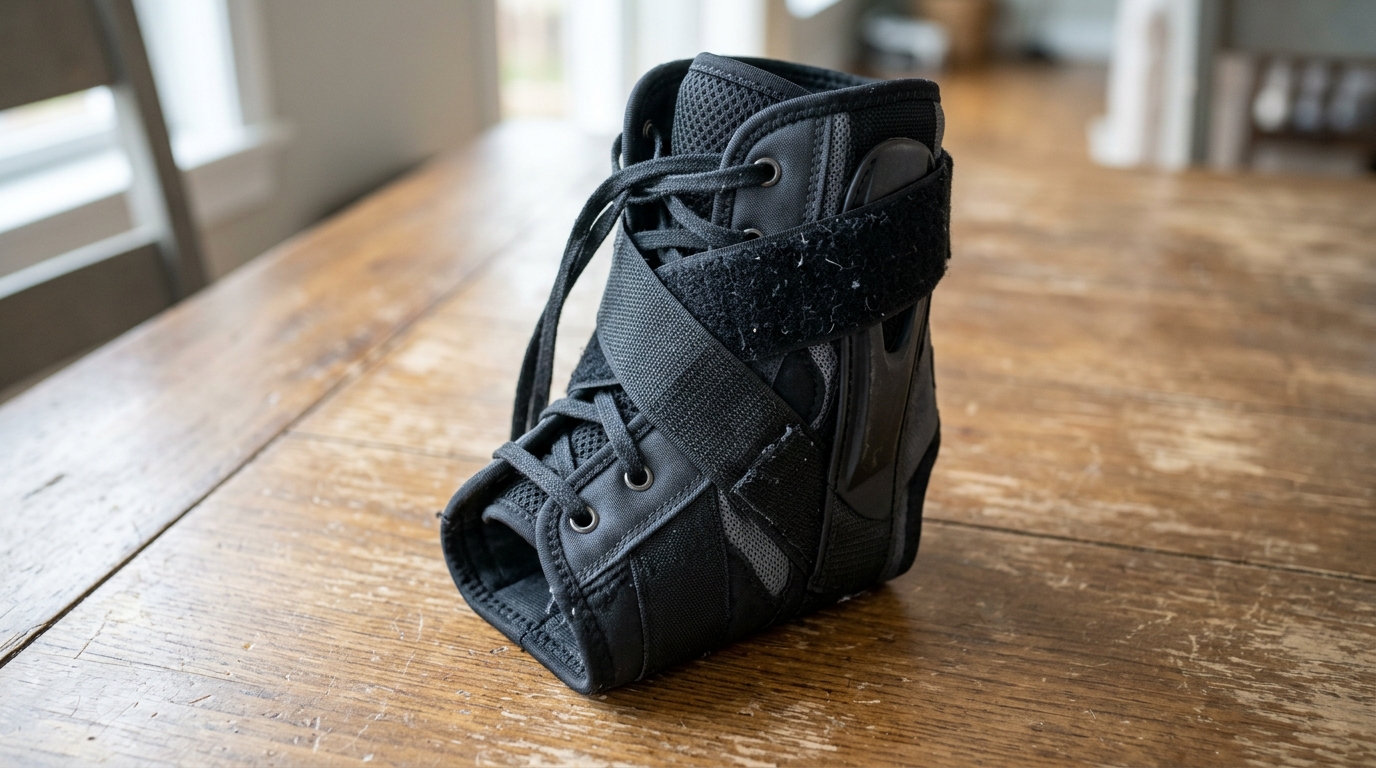
Then rebuild: calf raises, balance work on one foot (start on flat ground, hold a chair if needed), and gentle resistance band exercises in all four directions. Supportive shoes with a firm heel counter help, and an ankle brace or taping for the first few weeks back to sport is sensible, not overcautious.
For chronic, non-injury ankle pain — the slow ache that never quite leaves — the fix is usually about load and support: better shoes, insoles that correct overpronation, weight management if that’s a factor, and a physiotherapist’s eye on your gait. Arthritis pain responds to the same package, plus heat for morning stiffness and, when needed, a clinician’s advice on medication or injections.
FAQ
How do I know if it’s a sprain or a fracture?
You can’t reliably tell at home. The rule doctors use: if you can’t bear weight immediately and in the emergency department, or there’s tenderness over specific bony points, it needs an X-ray. When in doubt, get it imaged.
Should I use heat or ice?
Ice for fresh injuries and acute flare-ups (first 48 to 72 hours). Heat for chronic stiffness, like arthritic morning ache. Never sleep with a heating pad on, and never ice numb skin.
How long does a sprained ankle take to heal?
Mild sprains: one to three weeks. Moderate sprains: three to six weeks. Severe sprains with a complete ligament tear can take months and may need physiotherapy or a boot.
Why does my ankle keep giving way?
Repeated sprains stretch ligaments and dull the joint’s position sense, a condition called chronic ankle instability. Balance training helps; if it keeps happening, a physiotherapist or foot specialist should assess it.
Can I still exercise with ankle pain?
Usually yes, with modification — swimming, cycling, and upper-body work keep you fit without loading the ankle. Stop any activity that causes sharp pain or swelling that lasts into the next day.
Sources
- Mayo Clinic — Sprained ankle; Achilles tendinitis; Osteoarthritis
- American Academy of Orthopaedic Surgeons — Sprained ankle; Ankle arthritis
- American Podiatric Medical Association — Ankle pain and injuries
Medical disclaimer: This article is for general information only and is not medical advice. Ankle injuries that prevent weight-bearing, look deformed, or don’t improve within two weeks should be evaluated by a clinician.