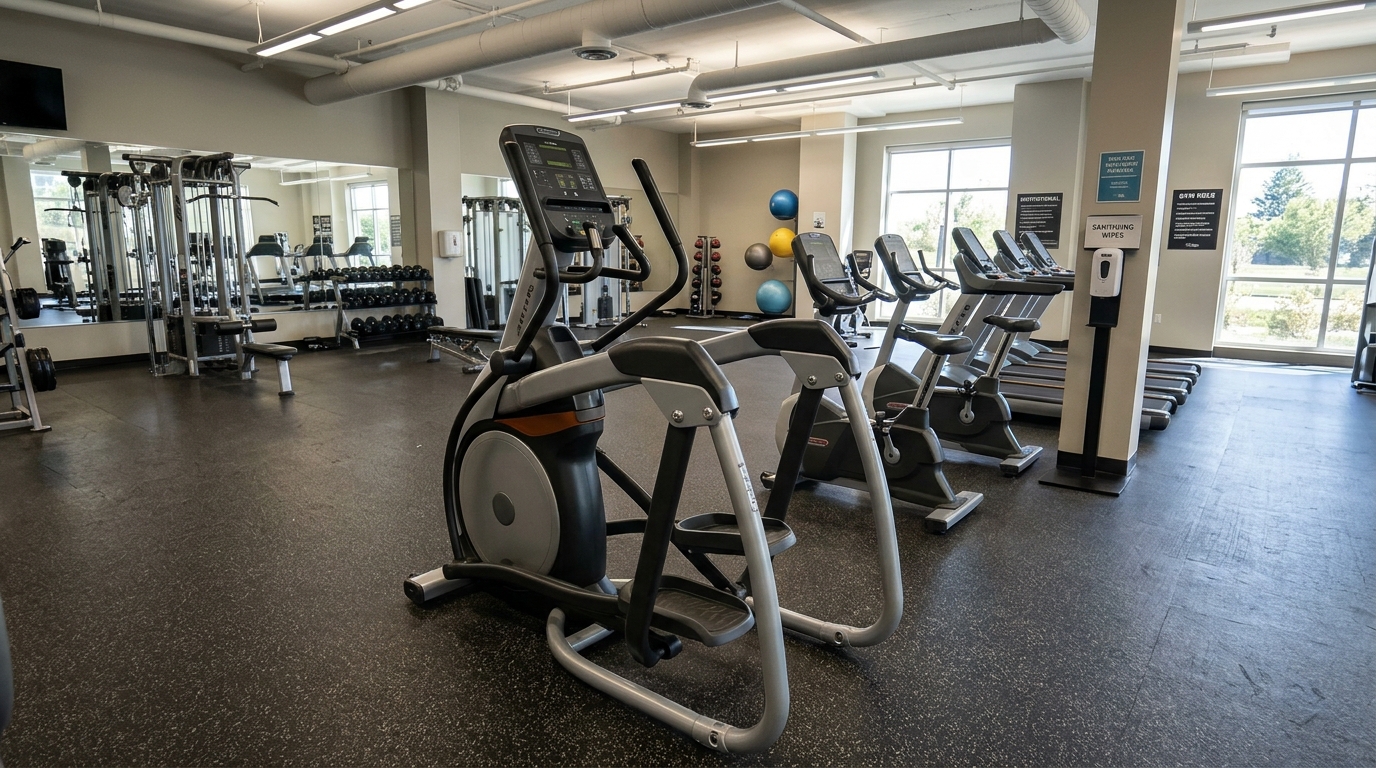
Quick Answer: Foot pain from elliptical workouts usually comes from your feet staying planted on the same spot on the pedals while you glide. Unlike running, where your feet roll heel to toe, the elliptical keeps your whole foot flat and still — so pressure builds up in the same place, especially the ball of your foot and your toes. Numb toes and burning in the forefoot are the classic signs. Better shoes, a mid-foot pedal position, and shorter sessions usually fix it.
See a doctor promptly if you notice:
- Sharp or severe pain in the heel, arch, or one spot on a bone
- Swelling, redness, or warmth that doesn’t settle after a day or two of rest
- Numbness, tingling, or a burning feeling in your feet or toes
- Pain that makes walking or putting weight on your foot difficult
- A wound, sore, or blister that won’t heal — especially if you have diabetes
Why the Elliptical Can Hurt Your Feet
The elliptical gets sold as the joint-friendly machine, and for your knees and hips it is. But your feet tell a different story. On a treadmill, your foot lifts, rolls, and pushes off with every step, so the pressure moves around. On the elliptical, your foot never leaves the pedal. It sits flat, glides in an oval, and takes the same load in the same spot for the whole workout. The problem is pressure that never gets a break.
Your forefoot takes the worst of it: the pedal pushes up into the ball of your foot while your body weight pushes down, with no heel-to-toe roll to spread the force out. After ten or fifteen minutes, the nerves between your toes can get squeezed — that’s the tingling and numbness so many people feel. Soft shoes or flat feet let the arch collapse a little more with every glide, which is how it starts aching too.
Then there’s the resistance. Crank it up and you press harder into the pedals with every stride — great for your glutes, brutal for your forefoot. You won’t notice it in the first ten minutes — but by minute thirty, your feet are complaining.
What It Is: The Most Common Causes
Metatarsalgia — pain in the ball of your foot — is the top culprit. It’s the ache or burning under your toes that grows the longer you glide and eases when you step off.
Morton’s neuroma is the next one to know about. It’s a thickening of the tissue around the nerve between your toes, usually the third and fourth. The classic sign is burning or tingling that shoots into your toes, sometimes with the feeling that there’s a pebble in your shoe. Tight shoes and the constant pedal pressure can both bring it on. If your toes keep going numb on the machine, our guide to tingling in toes causes explains when that numbness needs a doctor.
Plantar fasciitis and arch strain round out the list. Your arch flattens a little on every glide without supportive shoes, and the plantar fascia — the band along the bottom of your foot — gets stretched and irritated. The tell is heel or arch pain with your first steps after you step off. Cycling moves your feet in a circle so the pressure shifts; the elliptical’s fixed pedal position is what makes your feet so sore — our guide to foot pain from cycling shows how a different pedal setup changes the load.
What Helps: Shoes and Pedal Position
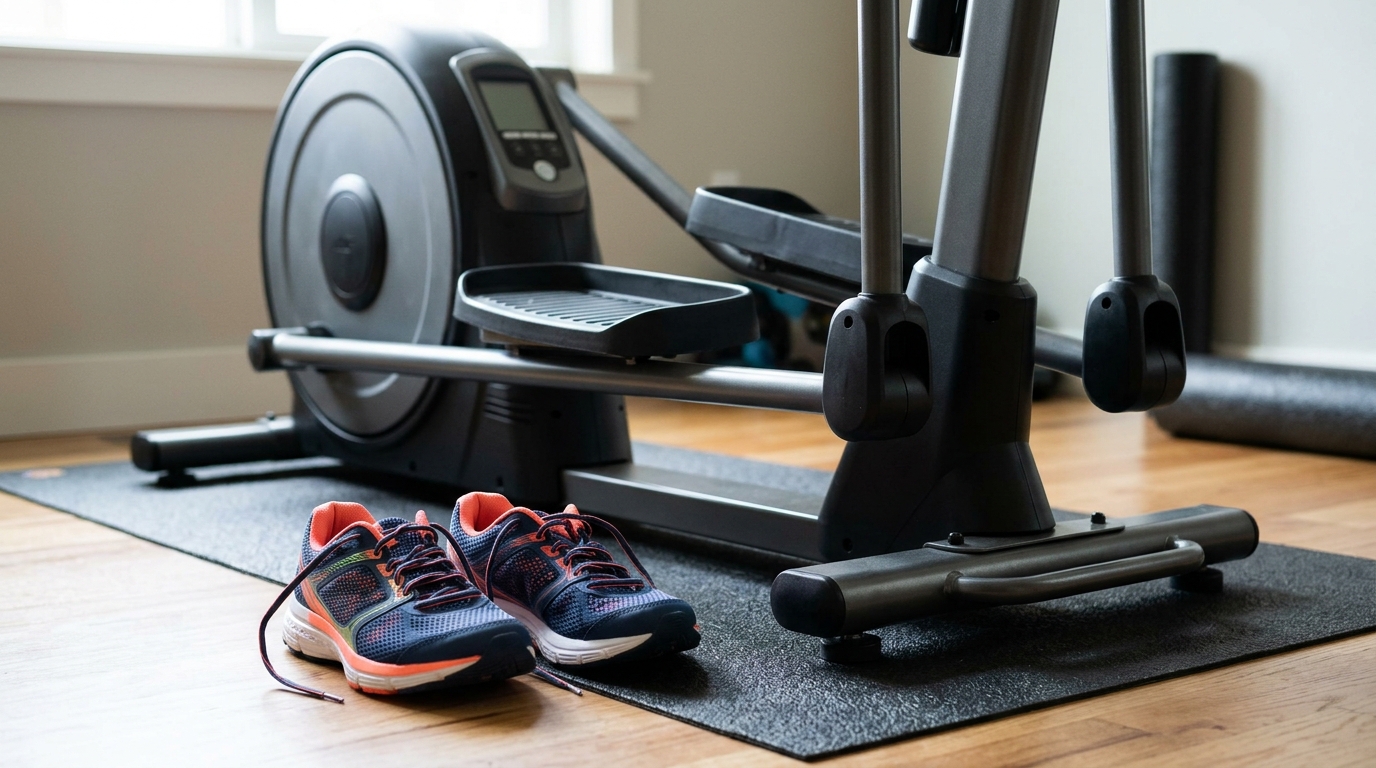
Start with your shoes. Wear a trainer with a firm, cushioned sole — not a soft running shoe or a flat sneaker. You want something that spreads the pedal pressure across your whole foot instead of letting it dig into the ball. Replace worn-out shoes before you blame the machine — a collapsed midsole makes the pain much worse.
Next, check where your feet sit on the pedals — centered, heel over the back of the pedal, toes not hanging off the front edge. Placing your feet slightly toward the middle of the pedal — not all the way forward — eases forefoot pressure straight away.
Finally, lower the resistance a notch — high resistance is the main reason a gentle machine turns painful. Drop it a level or two, keep your stride smooth, and stand tall instead of leaning onto the handles.
What Helps: Recovery and Prevention
After your session, give your feet a few minutes of care. Roll the bottom of each foot over a tennis ball or frozen water bottle — it loosens the plantar fascia and calms the forefoot. Stretch your calves against a wall for thirty seconds a side — tight calves push more pressure onto the front of your foot.
Build your time up slowly. If twenty minutes leaves your toes numb, do ten on the elliptical and ten walking, then add five minutes a week. Alternate elliptical days with cycling or walking so the same pressure point isn’t hammered every day.
Your Daily Routine for Happier Feet on the Elliptical
A routine that keeps your feet comfortable on the machine:
- Wear a firm, cushioned trainer: A stable sole that spreads the pedal pressure.
- Center your feet on the pedals: Heel over the back, toes not hanging off the front.
- Keep resistance moderate: High resistance pushes harder into the ball of your foot.
- Stand tall, don’t lean forward: Leaning loads your forefoot even more.
- Roll and stretch after every session: A tennis-ball roll loosens tired arches.
FAQs
Is foot pain from elliptical workouts normal?
Mild aching or numb toes are common when you’re new to the machine or wearing soft shoes. Sharp, burning, or one-sided pain isn’t normal — change your setup or see a doctor.
Why do my toes go numb on the elliptical?
Your foot stays flat and still on the pedal, squeezing the nerves between your toes for the whole workout. Re-centre your feet, loosen your laces, and wear a firmer shoe.
Should I wear running shoes on the elliptical?
A firm cross-trainer is usually better. Running shoes are built for heel-to-toe rolling, which doesn’t happen on the elliptical — a stable, cushioned trainer spreads pedal pressure more evenly.
Is the elliptical better or worse for feet than the treadmill?
It’s easier on your knees and hips, but harder on the ball of your foot, because your foot never lifts and rolls. On a treadmill the pressure moves around with each step; on the elliptical it stays in one spot.
How long does elliptical foot pain take to go away?
Most mild soreness settles within a week or two once you fix your shoes, pedal position, and session length. If it keeps coming back, get it checked — it could be a neuroma or plantar fasciitis that needs treatment.
Sources
- Mayo Clinic — metatarsalgia causes and treatment
- Cleveland Clinic — Morton’s neuroma symptoms and causes
- American Podiatric Medical Association — foot pain during exercise
This article is for general information only and is not medical advice. Talk to your doctor or a podiatrist about your own feet.