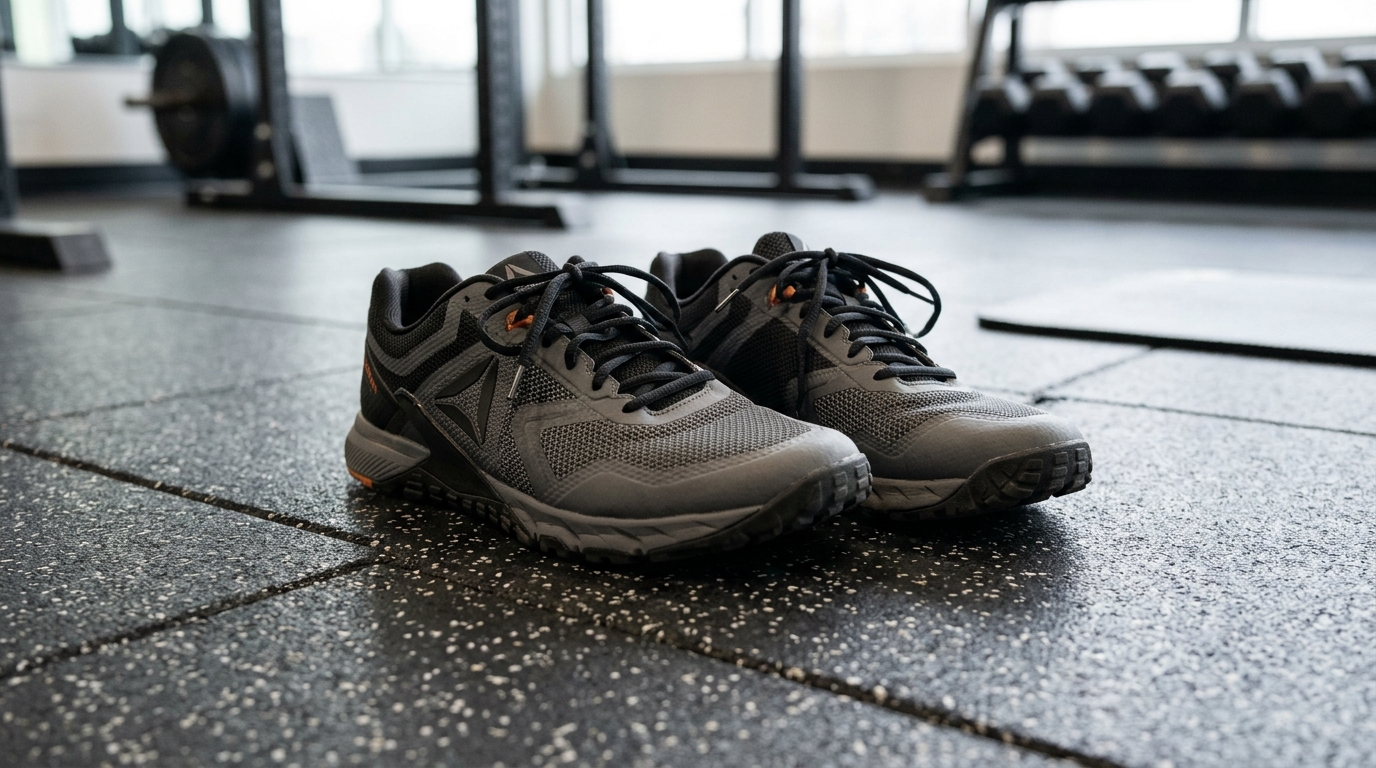
Quick Answer: Foot pain from lunges usually comes from one foot carrying your full body weight in a deep bend, with the toes folded hard under you at the back. Unlike a squat, where both feet share the load, a lunge puts all your weight through one front foot and all your balance through one back foot — so the arch, the ball, and the big-toe joint get squeezed at once. The fix is mostly form: shorter steps, a flat front foot, softer surfaces, and supportive shoes.
See a doctor promptly if you notice:
- Sharp or severe pain in the heel, arch, or one spot on a bone
- Swelling, redness, or warmth that doesn’t settle after a day or two of rest
- Numbness, tingling, or a burning feeling in your feet or toes
- Pain that makes walking or putting weight on your foot difficult
- A wound, sore, or blister that won’t heal — especially if you have diabetes
Why Lunges Can Hurt Your Feet
Lunges look like a leg exercise, but your feet do a lot of the work. In a squat, both feet stay flat on the floor and share your weight. In a lunge, you split your stance — one foot steps forward and plants flat, the other stays back with the heel lifted and the toes folded under. So one foot at a time carries your whole body, and the back foot balances on a folded toe joint.
The front foot takes the first hit. As you sink down, your weight shifts forward onto the ball of that foot — and if your knee drifts past your toes, the pressure climbs even higher. Your arch flattens under the load and the big-toe joint gets pushed and twisted. That’s why foot pain from lunges so often shows up in the ball of the foot or the big toe.
The back foot has it just as hard, in a different way. Its heel is up, so all its weight sits on toes folded back at a sharp angle. The tendons on top stretch and the toe joints compress with every rep.
What It Is: The Most Common Causes
Metatarsalgia — pain in the ball of your foot — is the most common complaint. It’s the ache or burning under your toes that builds with each set and lingers after you finish.
Big-toe joint pain comes next. The big toe bends hard in both feet — pressed into the floor at the front, folded under at the back. If you already have a bunion or stiff big toe, lunges can flare it up fast. Our guide to big toe pain causes explains what makes that joint sore and when to see a doctor.
Plantar fasciitis and arch strain round out the list. The front arch flattens under your full weight in a deep bend, stretching the plantar fascia along the bottom of your foot. The classic sign is heel or arch pain with your first steps the morning after. Compared with jumping, where both feet land together and share the impact, a lunge loads one foot at a time — our guide to foot pain from jumping shows how that shared landing changes the load.
What Helps: Fix Your Lunge Form
The single biggest fix is a shorter step. A huge lunge looks impressive, but it drives your front knee forward and dumps your weight onto the ball of your front foot. Step out just far enough that your front knee stays over your ankle — not past your toes — and your shin stays close to vertical. Your weight should sit through the whole front foot, heel included.
Next, keep your front foot flat. The moment your front heel lifts, your forefoot takes the whole load. If your heel keeps coming up, your calves or ankles may be tight — work on ankle mobility and calf stretches, and don’t force the depth.
Finally, protect your back foot. Don’t let the back toes fold completely flat against the floor — a slight bend is enough. If you’re doing walking lunges on concrete, switch to a mat or a gym floor — a hard surface with no give makes both feet work harder.
What Helps: Recovery and Prevention
After a lunge workout, give your feet a few minutes of care. Roll the bottom of each foot over a tennis ball or frozen water bottle — it loosens the plantar fascia and calms the forefoot. Stretch your calves and big toes: pull the big toe gently back toward your shin for thirty seconds a side. Tight calves and stiff toes make lunge pain worse.
Build up slowly. If three sets of ten leave your feet aching, start with two sets of eight and add a few reps each week. Alternate lunge days with exercises that share the load — squats, for example, spread your weight across both feet.
Your Daily Routine for Happier Feet With Lunges
A routine that keeps your feet comfortable when lunges are in your workout:
- Take a shorter step: Keep your front knee over your ankle, not past your toes.
- Keep your front foot flat: Heel down, weight through the whole foot.
- Don’t over-fold your back toes: A slight bend is enough for balance.
- Wear a stable, supportive shoe: A firm sole that holds your arch in a deep bend.
- Roll and stretch after every session: A tennis-ball roll loosens tired arches.
FAQs
Is foot pain from lunges normal?
Mild soreness in the ball of the foot or the arch is common when you’re new to lunges or stepping out too far. Sharp, one-sided, or lingering pain isn’t normal — change your form or see a doctor.
Why does my big toe hurt after lunges?
Your big toe bends hard in both feet — pressed into the floor at the front, folded under at the back. If the joint is already stiff or you have a bunion, the deep bend can flare it up.
Should I do lunges barefoot or in shoes?
Shoes are usually better, especially on a hard floor. A stable trainer with a firm sole supports your arch in the deep bend and cushions the ball of your foot — barefoot lunges load the forefoot harder.
Are lunges worse for feet than squats?
They can be, because a lunge loads one foot at a time while a squat shares your weight across both feet. In a squat both feet stay flat; in a lunge the back foot balances on folded toes — a whole second pressure point.
How long does lunge foot pain take to go away?
Most mild soreness settles within a week or two once you shorten your step, keep your front foot flat, and build reps up slowly. If it keeps coming back, get it checked — it could be plantar fasciitis or a big-toe joint problem that needs treatment.
Sources
- Mayo Clinic — metatarsalgia causes and treatment
- Cleveland Clinic — plantar fasciitis symptoms and causes
- American Podiatric Medical Association — foot pain during exercise
This article is for general information only and is not medical advice. Talk to your doctor or a podiatrist about your own feet.