
Athlete’s Foot: Causes, Treatment & Prevention
You do not need to be an athlete to get athlete’s foot. Anyone whose feet stay warm and sweaty inside closed shoes can grow the dermatophyte fungi that cause it. It spreads easily across damp floors, towels and shoes, and it loves the tight, moist space between your toes.
When to see a doctor
See a clinician if the rash does not improve within 2 weeks of over-the-counter antifungal treatment, if it keeps coming back, if blisters or cracked skin develop, or if you see signs of bacterial infection — swelling, warmth, pus or fever. If you have diabetes, see a doctor as soon as you suspect athlete’s foot: foot infections are more serious with diabetes and should not be left to home care.
What causes it
- Warm, damp feet: sweaty feet inside tight, non-breathable shoes are the perfect fungal environment.
- Contaminated surfaces: locker rooms, pool decks, communal showers and shared towels, socks or shoes.
- Skin-to-skin spread: contact with an infected person, or scratching and touching other body areas (it can spread to nails, hands and groin).
- Risk factors: tight footwear, not drying feet properly, sharing personal items, walking barefoot in public wet areas, and a weakened immune system.
Symptoms
- Itchy, scaly rash, usually starting between the toes
- Peeling, cracked or soggy-looking skin between toes
- Burning or stinging, especially right after taking shoes and socks off
- Red, inflamed patches (colour varies with skin tone), blisters, or dry scaly skin on the sole spreading up the sides
- One or both feet affected; nails can become infected if it spreads
What actually helps
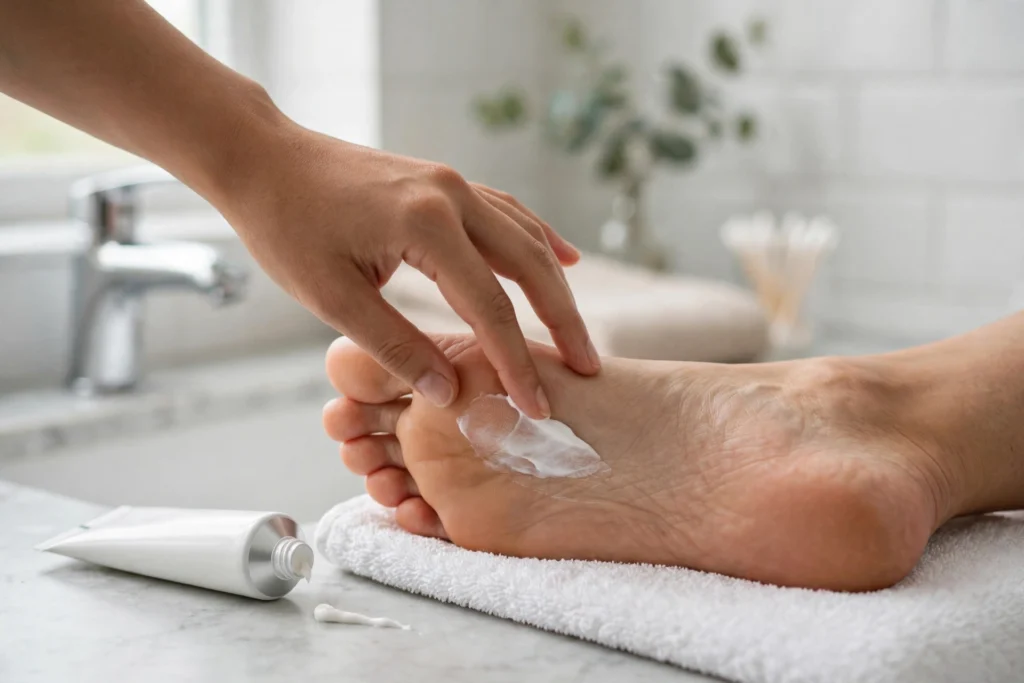
- OTC antifungals: creams, sprays or powders applied as directed — usually enough for mild cases. Continue 1–2 weeks past visible clearing to prevent recurrence.
- Keep feet dry: wash daily, dry thoroughly between the toes, change socks when damp, and let shoes air out between wears.

- Breathable footwear: ventilated shoes and moisture-wicking socks; avoid tight, non-breathable shoes.
- Stop the spread: do not share towels, socks or shoes; wear flip-flops in communal showers and pool areas; wash hands after touching infected skin.
- Prescription care: if OTC treatment fails or infection is severe or recurring, a doctor may prescribe stronger topical or oral antifungals. Take the full course even after symptoms improve.
Daily routine to clear and prevent it
- Morning: wash feet, dry carefully between every toe, apply antifungal, put on clean moisture-wicking socks.
- Through the day: ventilated shoes; change socks if feet get sweaty.
- Evening: wash again, dry thoroughly, reapply antifungal, and let shoes air overnight.
- Ongoing: flip-flops in shared showers, never share towels or shoes, and keep treating 1–2 weeks past clear skin.
Frequently asked questions
Can athlete’s foot go away on its own?
Mild cases sometimes improve with drying and hygiene, but most need an antifungal. Without treatment it often spreads to nails or other skin areas.
Why does it keep coming back?
Usually because treatment stopped too early, shoes stayed damp, or the fungus survived in socks, shoes or towels. Treat past clearing, dry shoes fully, and wash socks hot.
Is athlete’s foot contagious?
Yes — highly. It spreads through damp floors, towels, shoes and direct contact. That is why communal showers and shared footwear are the classic sources.
Can I use the same cream for toenail fungus?
Skin creams rarely clear nail fungus — nails need different treatment and much longer courses. See our toenail fungus guide for the honest cure rates.
Are home remedies like vinegar soaks effective?
They may soothe itching but do not reliably kill the fungus. An OTC antifungal is cheaper, proven and faster — use that first.
Sources
- Athlete’s Foot — Johnson Memorial (Mayo Clinic content)
- Athlete’s Foot — Augusta Health
- Athlete’s Foot: Causes, Symptoms and Treatment — Excilor
Footcarely is reader-supported. We don’t use affiliate links yet — when we do, this page will say so. This guide is general information, not medical advice. Persistent foot problems deserve a podiatrist, not just home care.
Related: Toenail Fungus Guide · Cracked Heels Guide · Foot Pain Map · Foot Problem Finder quiz