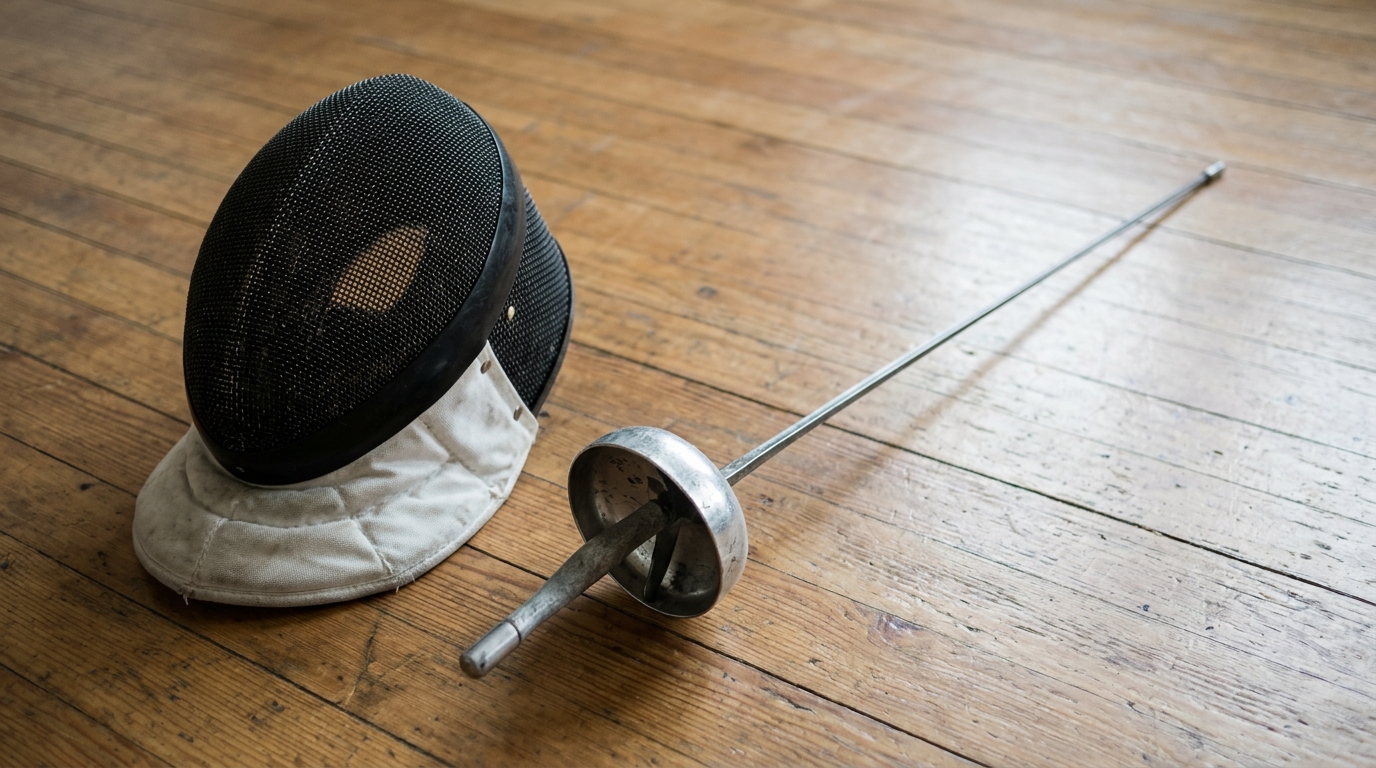
Quick Answer: In short, foot pain from fencing usually comes from the lunge and the en-garde stance — your front foot slams down hard with every attack, your back foot twists and pushes off, and you hold a sideways crouch on a hard piste for the whole bout. The pain is usually soreness in the soles, arches and heels, and it often fades with rest, better shoes and a warm-up. If it stays sharp, lasts more than a couple of weeks, or comes with swelling or numbness, see a doctor or podiatrist.
See a doctor promptly if you notice:
- Sharp or severe pain in the heel, arch, or one spot on a bone
- Pain that makes walking or putting weight on your foot hard
- Swelling, redness, or warmth that doesn’t settle within a day or two
- Numbness, tingling, or a burning feeling in your foot or toes
- A blister or sore that won’t heal, or pain that returns after every bout
Why Fencing Can Hurt Your Feet
Fencing looks elegant from the outside, but your feet work incredibly hard the whole time. You spend the whole bout in the en-garde stance — sideways on, knees bent — then explode into a lunge, slam your front foot down, and recover back again, hundreds of times a session, always with the same foot forward.
That one-sidedness is what makes fencing different from other combat sports. In martial arts you move in all directions, kick with both feet, and often train barefoot on a mat. In fencing, your front foot does the same job every time — land the lunge, take your weight, push you back — while your back foot stays planted and drives the push-off.
What It Is: The Most Common Causes
The lunge is the biggest culprit. When you attack, your front leg shoots forward and your front foot lands hard, heel first, with your whole body weight driving over it. That impact loads the heel and arch at once, and if the lunge is long or your timing is off, the foot twists slightly as it lands. Do that hundreds of times and the soles and arches get sore.
The en-garde stance is another frequent complaint. Holding a sideways crouch with bent knees for minutes at a time keeps constant tension on the small muscles of your feet and ankles. Your front foot stays flat while your back foot sits on the ball, heel raised, so the back foot’s arch is loaded the whole time you’re on guard.
Blisters are a classic fencing problem. The piste is hard and flat, and fencing shoes are thin and flat-soled so you can feel the strip and move quickly. That combination means your feet slide slightly inside the shoe on every lunge and recovery, and the friction blisters the heel and the ball of the foot.
Overuse is the quiet cause behind most fencing foot pain. Because the movement is always on the same foot, the same tissues get loaded again and again. Our guide to foot pain from weightlifting covers similar repetitive loading from heavy lunges and squats, while foot pain from basketball looks at the hard stops and jumps of another indoor court sport.
What Helps: Shoes and Footwork That Protect Your Feet
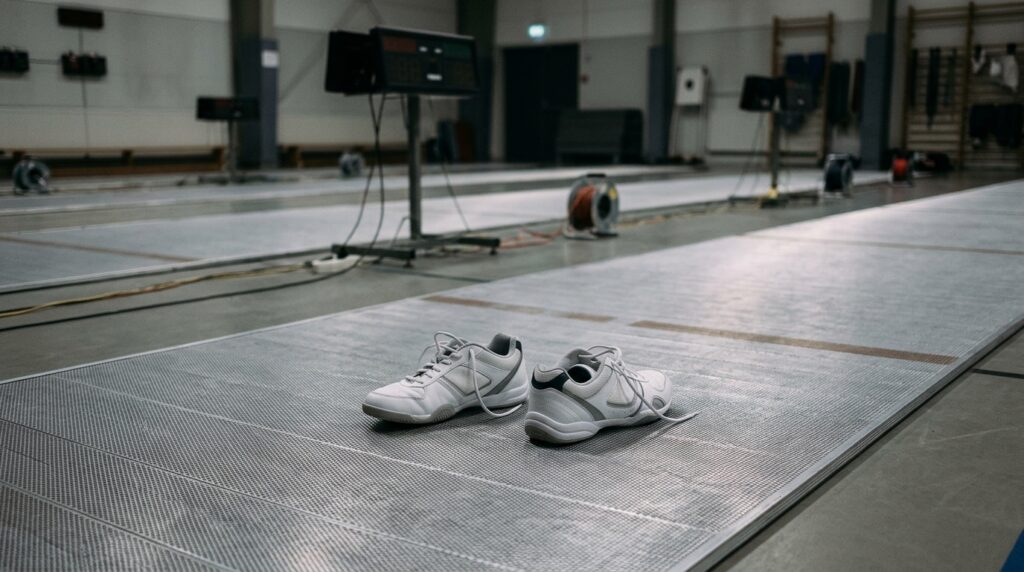
The first fix is your shoes. Fencing shoes are deliberately thin and flat, but they still need to fit well — snug around the midfoot so your foot doesn’t slide, with a thumb’s width at the toes because your front foot slides forward on every lunge. Too big and your feet swim and blister; too small and your toes jam. Replace worn shoes promptly — once the thin sole flattens, every landing goes straight into your heels.
Your lunge technique matters too. A controlled lunge — landing heel first and rolling through the foot, with your knee tracking over your toes — spreads the load across your whole foot instead of slamming it into one spot, while overreaching twists the ankle.
Good socks help more than most fencers expect. Moisture-wicking sports socks with padding at the heel and forefoot cut down on blisters and soften each landing. The Cleveland Clinic points out that tight calves are one of the most common reasons heel and arch pain flares during exercise.
What Helps: Recovery After a Bout
After a hard session, give your feet time to settle. Sit down, take your shoes off, and let your feet breathe. Rolling the bottom of your foot over a tennis ball or a frozen water bottle loosens tight tissue — keep the pressure gentle if your arch or heel is tender.
Rest your feet for a day if they’re sore — a few days off now beats a month off later. If a blister has formed, keep it clean and covered; one that looks red, swollen or infected needs a doctor’s look.
Your Daily Routine for Happier Feet on the Piste
Here’s a routine to keep your feet comfortable on the piste:
- Warm up your feet and calves: Two minutes of ankle circles, calf raises and gentle lunges before you fence.
- Check your shoes: Make sure they fit snugly at the midfoot with a thumb’s width at the toes.
- Wear moisture-wicking socks: Padded sports socks cut blisters and cushion every landing.
- Keep your lunges controlled: Land heel first, roll through the foot, and keep your knee tracking over your toes.
- Roll sore feet after a session: Roll each foot over a tennis ball, and rest a day if the ache remains.
FAQs
Is foot pain from fencing normal?
Mild soreness in the soles or arches is common when you’re new to fencing, and it usually fades with rest, better shoes and a warm-up. Sharp or persistent pain is not normal — get it checked.
Why does my front foot hurt after fencing?
Your front foot lands every lunge, taking your full body weight heel first on a hard piste. That repeated impact loads the heel and arch heavily, and badly fitting shoes make it worse.
Why does my back foot ache in en-garde?
Your back foot stays on the ball, heel raised, for the whole bout, which keeps the arch loaded the entire time. That constant tension tires the small muscles of the foot — stretching between bouts helps.
Can fencing cause plantar fasciitis?
Fencing can irritate the plantar fascia, especially with tight calves and thin or worn-out shoes. Rest, calf stretching and better shoes usually help — persistent heel pain needs a doctor’s look.
When should I see a doctor about foot pain from fencing?
See a doctor promptly if the pain is sharp or severe, if swelling doesn’t settle, if a blister looks infected or won’t heal, or if the pain keeps coming back despite rest and new shoes.
Sources
- Mayo Clinic — plantar fasciitis causes and symptoms
- Cleveland Clinic — arch pain and calf tightness information
- American Podiatric Medical Association — foot strengthening exercises
This article is for general information only and is not medical advice. Talk to your doctor or a podiatrist about your own feet.