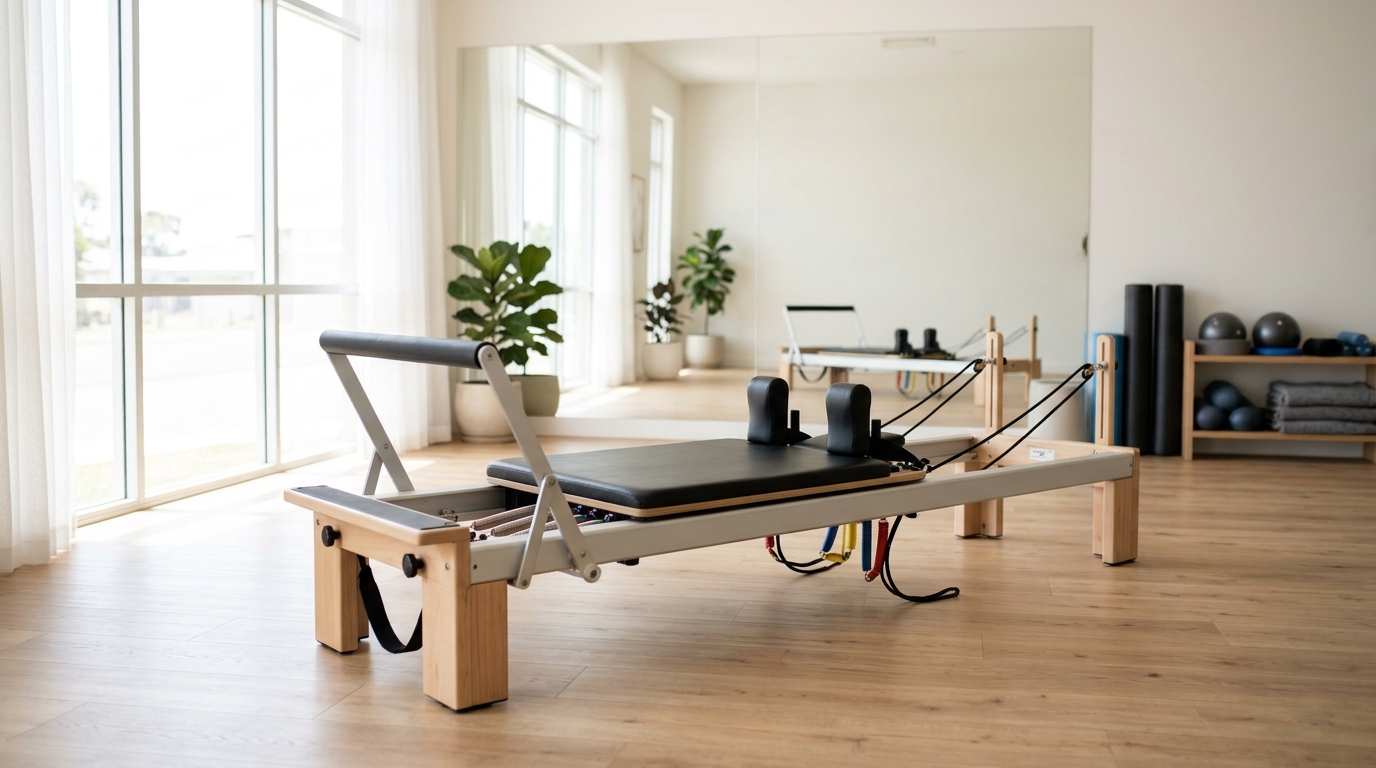
Quick Answer: Foot pain from pilates usually comes from working barefoot on the reformer — your feet press against the footbar for whole exercises, and the straps and springs load your arches in ways they’re not used to. The pain is most often soreness in the arches, heels and balls of your feet, and it usually eases with rest, better footbar positioning and foot-strengthening exercises. If it stays sharp or lasts more than a couple of weeks, get it checked by a doctor or podiatrist.
See a doctor promptly if you notice:
- Sharp or severe pain in the heel, arch, or a single spot on a bone
- Pain that makes walking or putting weight on your foot difficult
- Swelling, redness, or warmth that doesn’t settle within a day or two
- Numbness, tingling, or a burning feeling in your foot or toes
- Pain that keeps coming back after every class, or a foot that feels unstable
Why Pilates Can Hurt Your Feet
Pilates is gentle on your joints, which is why so many people love it — but your feet tell a different story. Every class is done barefoot, and on the reformer your feet press against the footbar, push through the straps, and balance on a moving carriage with nothing but your bare soles between you and the machine.
The footwork series is where most of the trouble starts. It’s often the first exercise in a reformer class, and it asks your feet to press, point, flex and roll through the arch — over and over, against spring resistance. If your feet aren’t used to that kind of load, they complain quickly. And unlike a yoga class, where your feet mostly stretch, pilates loads them with resistance — a different kind of demand entirely.
What It Is: The Most Common Causes
Footbar pressure is the biggest culprit. During footwork, the balls of your feet press into a hard metal bar while the springs resist every push. Do that for a full series and the balls of your feet and your arches get sore — especially if your foot placement is off and the bar digs into one spot. Our guide to foot pain from yoga covers the same barefoot soreness on the mat, though pilates adds the resistance your yoga class doesn’t.
The reformer straps add their own strain. When your feet are in the straps for leg circles or frog, the straps pull across the tops of your feet and ankles while the springs tug back. That constant pulling can irritate the tendons on top of your foot — particularly if the straps sit too close to your toes.
Repetitive arch work is another frequent complaint. Pilates asks your feet to move through their full range — pointed, flexed, and everything in between — while pushing against resistance. That’s great for strength in the long run, but if you jump from no footwork at all to three reformer classes a week, the small muscles in your arches get overworked and cramp up.
Standing work on the reformer finishes the job. Exercises like standing splits put your whole body weight through one bare foot on a narrow, moving platform, and if your balance wobbles, your toes grip hard to keep you steady.
What Helps: Better Footbar Position and Foot Strength
The first fix is where your feet sit on the footbar. The balls of your feet should be centered on the bar, with your weight spread evenly — not rolled to the inside or outside edge. Ask your instructor to check your placement; a small adjustment often fixes the soreness in a single class.
Foot and ankle strength matters more than most people realize. The Cleveland Clinic points out that weak foot muscles and tight calves are common reasons arch and heel pain flares during exercise, and pilates footwork is basically a strength workout for your feet. Simple drills — toe scrunches, calf raises, and rolling a ball under your arch — build the support your feet need.
Try padded grip socks. Many studios allow toe socks or pilates socks with grippy soles, and a lightly padded pair takes the edge off the footbar without changing your feel for the machine.
Build up gradually. If you’re new to the reformer, two classes a week is plenty — jumping straight to daily classes is how arches get overworked before they’ve had time to strengthen.
What Helps: Recovery After Class
After a sore class, roll each foot over a tennis ball or a frozen water bottle for a few minutes — it loosens tight tissue and feels wonderful on tired arches.
Stretch your calves and feet before you leave the studio. A wall calf stretch and a few slow ankle circles take two minutes and make a real difference the next morning. Our guide to foot pain from weightlifting has more recovery tips for resistance-loaded feet that translate well to reformer work.
Your Daily Routine for Happier Feet in Pilates
Here’s a routine to keep your feet comfortable through your pilates practice:
- Warm up your feet: Before class, spend two minutes spreading your toes and rolling each ankle in circles.
- Check your footbar placement: At the start of footwork, make sure the balls of your feet are centered on the bar.
- Wear grip socks if your studio allows: A lightly padded pair softens the footbar without dulling your feel for the reformer.
- Strengthen your arches: Toe scrunches and calf raises a few times a week build the support your feet need.
- Roll sore feet: Roll each foot over a tennis ball for a few minutes after class.
FAQs
Is foot pain from pilates normal?
Mild soreness in the arches or balls of your feet, when you’re new to the reformer, is common and usually fades as your feet strengthen. Sharp or persistent pain is not normal and should be checked.
Why do the balls of my feet hurt after pilates?
During footwork, the balls of your feet press into a hard metal footbar against spring resistance. If your placement is off, that pressure concentrates in one spot and leaves the balls of your feet sore.
Can pilates cause plantar fasciitis?
Pilates can irritate the plantar fascia, especially with tight calves and a sudden jump in reformer classes. Rest, calf stretching and gradual build-up usually help — persistent heel pain should be checked by a doctor.
Should I wear socks on the reformer?
Grip socks are a smart choice if your studio allows them — they protect your feet from the footbar and keep you from slipping, without changing your feel for the machine.
When should I see a doctor about foot pain from pilates?
See a doctor promptly if the pain is sharp or severe, if swelling doesn’t settle, if you feel numbness or tingling, or if the pain keeps coming back after every class despite resting and adjusting your foot placement.
Sources
- Mayo Clinic — plantar fasciitis causes and symptoms
- Cleveland Clinic — arch pain and calf tightness information
- American Podiatric Medical Association — foot strengthening exercises
This article is for general information only and is not medical advice. Talk to your doctor or a podiatrist about your own feet.