Quick Answer: In short, foot pain from dog walking usually comes from the mileage — several walks a day, every day, with no rest days — plus the sudden stops and pulls when your dog lunges at a squirrel or another dog. Those jolts twist your feet and jar your arches, while uneven ground makes your feet work harder. It often fades with rest, better shoes, and shorter, steadier walks. If it stays sharp, lasts more than a couple of weeks, or comes with swelling or numbness, get it checked.
See a doctor promptly if you notice:
- Sharp or severe pain in the heel, arch, or a single spot on a bone
- Pain that makes walking or putting weight on your foot difficult
- Swelling, redness, or warmth that doesn’t settle within a day or two
- Numbness, tingling, or a burning feeling in your foot or toes
- Pain that keeps coming back on every walk despite rest and better shoes
Why Dog Walking Can Hurt Your Feet
Walking the dog sounds like the gentlest exercise there is — a stroll around the block, a bit of fresh air, done. But it isn’t really a stroll: daily mileage with no rest days, with a companion who stops without warning and lunges at squirrels. Your feet absorb all of it.
The mileage is the part most people underestimate. Two or three short walks a day add up to an hour or more of walking every day — often in flat, unsupportive shoes — with no day off. The soreness builds quietly until one morning your arches ache before you’ve even left the house.
What It Is: The Most Common Causes
Daily overuse is the biggest culprit. Walking is low-impact, but doing it every day means the small muscles and tissues in your feet never fully recover. The plantar fascia, the band of tissue along the bottom of your foot, gets a little irritated each day, and without a rest day the irritation stacks up — which is why many dog walkers feel fine for months, then suddenly notice heel pain in the morning. Our guide to foot pain from walking too much covers the same overuse pattern in more detail.
Leash pulls and sudden stops are the dog-walking twist that regular walking doesn’t have. When your dog lunges, your body jerks forward and your feet plant hard to stop you — often twisted, at a bad angle. Those jolts strain your arches and ankles, and a hard yank can even roll an ankle. A strong puller on a long lead is the worst combination — you get no warning.
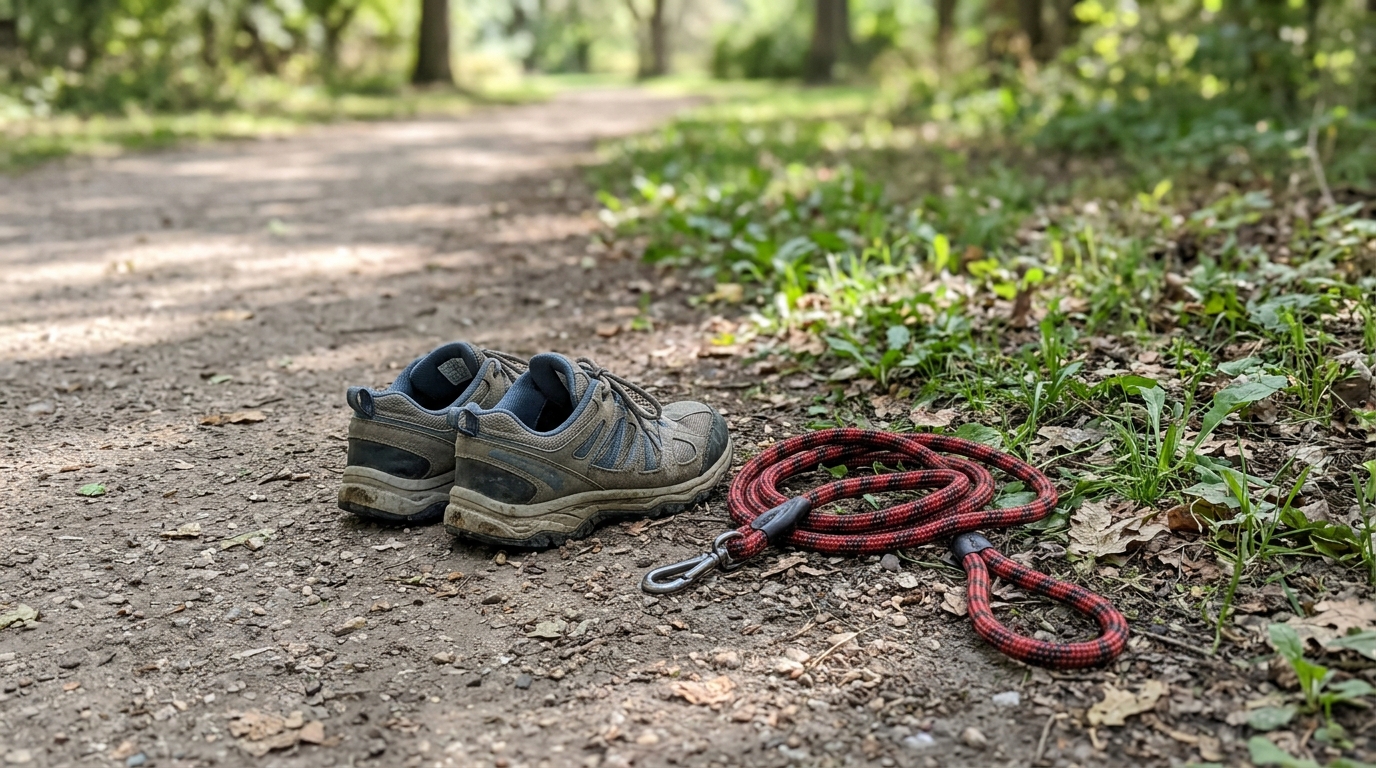
Uneven ground is another frequent complaint. Grass verges, muddy paths, tree roots, gravel, and curbs force your feet to adjust constantly, and the small muscles in your feet work overtime to keep you stable. Wet grass and icy sidewalks add slips, and every catch or twist strains your arches. Our guide to foot pain from hiking explains how uneven terrain tires the same foot muscles, just at a slower pace.
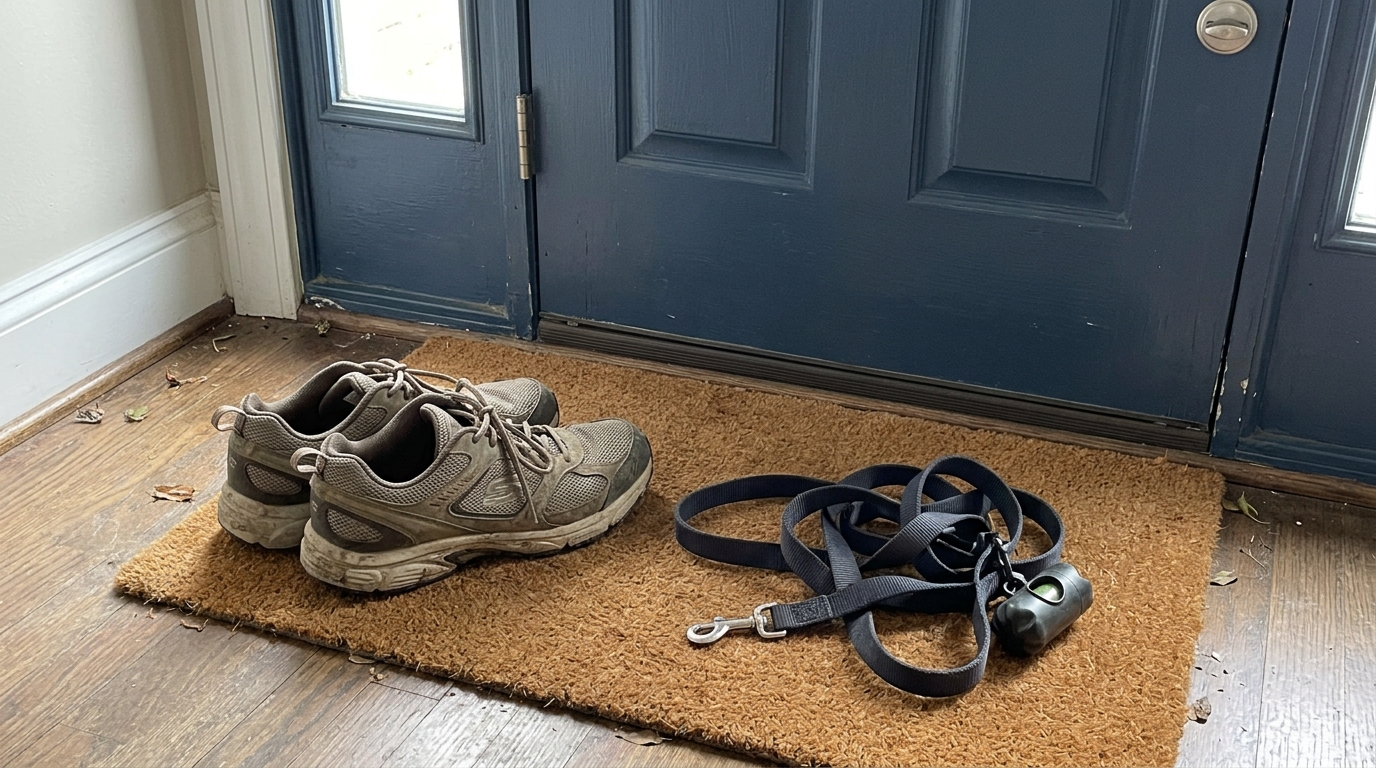
Worn-out shoes make everything worse. The shoes you wear to walk the dog are often the oldest pair by the door — flat, floppy, with the cushioning long gone. With no arch support and no shock absorption, every step lands harder on your heels and arches. In winter, cold, stiff feet tighten up before the walk even starts — a common trigger for heel and arch pain, the Mayo Clinic notes.
What Helps: Making Your Walks Easier on Your Feet
The first fix is your shoes. Retire the flat, worn-out pair by the door and get proper walking shoes with arch support and a cushioned sole. Your feet will notice the difference within a week.
Shorten the leash and steady your pace. A shorter lead gives your dog less room to lunge, and it keeps the pulls smaller. If your dog is a strong puller, a front-clip harness spreads the force across their chest instead of yanking you sideways. A steady, even pace instead of the stop-start rhythm of sniffing and lunging also gives your feet a much easier time.
Stretch your feet and calves before you head out. The Cleveland Clinic points out that tight calves are one of the most common reasons heel and arch pain flares during exercise, and cold mornings make them even stiffer. A wall calf stretch and a few ankle circles take two minutes.
What Helps: Recovery After Your Walks
After your walks, take your shoes off and let your feet breathe. Rolling the bottom of your foot over a tennis ball or a frozen water bottle for a few minutes loosens tight tissue — keep the pressure gentle if the soles are tender.
Rest your feet for a day when the ache flares up. If the soreness keeps coming back, your shoes, your route, or your dog’s pulling still needs fixing — or something else is going on.
Your Daily Routine for Happier Feet on Dog Walks
Here’s a routine to keep your feet comfortable when you walk the dog:
- Wear real walking shoes: Proper ones with arch support and cushioning, not the flat, worn-out pair by the door.
- Keep the leash short: A shorter lead means smaller, gentler pulls, and a front-clip harness helps strong pullers.
- Warm up your feet and calves: Before you head out, spend two minutes spreading your toes, rolling each ankle in circles, and stretching your calves.
- Pick smoother routes: Choose paved paths over muddy verges and tree roots when your feet are sore.
- Roll sore feet after walks: Roll each foot over a tennis ball for a few minutes.
FAQs
Is foot pain from dog walking normal?
Mild soreness in the arches or heels, especially when you’ve just started walking more or your dog pulls hard, is common and usually fades with rest and better shoes. Sharp or persistent pain should be checked.
Why do my feet hurt after walking the dog every day?
Daily walks with no rest days add up — the tissues in your feet never fully recover, so the irritation stacks up over weeks. Add leash pulls, uneven ground, and worn-out shoes, and your arches take a beating.
Can dog walking cause plantar fasciitis?
Dog walking can irritate the plantar fascia, especially with tight calves and flat shoes. Rest, calf stretching, and supportive shoes usually help — persistent heel pain should be checked.
What shoes are best for walking the dog?
Proper walking shoes with arch support, a cushioned sole, and good grip are best — they absorb impact and keep you stable on wet or uneven ground. Avoid flat shoes.
When should I see a doctor about foot pain from dog walking?
See a doctor promptly if the pain is sharp or severe, if swelling doesn’t settle, if you have numbness or tingling, or if it keeps coming back despite rest and better shoes.
Sources
- Mayo Clinic — plantar fasciitis causes and symptoms
- Cleveland Clinic — arch pain and calf tightness information
- American Podiatric Medical Association — foot strengthening exercises
This article is for general information only and is not medical advice. Talk to your doctor or a podiatrist about your own feet.