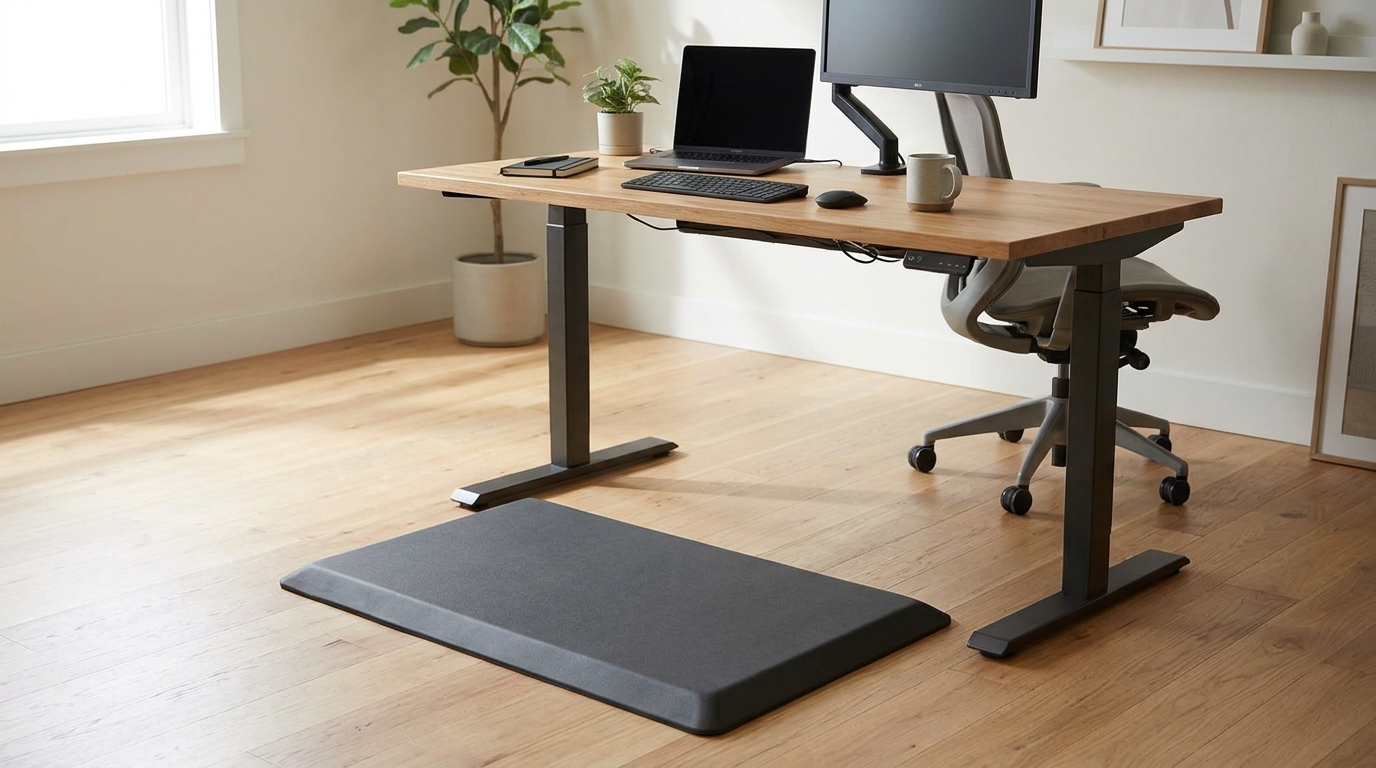
Foot pain from standing desk work is usually caused by standing still on a hard floor for hours, in unsupportive shoes, without moving. Unlike walking, standing still lets blood pool in the feet, loads the same tissues continuously, and fatigues the muscles that hold you upright — so arches ache, heels throb, and legs feel heavy by the end of the day. The fixes are straightforward: supportive shoes or insoles, an anti-fatigue mat, a footrest to shift weight, and short movement breaks every 30 to 60 minutes. Most standing-desk foot pain improves within a week or two of these changes, but pain that is sharp, one-sided, or persistent deserves a medical check.
See a doctor promptly if you notice any of these:
- Sharp or sudden foot pain, or pain that does not improve with rest and better support
- Swelling in one leg or foot, especially with pain or redness
- Numbness, tingling, or color changes in your feet
- Heel pain that is worst first thing in the morning
- Swelling that does not go down overnight, or comes with shortness of breath
Why standing still hurts more than walking
It seems backwards, but standing still is harder on your feet than walking. When you walk, your calf muscles pump blood back up your legs with every step, and the load on your feet shifts constantly between heel, arch, and forefoot. When you stand still, that pump stops, blood pools in the lower legs and feet, and the same tissues bear your full weight without relief. The result is aching arches, throbbing heels, swollen ankles, and heavy legs — the classic end-of-day standing-desk complaint.
Hard floors make it worse. Concrete, tile, and hardwood offer no give, so every bit of impact and pressure goes straight into your feet. Unsupportive shoes compound the problem: flat shoes, worn-out sneakers, and dress shoes with no arch support let the arches collapse and the plantar fascia strain under hours of load. Over weeks, this can develop into plantar fasciitis, Achilles tightness, or metatarsalgia — the same problems that plague people in standing jobs like nursing, retail, and teaching.
Posture plays a role too. Standing with locked knees, weight shifted to one leg, or feet planted in exactly the same spot for an hour forces a few tissues to do all the work. The body is designed to move, and standing desks work best when they encourage movement, not statue-still standing.
Fixes that actually work
Wear supportive shoes. This is the single biggest fix. Choose shoes with arch support, cushioning, and a firm heel counter — or add a supportive insole to the shoes you already wear. Avoid standing barefoot or in socks on a hard floor, and retire shoes whose insoles have collapsed.
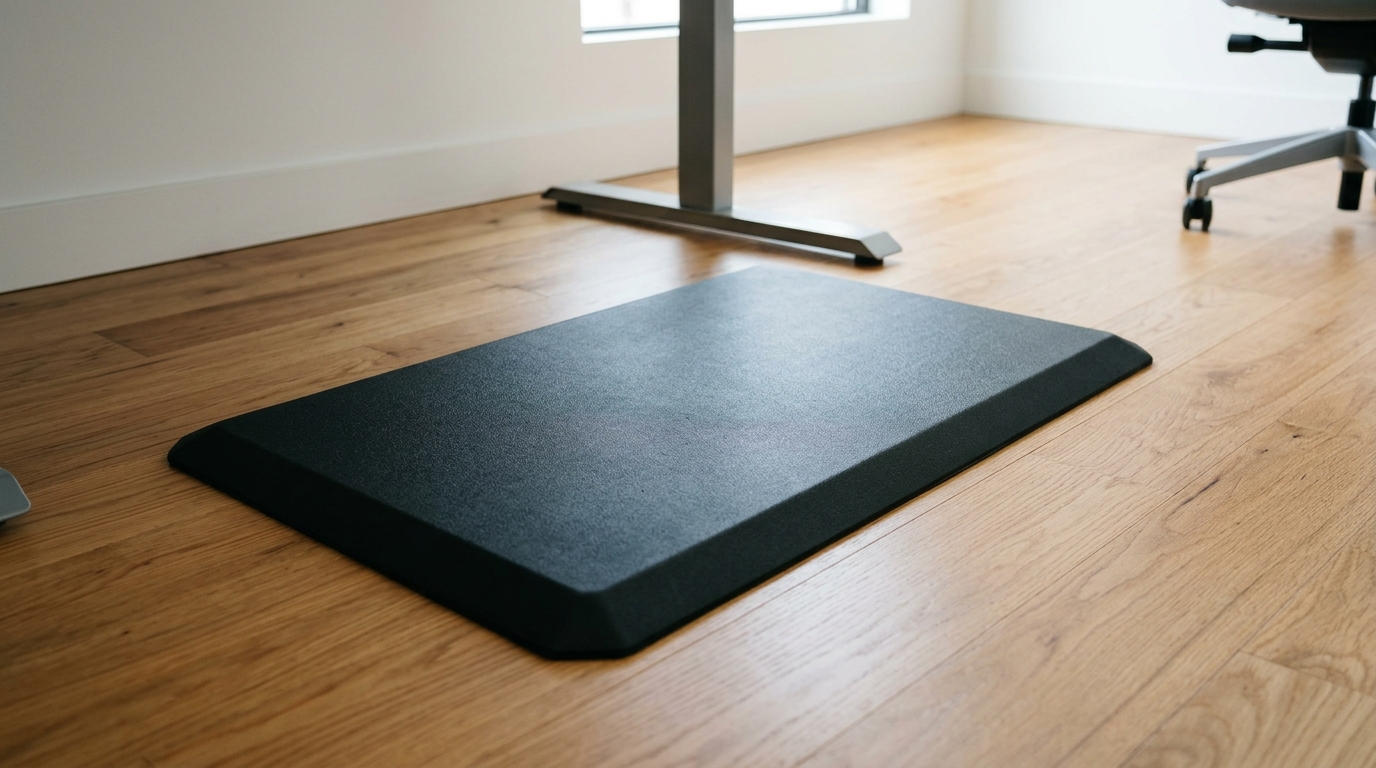
Use an anti-fatigue mat. A thick, cushioned mat encourages tiny balance adjustments in your feet and legs, which keeps blood moving and reduces fatigue. Studies on anti-fatigue mats show reduced discomfort for people who stand for long periods. A mat that is too soft is counterproductive — it should cushion without feeling wobbly.
Shift your weight and move. Keep a small footrest or a low step under your desk and alternate one foot on it every 15 to 20 minutes — this changes the load on your back and feet. Better yet, move every 30 to 60 minutes: walk to get water, do a few calf raises, roll your feet over a tennis ball, or sit down for a few minutes. Alternating between sitting and standing across the day is far healthier than standing all day.
Stretch at your desk. Calf stretches against the desk, toe spreads, ankle circles, and a quick arch roll on a ball take two minutes and loosen the tissues that stiffen during standing. A short stretching break mid-morning and mid-afternoon makes a noticeable difference by the end of the day.
Build up gradually. If you are new to a standing desk, do not jump to eight hours standing. Start with 30 to 60 minutes at a time, alternating with sitting, and build up over a couple of weeks. Your feet, calves, and back need time to adapt.
When standing-desk pain needs a check
Most standing-desk foot pain is simple fatigue and improves with better shoes, a mat, and movement. But get checked if the pain is sharp, one-sided, or does not improve within two weeks of these changes. Morning heel pain that eases as you walk suggests plantar fasciitis; swelling in one leg could signal a circulation problem; and numbness or tingling may indicate nerve compression. A podiatrist can check your gait and arches and recommend orthotics if needed.
Standing desks are a genuine health upgrade over sitting all day — but only if you stand well. Supportive shoes, a mat, regular movement, and gradual build-up turn a standing desk from a foot-pain trap into the healthy workstation it is meant to be.
Frequently asked questions
How long should I stand at a standing desk?
Alternate between sitting and standing, building up gradually. Most experts suggest standing for 30 to 60 minutes at a time, with movement breaks, rather than standing all day.
Do anti-fatigue mats really help?
Yes. They encourage small balance adjustments that keep blood flowing and reduce fatigue, and studies show less discomfort for prolonged standing compared with hard floors.
What shoes are best for a standing desk?
Supportive shoes with arch support, cushioning, and a firm heel counter, or your usual shoes with a quality insole. Avoid flat, unsupportive shoes and standing barefoot on hard floors.
Can a standing desk cause plantar fasciitis?
It can contribute to it, especially in unsupportive shoes on hard floors, because the plantar fascia bears continuous load. Supportive footwear, a mat, and movement breaks reduce the risk.
Is it better to sit or stand all day?
Neither — alternating is best. Prolonged sitting and prolonged standing both cause problems; regular movement between the two is the healthiest pattern.
Sources
- Mayo Clinic — Plantar Fasciitis: Risk Factors
- Cleveland Clinic — Standing Desk Ergonomics
- American Podiatric Medical Association — Foot Pain From Standing
This article is for information only and is not medical advice. If your foot pain is severe, sudden, or not improving, talk to a healthcare professional for a proper diagnosis.