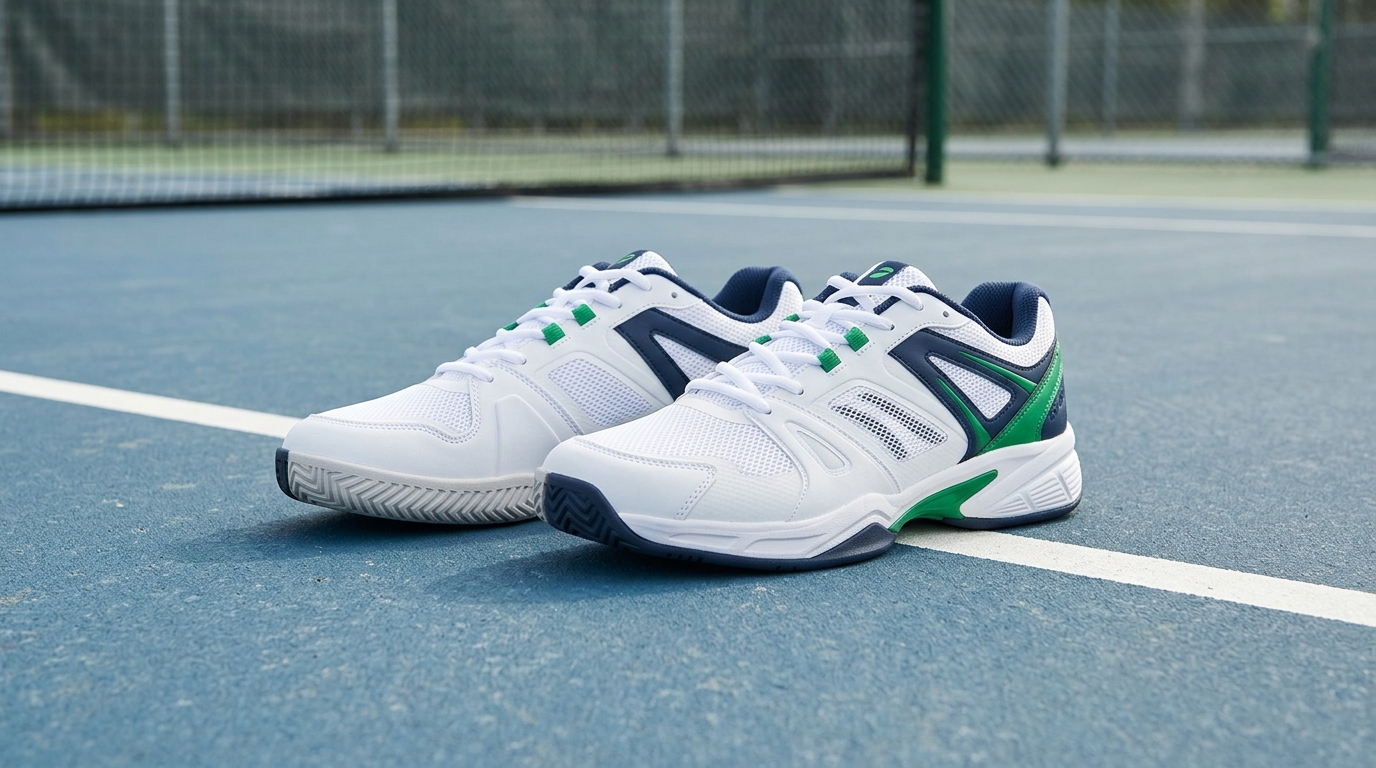
Quick Answer: Foot pain from tennis is usually caused by the stop-start sprinting, hard-court impact, and court shoes that don’t match your foot or your game. It most often shows up in the heel, arch, or ball of the foot, and it’s usually worst after a long match or on a new surface. Rest, ice, better shoes, and a few stretches fix most cases — but pain that stays sharp or lasts more than two weeks deserves a podiatrist’s look.
See a doctor promptly if you notice:
- Sharp, severe, or worsening pain, or pain that makes walking difficult
- Swelling, bruising, or a misshapen foot after a twist or fall
- Pain in one spot on a bone that doesn’t ease with rest
- Numbness, tingling, or a burning feeling in your foot
- Pain still there after two weeks of rest
What It Is: How Tennis Stresses Your Feet
Tennis is tough on feet in a way most sports aren’t. You’re sprinting, stopping dead, lunging sideways, and pushing off hard, all on a surface that gives back almost nothing — over a two- or three-set match, that’s thousands of impacts.
Hard courts are the worst offenders. Unlike clay or grass, a hard court absorbs almost no shock, so your heels and the balls of your feet take the full force of every landing. That’s why players switching from clay to hard courts often notice sore feet within a week or two.
Shoes matter just as much. A worn-out or narrow pair can turn a normal match into a painful one, and running shoes — built to move forward, not sideways — let your foot slide and strain the arch and ankle.
Why It Happens: The Most Common Causes
Plantar fasciitis is the most common culprit. The plantar fascia is the band of tissue along the bottom of your foot, and the repeated push-offs and hard landings in tennis can irritate it, especially if you play several times a week. The classic sign is sharp heel pain with your first steps in the morning.
Metatarsalgia — pain in the ball of the foot — is another frequent complaint. All that lunging forward loads the front of the foot, and if your shoes are too tight, the area can become sore and inflamed.
Achilles tendinitis can show up when you suddenly play more, especially after a break. The tendon at the back of the ankle gets irritated by all the explosive starts, and it usually aches at the start of a match, then loosens up — until it doesn’t.
Blisters and bruised toenails are almost always a shoe issue: shoes that are too short, too narrow, or laced too loosely let your foot slide and jam forward with every stop. Stress fractures are rarer, but they happen in players who ramp up court time too fast — a dull ache in one spot that gets worse as you play is the warning sign.
What Helps: Treating Sore Feet After Tennis
First, rest the sore foot. That doesn’t mean quitting tennis — just skip a day or two and play shorter sessions while they recover. The Mayo Clinic recommends resting, icing, and elevating a sore foot, and icing for 15 to 20 minutes after a match is one of the most effective things you can do.
Stretching helps more than most players expect. The Cleveland Clinic notes that stretching the calf muscles and the plantar fascia reduces strain on the heel and arch, where tennis pain tends to show up. A wall calf stretch and rolling the bottom of your foot over a tennis ball for a few minutes after playing are both worth doing.
Over-the-counter pain relief can help through the first few days, used as directed, and a supportive insole can take pressure off the ball of the foot or arch. The American Podiatric Medical Association advises replacing court shoes once the tread wears smooth or the midsole loses its cushioning — for a regular player, that’s often every few months. If your pain feels like the kind that shows up after any hard workout, our guide to foot pain after exercise covers the same recovery basics.
What Helps: Preventing It Next Time You Play
Prevention starts with the right shoes. Wear proper court shoes — not running shoes — with a snug heel, a roomy toe box, and good lateral support. Lace them firmly so your foot can’t slide forward on sudden stops.
Build up gradually. If you’re coming back after a break, or switching from clay to hard courts, ease in over a couple of weeks rather than playing three long matches in your first week back. Mix in rest days — your feet need time to recover. If running is part of your training too, our guide to foot pain after running explains how to tell normal soreness from something that needs attention.
Your Daily Routine for Tennis Feet
Here’s a routine for regular players:
- Before you play: Spend five minutes on calf stretches and ankle circles, and check your shoes are laced firmly.
- After you play: Roll the bottom of each foot over a tennis ball for two to three minutes, then ice sore spots for 15 minutes.
- On rest days: Do a wall calf stretch morning and evening, and walk barefoot on a soft surface.
- Weekly: Check your court shoes for worn tread and flattened cushioning, and swap in fresh socks — moisture makes blisters more likely.
- When it hurts: Take a day off, ice, and play shorter sessions until the pain fades — don’t push through sharp pain.
FAQs
Is foot pain from tennis normal?
Some soreness after a long or hard match is normal, especially on hard courts or after a break. But pain that is sharp, keeps coming back, or lasts more than two weeks should be checked.
Why do my heels hurt after playing tennis?
Heel pain after tennis is most often plantar fasciitis, from the repeated impact on hard courts. Morning heel pain is the classic sign, and stretching and rolling your foot over a tennis ball usually helps.
Should I play tennis in running shoes?
No — running shoes are built for forward motion, not the side-to-side movement of tennis. Proper court shoes protect your arches and ankles far better.
How long should I rest a sore foot from tennis?
A day or two of rest plus icing is usually enough for mild soreness. If it’s still there after two weeks, or sharp, or in one spot on a bone, see a doctor or podiatrist.
Can insoles help with foot pain from tennis?
Yes — a supportive insole spreads the impact more evenly if your pain is in the arch or the ball of the foot. Just make sure it fits in your court shoe, and replace it when it flattens.
Sources
- Mayo Clinic — foot pain causes and when to seek care
- Cleveland Clinic — plantar fasciitis and stretching information
- American Podiatric Medical Association — athletic footwear and foot care guidance
This article is for general information only and is not medical advice. Talk to your doctor or a podiatrist about your own feet.