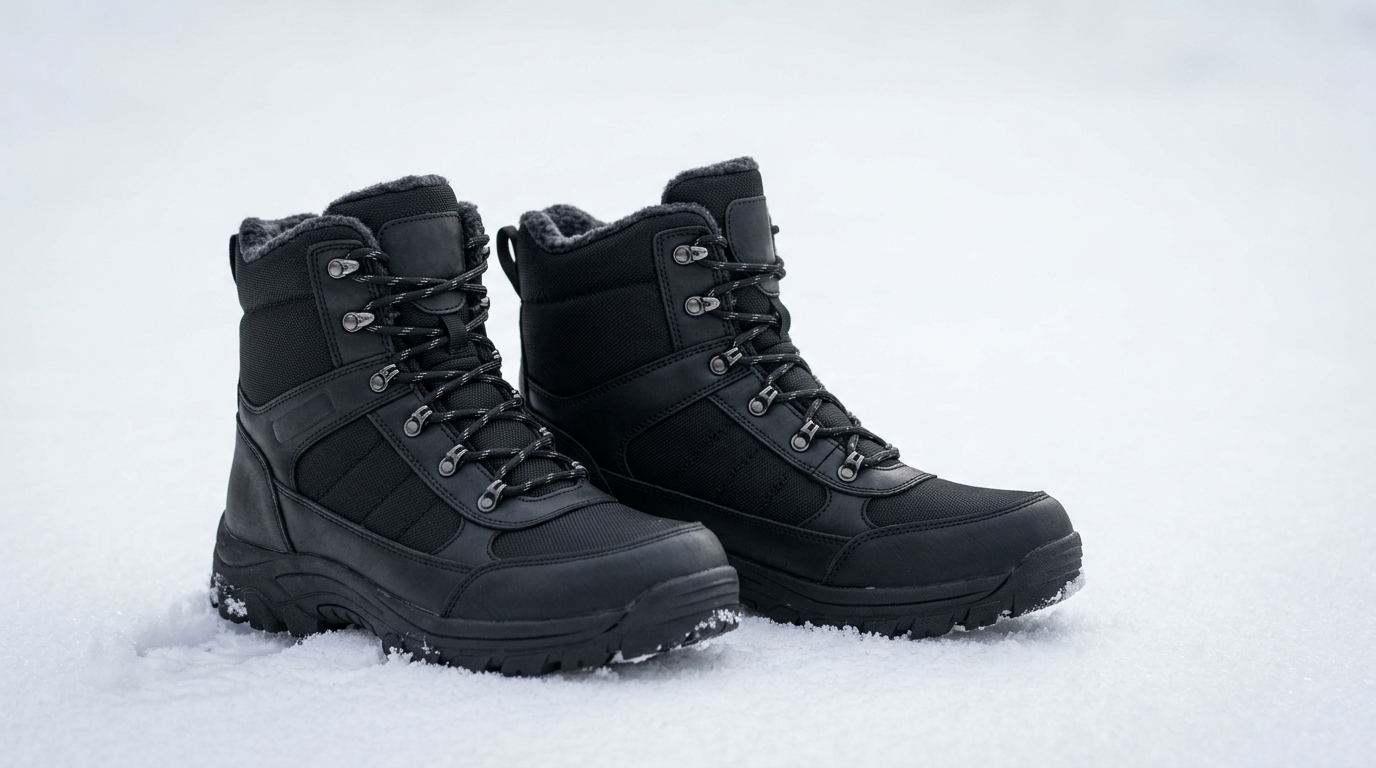
Quick Answer: In short, foot pain from shoveling snow usually comes from three things at once: cold stiff boots that don’t support your feet, the heavy lifting and pushing of wet snow, and slipping on icy ground. Your arches, heels, and calves take the strain with every shovelful, and by the time the driveway is clear they’re tired. It usually eases with rest, warmth, and calf stretching. If the pain is sharp, one-sided, or still there after a few days, get it checked by a doctor or podiatrist.
See a doctor promptly if you notice:
- Sharp or severe pain in the heel, arch, or one spot on a bone
- Swelling, redness, or warmth that doesn’t settle after a day or two of rest
- Numbness, tingling, or a burning feeling in your feet or toes
- Pain that makes walking or putting weight on your foot difficult
- Toes that stay white, blue, or numb after warming up indoors
Why Shoveling Snow Can Hurt Your Feet
Shoveling looks like an arm and back job, but your feet do a surprising amount of the work. Every shovelful starts with your feet: you brace, push the shovel forward, twist to toss the load, and step through ankle-deep snow. Your feet anchor all that force on slippery ground in stiff boots.
The cold is part of the problem. Cold muscles and tendons are stiffer, so the same effort that would be fine in summer strains your feet more in January. Heavy insulated boots are warm, but many have flat insoles, little arch support, and soles that don’t bend. After an hour in them, your arches ache and heels feel bruised.
Then there’s the slipping. A patch of ice under the snow catches you off guard, your foot twists, and you catch yourself with a sudden jolt through the ankle. One slip can leave a foot sore for days — one reason foot pain from shoveling snow is so common in snowy places.
What It Is: The Most Common Causes
Plantar fasciitis is the most common culprit. The plantar fascia is the band of tissue along the bottom of your foot, and hours of pushing and twisting in stiff boots stretch and irritate it. The classic sign is heel pain with your first steps in the morning, which eases as you move, then returns the day after a big session.
Metatarsalgia — pain in the ball of your foot — comes from all the pushing. Driving a shovel into packed snow loads the forefoot over and over, and stiff boot soles pass that force straight to the balls of your feet. Wet, heavy snow is the worst: a shovelful weighs far more than you’d guess.
Achilles tendon strain is another winter pattern. Pushing a loaded shovel with your foot planted, or catching yourself on ice, pulls hard on the Achilles. The tendon sits right where a stiff boot top rubs, and cold, friction, and sudden load leave it aching.
The cold itself can hurt your feet in ways that have nothing to do with the shovel. Numb toes, chilblains, and stiff arches are all part of winter foot trouble, and they make shoveling soreness worse. Our guide to foot pain in cold weather covers how low temperatures tighten tissues and what to do about it.
What Helps: Before You Pick Up the Shovel
Your boots are the first thing to fix, and they matter more than the shovel. Look for winter boots with a proper arch, a cushioned insole, and a sole that grips on ice — good traction means fewer slips. If your boots are flat inside, slip in a supportive insole. Our guide to foot pain from snow boots covers which boots help and which ones hurt.
Warm up before you go out, even if it’s only for five minutes. March in place, do a few calf raises, and circle your ankles. Warm muscles stretch more easily than cold ones, and that small warm-up makes a real difference in freezing air. Wear warm socks, too — cold feet cramp faster and hurt more.
Pick the right shovel. A lighter, ergonomic shovel with a bent handle means less weight on every lift and less twisting. Push the snow instead of lifting it, and take smaller loads — a half-full shovel is kinder to your feet and back than a heaped one.
What Helps: Recovery After Shoveling
When you’re done, get out of your cold boots and into warm, dry socks and supportive shoes — not flat slippers. Warm your feet up gradually; a ten-minute warm soak helps blood flow back and eases stiff tissue. Roll each foot over a tennis ball to loosen tight arches.
Stretch your calves every evening after a shoveling day. Face a wall, step one foot back, and press the heel into the floor until you feel a gentle pull. Hold it for thirty seconds on each side. Tight calves drive heel pain, and this two-minute habit makes a real difference over a few weeks.
Your Daily Routine for Happier Feet in Snow Season
Here’s a routine for the snow season:
- Warm up indoors first: Calf raises and ankle circles take five minutes.
- Wear boots with grip and arch support: Good traction means fewer slips, and a supportive insole stops flat boots bruising arches.
- Push snow, lift less, take breaks: Smaller loads and a rest every fifteen minutes keep strain manageable.
- Warm up and change socks straight after: Dry socks and a warm soak get blood flowing back.
- Stretch your calves every evening: A two-minute wall stretch after a shoveling day keeps heel pain from building.
FAQs
Is foot pain from shoveling snow normal?
Mild soreness in the arches or heels after shoveling is very common and usually fades with rest, warmth, and stretching. Sharp, one-sided, or persistent pain is not normal — get it checked.
Why do my heels hurt the morning after shoveling?
Hours of pushing and bracing in stiff boots irritate the plantar fascia, and it tightens overnight. That first-steps heel pain in the morning is the classic sign, and stretching usually helps it settle.
Can shoveling snow cause plantar fasciitis?
Yes — repeated pushing, lifting, and twisting in stiff, unsupportive boots can irritate the plantar fascia. Rest, calf stretching, and supportive insoles usually help, but heel pain lasting more than a couple of weeks should be checked.
What boots are best for shoveling snow?
Look for boots with good ice traction, a proper arch, and a cushioned insole — and add a supportive insole if the boot is flat inside. Warmth matters too: cold feet cramp faster, so wear warm socks.
When should I see a doctor about foot pain from shoveling snow?
See a doctor promptly if the pain is sharp or severe, if swelling doesn’t settle after rest, if you can’t put weight on your foot, or if your toes stay numb, white, or blue after warming up.
Sources
- Mayo Clinic — plantar fasciitis causes and symptoms
- Cleveland Clinic — Achilles tendon pain
- American Podiatric Medical Association — winter foot care
This article is for general information only and is not medical advice. Talk to your doctor or a podiatrist about your own feet.