Quick Answer: In short, foot pain from yoga usually comes from overloading small muscles in your feet that aren’t used to bearing your full weight barefoot — standing poses and deep toe stretches can leave your arches and heels aching. The pain is usually mild and fades with rest, better alignment, and a little strengthening. If it stays sharp, lasts more than a couple of weeks, or comes with swelling, get it checked by a doctor or podiatrist.
See a doctor promptly if you notice:
- Sharp or severe pain in the heel, arch, or a single spot on a bone
- Pain that makes walking or putting weight on your foot difficult
- Swelling, redness, or warmth that doesn’t settle within a day or two
- Numbness, tingling, or a burning feeling in your foot or toes
- Pain that keeps coming back every class and isn’t improving
Why Yoga Can Hurt Your Feet
Yoga is sold as gentle — slow movements, no impact, bare feet on a soft mat. So why do your feet ache after class? The honest answer is that yoga asks a lot of your feet. You’re balancing on one leg, folding your toes under, and holding standing poses for a minute or more. If your foot muscles aren’t used to that kind of work, they complain.
Most of us spend the day in shoes that do the supporting for us. Take those shoes off and ask your feet to grip, balance, and hold your weight, and the small muscles along the arch and toes suddenly have a big job.
What It Is: The Most Common Causes
Plantar fascia strain is the most common culprit. Standing poses like Warrior II and Triangle stretch the band of tissue along the bottom of your foot, and if it’s tight or already irritated, it aches — often worst in the heel or arch the morning after a class. The Mayo Clinic lists overuse and tight calf muscles among the main causes of plantar fasciitis, and both show up regularly in yoga.
Toe cramps are another frequent complaint. Poses like Hero pose or kneeling with the toes tucked under fold the toes sharply, and that position can trigger cramping in the small muscles of the forefoot.
Balance poses can strain your ankles and arches too. Standing on one foot in Tree pose forces the muscles on the inside of your arch to hold your whole body steady. If your arch is flat or your ankles roll inward, those muscles tire quickly and the arch aches afterward.
Then there’s simply doing too much too soon. If you’ve jumped into daily classes after months off the mat, your feet haven’t had time to adapt. A new, longer class or a more demanding style — hot yoga, power yoga — can be enough to leave you sore. If your feet also hurt when you stretch them at home, our guide to a foot stretching routine shows gentle moves that help your feet adjust gradually.
What Helps: Adjusting Your Practice
The first fix is to slow down in the poses that hurt. If a standing pose makes your arch burn, shorten the hold, bend the front knee less, or come out of it early — there’s no prize for holding a pose through pain.
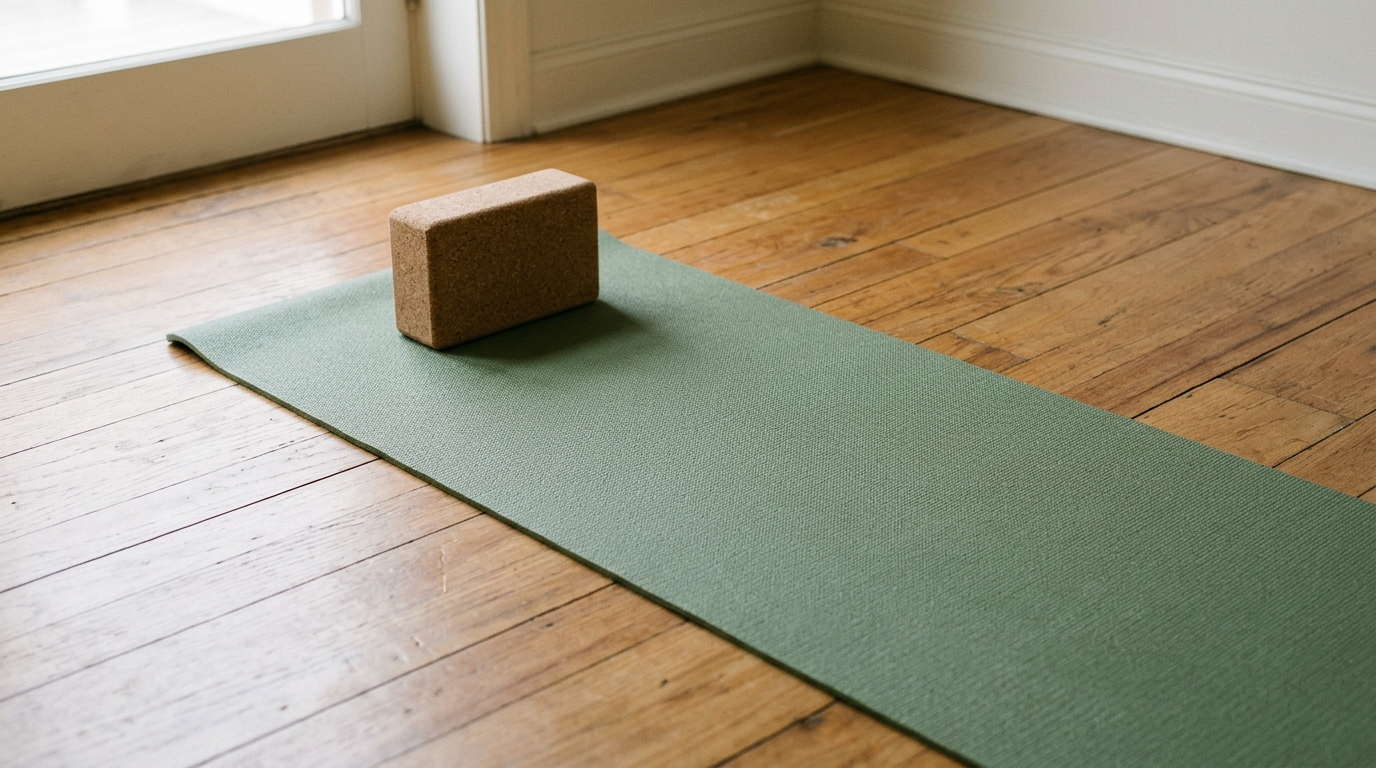
Your mat matters more than you’d think. A thin mat on a hard floor gives your feet almost no cushioning. A thicker mat — or a folded blanket under your heels in poses like Downward Dog — takes the edge off.
Strengthening helps over time. The American Podiatric Medical Association recommends exercises like towel scrunches and toe spreads to build the small muscles in your feet — stronger feet handle balance poses without aching.
Stretch your calves regularly, too. Tight calves pull on the heel and the plantar fascia, and the Cleveland Clinic points out that calf tightness is one of the most common reasons heel pain flares during exercise. A wall stretch after class, held for 30 seconds on each leg, is a simple habit that pays off.
What Helps: Recovery After Class
After a sore class, rest your feet for a day and let the ache settle. Rolling the bottom of your foot over a tennis ball or a frozen water bottle for a few minutes loosens tight tissue and feels surprisingly good — just keep the pressure gentle, especially if the arch is tender.
If your feet are sore after every class, look at what else you’re doing on your feet. Dancing, running, or long days standing can all add up, and yoga may just be the last straw. Our guide to foot pain from dancing covers the same kind of overuse ache in a different setting.
Your Daily Routine for Happier Feet on the Mat
Here’s a routine to keep your feet comfortable in class:
- Warm up your feet: Before class, spend two minutes spreading your toes wide, scrunching a towel with them, and rolling each ankle in circles.
- Use a thicker mat: A mat with more cushioning protects your heels in standing poses — or fold a blanket under your heels for Downward Dog.
- Modify early: Shorten holds or bend the knee less in any pose that makes your arch burn, and come out before the pain builds.
- Stretch your calves after class: Hold a wall calf stretch for 30 seconds per leg, plus a gentle seated toe stretch.
- Roll sore feet: Roll the bottom of each foot over a tennis ball for a few minutes on class days, and rest a day if the ache is still there.
FAQs
Is foot pain from yoga normal?
Mild soreness in the arches or heels, especially when you’re new to yoga or have increased your classes, is common and usually fades as your feet get stronger. Sharp or persistent pain is not normal and should be checked.
Why do my arches hurt after yoga?
Standing and balance poses ask the small muscles in your arches to support your full weight barefoot, which they’re often not used to. Weak arches, flat feet, and tight calves all make it worse.
Can yoga cause plantar fasciitis?
Yoga can irritate the plantar fascia, especially if it’s already tight or you jump into demanding classes too quickly. Rest, calf stretching, and gentler poses usually help — persistent heel pain should be checked by a doctor.
Should I wear yoga socks?
Yoga socks with grips can help if your feet slide on the mat, but they’re a comfort choice, not a fix — the real fix is stronger feet, a good mat, and not pushing through pain.
When should I see a doctor about foot pain from yoga?
See a doctor promptly if the pain is sharp or severe, if there’s swelling that doesn’t settle, if you have numbness or tingling, or if the pain keeps coming back every class despite resting and modifying your practice.
Sources
- Mayo Clinic — plantar fasciitis causes and symptoms
- Cleveland Clinic — arch pain and calf tightness information
- American Podiatric Medical Association — foot strengthening exercises
This article is for general information only and is not medical advice. Talk to your doctor or a podiatrist about your own feet.