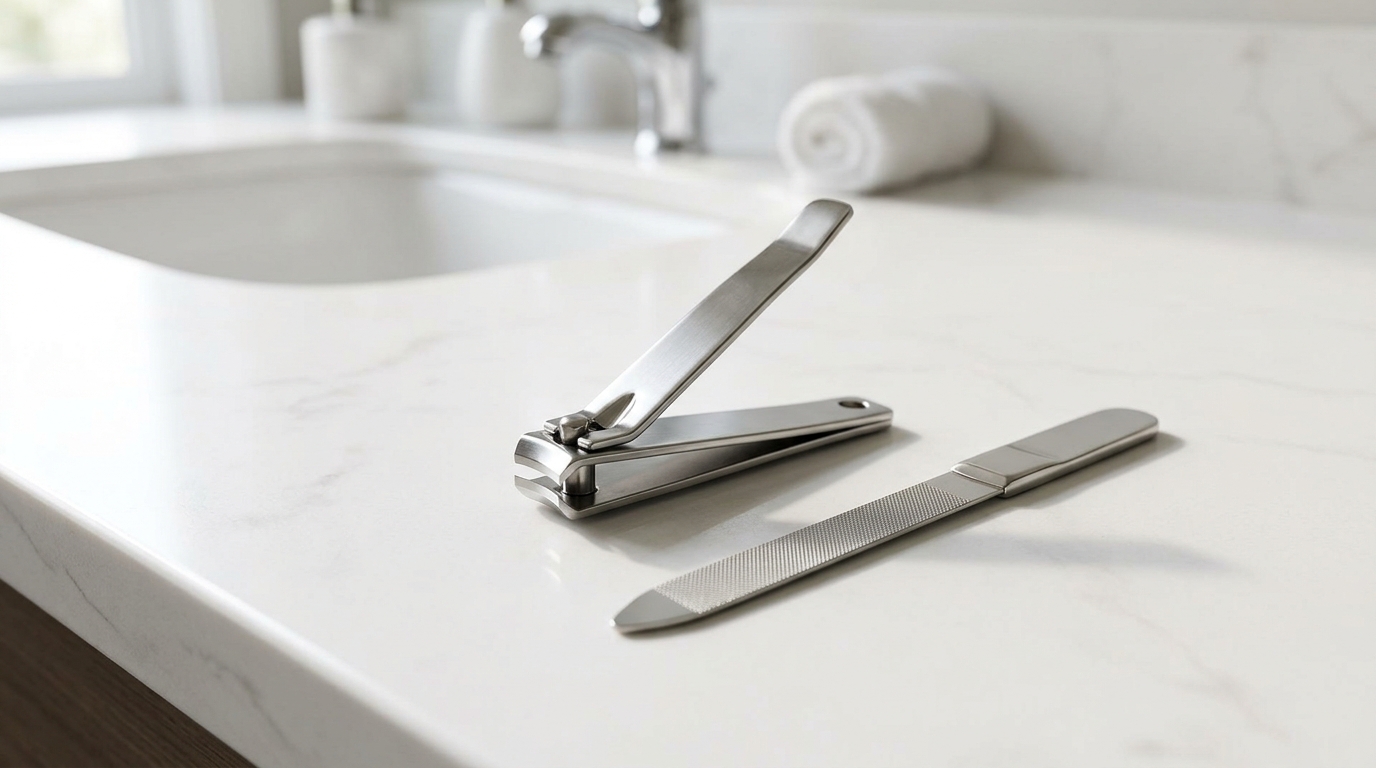
Quick Answer: Learning how to trim toenails properly comes down to three things: cut straight across, leave a little length, and use the right tool. Trim after a shower when nails are softer, use clean nail clippers or toenail nippers, and file the sharp corners lightly instead of rounding them down.
See a doctor promptly if:
- You have diabetes or poor circulation and notice any cut, redness, or sore on your toes.
- A nail is already digging into the skin and the area is swollen, hot, or leaking fluid.
- You see red streaks spreading from a toe, or you develop a fever.
- A toenail is thick, discolored, or painful and you are not sure what is causing it.
Why a Simple Trim Matters More Than You Think
Most of us trim our toenails on autopilot — a quick snip while we are half-watching TV. And most of the time that works out fine. But a careless trim is also one of the most common causes of ingrown toenails, and an ingrown nail can turn a normal week into a limping, throbbing one. The good news is that the fix is simple. You don’t need fancy tools or a salon visit. You just need to know how to trim toenails properly, and then make it a habit.
Your toenails grow slowly, roughly a millimetre or so a month, so you only need to trim them every six to eight weeks or so. That slow pace means a small mistake takes a while to become a problem, but a good routine pays off for a long time. A straight cut, a sensible length, and clean tools are really all there is to it.
What Happens When You Cut Them Wrong
The classic mistake is cutting toenails in a curve, the way you would cut fingernails. On a toenail, that rounded shape lets the corners grow down into the skin beside the nail, and that is exactly how an ingrown toenail starts. The other common mistake is cutting them too short. When a nail is cut right down to the skin, the flesh at the tip of the toe can fold over the nail edge as it grows back, which traps it and invites pain and infection.
Peeling or tearing a nail instead of cutting it is another culprit. A tear leaves a jagged edge that can catch on socks and dig into the skin. And using dull or dirty clippers can crush the nail rather than cut it cleanly, which leaves rough edges and can spread bacteria. None of this is dramatic on its own, but stacked together over months, it is how most people end up with a sore toe that will not settle.
What Helps: The Tools and Technique Podiatrists Recommend
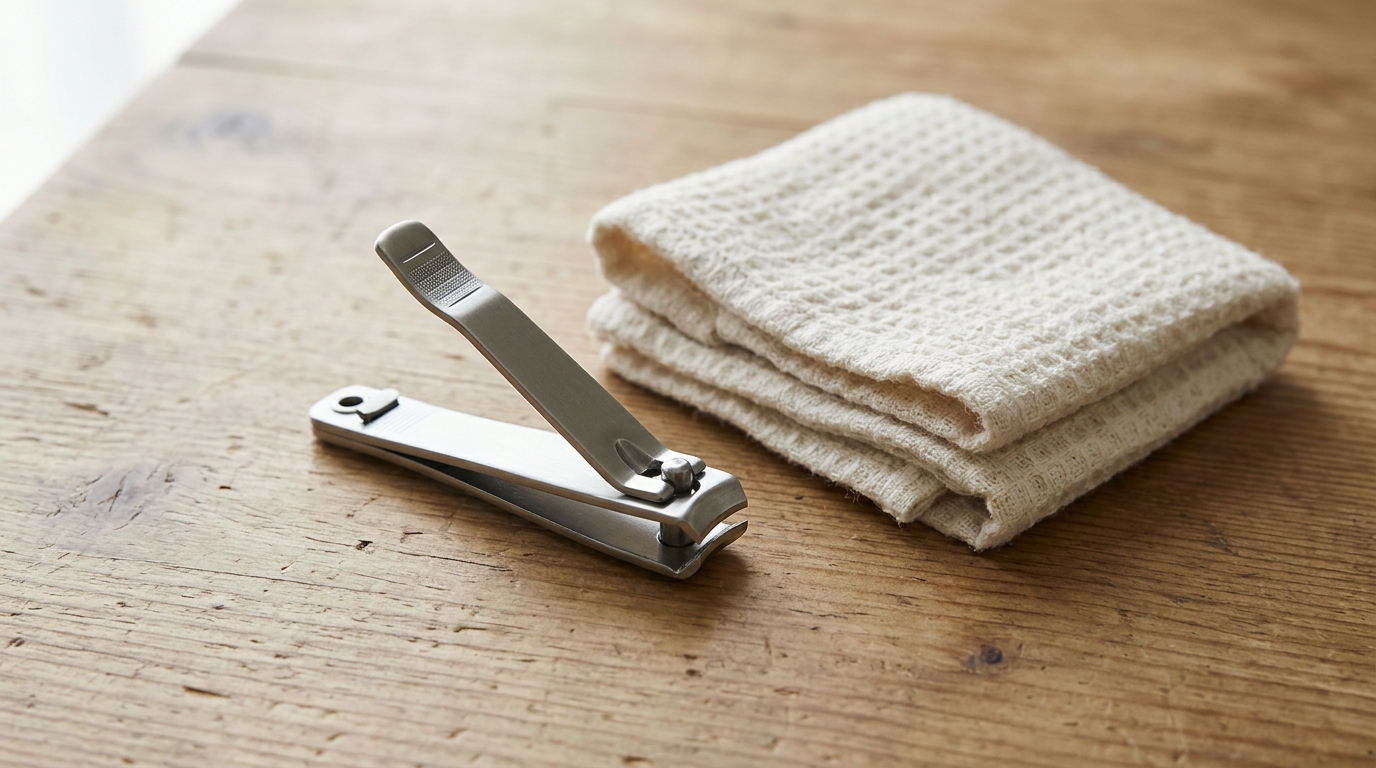
Podiatrists recommend keeping it simple. The American Podiatric Medical Association notes that toenails should be cut straight across and kept at a moderate length, with the corners left visible rather than dug out. A pair of toenail clippers — the larger, straight-edged kind — or toenail nippers for thicker nails will do the job. A nail file or emery board finishes the edge so it does not snag.
Start by washing your feet and trimming after a shower or a foot soak, when the nails are softer and easier to cut. Clean your clippers with soap and water or rubbing alcohol before you begin, especially if anyone else in the household uses them. Then cut straight across in small snips rather than one big bite, which gives you more control and a cleaner edge. Leave the nail just long enough that its edge sits level with the tip of your toe — you should be able to feel the corner with your fingertip. Finally, file the corners lightly to smooth them, but do not round them off or dig down the sides.
If a nail is thick, yellowed, or hard to cut, soak the foot for ten minutes first and use nippers instead of forcing regular clippers. If a nail keeps thickening or changing color, that is worth showing a podiatrist rather than wrestling with it at home.
Your Toenail Trimming Routine
Set aside five minutes every six weeks or so and make it a small ritual. Here is a routine that works:
- Wash and soak: Wash your feet with warm water and soap, or trim right after a shower.
- Clean your tools: Wipe clippers with rubbing alcohol and check they are sharp.
- Cut straight across: Small snips, straight line, corners left square and visible.
- Leave some length: The nail edge should sit level with the tip of your toe.
- File the edges: Smooth any sharp spots with a file — do not round the corners down.
- Moisturize and check: Rub in a little foot cream and glance over each toe for redness or swelling.
If you wear tight shoes, check the fit while you are at it. Shoes that squeeze the toes undo good trimming fast, because they press the skin right against the nail edge. And if you have diabetes or poor circulation, skip the do-it-yourself routine and let a podiatrist handle your nail care — even a small nick can become a slow-healing wound.
FAQs
How often should I trim my toenails?
Most people need a trim every six to eight weeks, since toenails grow slowly. If yours grow faster or you wear open shoes a lot, you may need to trim every four to six weeks. Let the length guide you rather than the calendar.
Should I cut my toenails straight across or curved?
Straight across, always. A curved cut lets the corners grow into the skin and is the most common cause of ingrown toenails. You can file the sharp corners lightly, but do not round them down or dig into the sides.
How short is too short?
If you cannot feel the edge of the nail with your fingertip, or the skin at the tip of your toe folds over the nail, you have cut too short. Leave the nail level with the tip of the toe.
What is the best tool for trimming toenails?
Straight-edged toenail clippers work for most people. If your nails are thick, toenail nippers give you more leverage. Keep whatever you use clean and sharp, and add a nail file to smooth the edges.
Can I trim my toenails if I have diabetes?
You should be extra careful. People with diabetes or poor circulation heal slowly, so even a small cut can become a problem. Many podiatrists advise having a professional trim your nails, and you should see a doctor promptly if you notice any cut, redness, or sore on your feet.
Sources
- American Podiatric Medical Association — foot health guidance on nail care
- Mayo Clinic — ingrown toenails, symptoms and prevention
- Cleveland Clinic — how to trim toenails and prevent ingrown nails
- NHS — foot care and looking after your toenails
This article is for general information only and is not medical advice. Talk to your doctor or a podiatrist about your own feet.