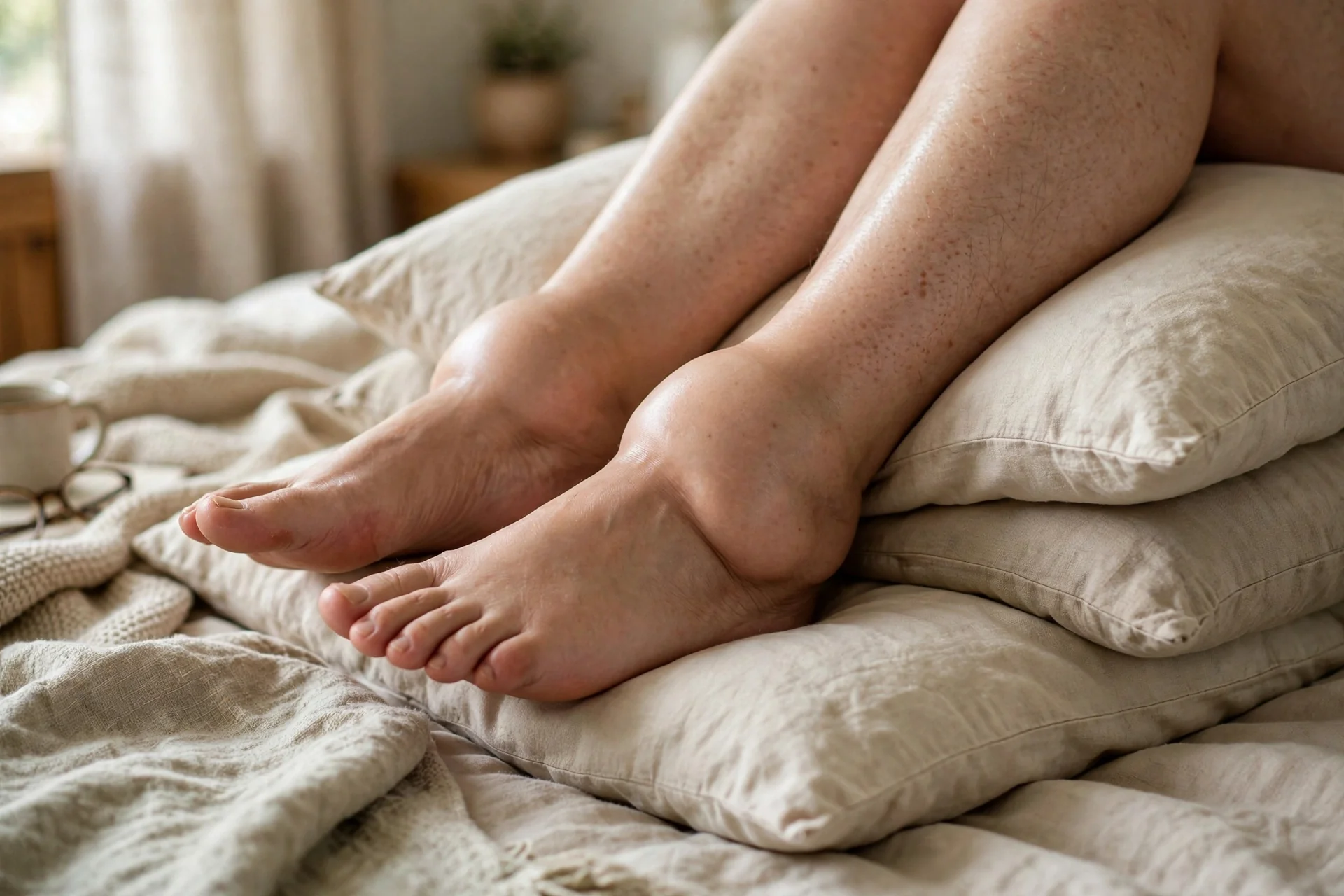
Swelling in the ankles, feet and legs happens when fluid builds up in the tissues — oedema. Gravity pulls that fluid downward, which is why it collects in the feet and why it is often worse by evening and better after a night lying down. Most of the time it is a nuisance, not an emergency. The pattern tells you a lot: swelling in both legs that comes and goes is usually benign; swelling in one leg only is more concerning.
When to see a doctor — urgently if needed
Call emergency services for swelling with shortness of breath or chest pain. Get urgent care for swelling in one ankle, foot or leg with no clear cause, severe or sudden swelling, a swollen area that is red or hot, fever, or swelling plus diabetes. See a clinician soon if both legs stay swollen after a few days of home care, swelling keeps worsening, or you have heart, kidney or leg-vein disease.
What causes swollen feet
- Gravity and inactivity: standing or sitting in one position for too long, long travel, and hot weather (blood vessels widen in heat).
- Diet and weight: too much salt, being overweight, and hormonal changes (pregnancy, menstruation, menopause).
- Medicines: some blood pressure medicines (calcium channel blockers), contraceptive pills, hormone therapy, antidepressants, steroids and anti-inflammatories.
- Vein problems: varicose veins and venous insufficiency — worn leg-vein valves that cannot return blood efficiently.
- Serious causes: a blood clot (usually one leg, painful), heart failure (both legs, worse by evening, with breathlessness), kidney or liver disease, infection, or injury.
Symptoms
- Puffy, swollen ankles, feet or legs, in one or both legs
- Shiny or stretched skin, sometimes with dents left when you press it
- Stiffness, discomfort, dry skin or colour changes
- Swelling worse by evening, better after lying down overnight
- With a clot: pain, warmth and redness in one calf; with heart failure: breathlessness and fatigue
What actually helps
- Elevation: raise legs above hip level when resting — the single most effective home step.
- Movement: walk and gently exercise the legs; avoid sitting or standing still for long stretches.

- Less salt: cut salty foods; drink normally — dehydration does not help swelling.
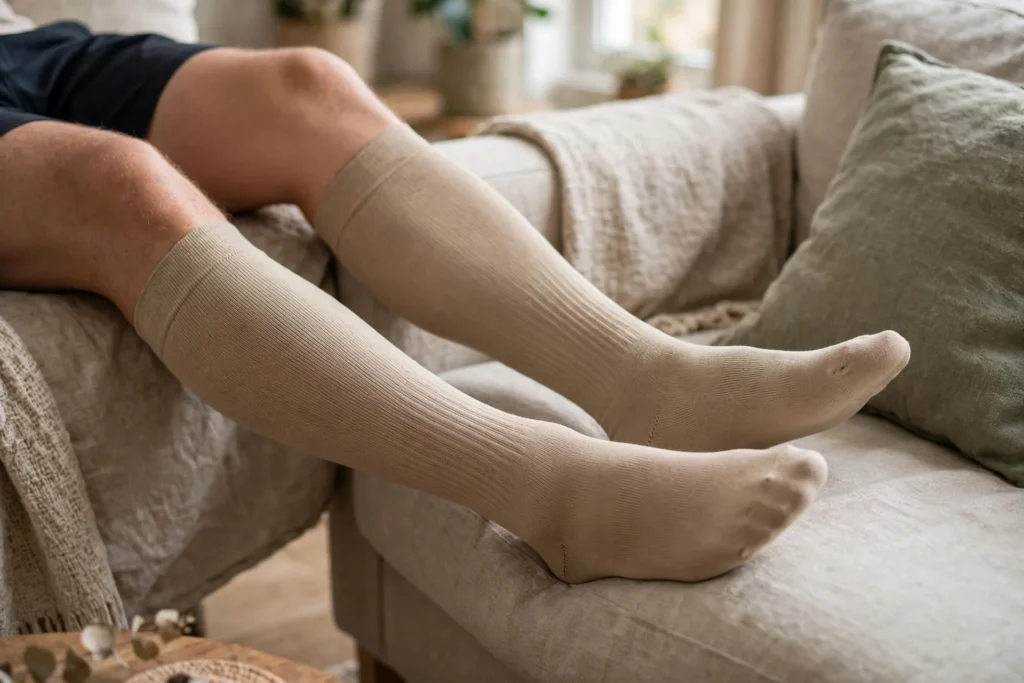
- Compression socks: help venous swelling, but only if a clinician has ruled out a clot or circulation problem — do not compress a painful one-sided swelling before it is checked.
- Check medicines: if swelling started with a new medicine, ask your doctor — never stop a prescribed drug on your own.
Daily routine for swollen feet
- Morning: check whether swelling cleared overnight; put on compression socks if advised.
- Through the day: move every hour, avoid long sitting or standing, keep salt low.
- Evening: elevate legs above hip level for 20–30 minutes.
- Watch for: one-sided swelling, pain, redness or breathlessness — any of these means get checked promptly, not tomorrow.
Frequently asked questions
When should I worry about swollen feet?
If swelling comes on suddenly, affects only one leg, keeps worsening, leaves a dent when pressed, or comes with chest pain or breathlessness. A swollen, red, painful calf can be a blood clot and needs urgent care.
Can swollen feet be a sign of heart problems?
Yes. When the heart pumps less effectively, fluid collects in the lower legs — usually both feet, worse at the end of the day. Breathlessness, tiredness or needing extra pillows at night make a heart cause more likely.
What causes swelling in both feet and ankles?
Most often standing or sitting too long, hot weather, pregnancy, being overweight, a high-salt diet, or medicines. Persistent both-leg swelling can also come from heart failure, kidney or liver disease, or weak leg veins.
How do you reduce swelling in the feet?
Raise legs above hip level, keep active, wear compression socks if advised, and cut salt. These ease swelling but do not treat the cause — if it keeps returning, get it assessed.
Does drinking less water help swollen feet?
No. Restricting fluids does not fix oedema and can cause other problems. Elevation and movement help; the cause needs identifying if it persists.
Sources
- Swollen Ankles, Feet and Legs (Oedema) — NHS
- Swollen Ankles and Feet — WebMD
- Why Are My Feet & Ankles Swollen? — Houston Methodist
Footcarely is reader-supported. We don’t use affiliate links yet — when we do, this page will say so. This guide is general information, not medical advice. One-sided, painful or sudden swelling deserves urgent care, not home remedies.
Related: Burning Feet at Night · Numb Feet & Toes · Foot Pain Map · Foot Problem Finder quiz