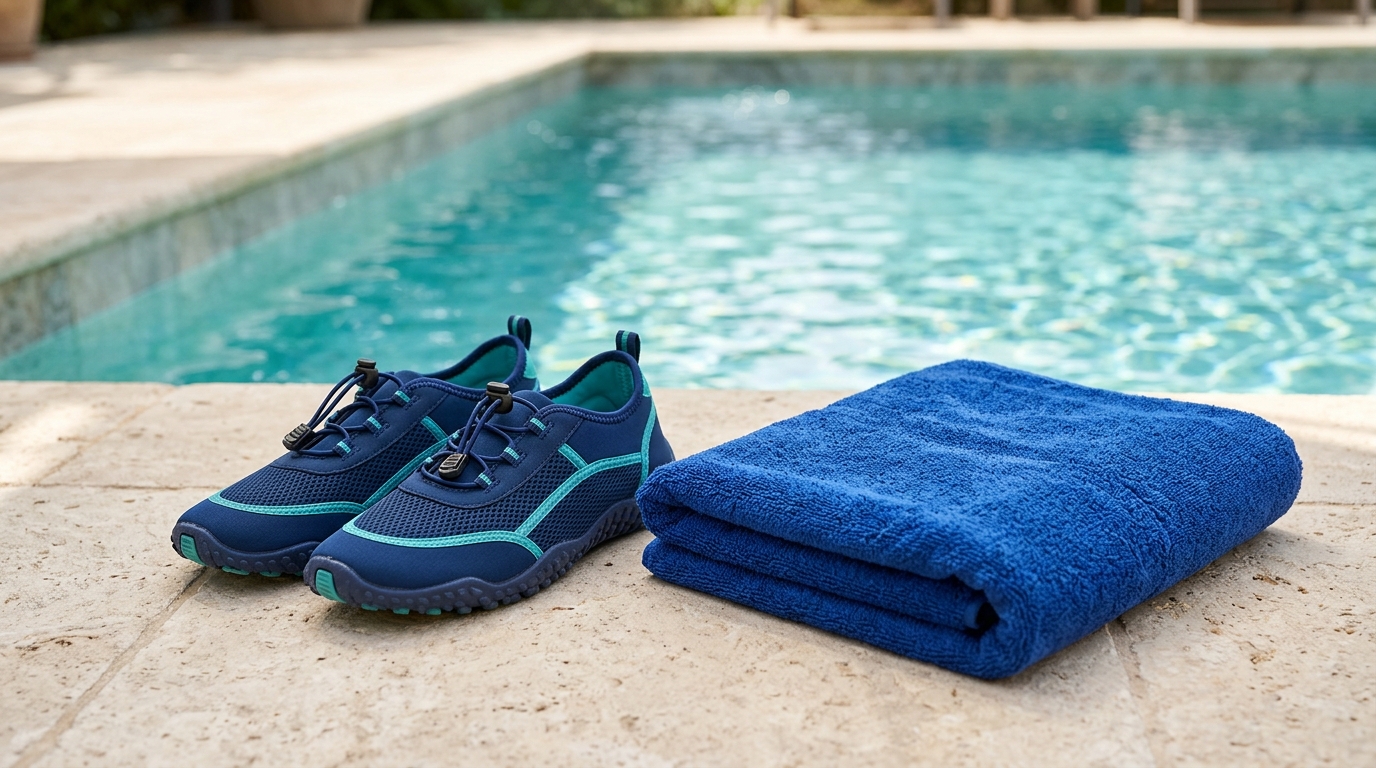
Quick Answer: In short, foot care after swimming is simple and takes just a few minutes: dry your feet thoroughly — especially between your toes — rinse off pool or lake water, and put on clean, dry socks and shoes. This small routine protects you against athlete’s foot, cracked skin, and other common poolside problems. If you swim regularly, a little moisturiser and a pair of pool sandals make a real difference too.
See a doctor promptly if you notice:
- Itchy, scaly, or peeling skin between your toes that won’t heal
- Blisters, open sores, or cracks that become red, warm, or painful
- A toenail that turns yellow, thick, or crumbly
- Swelling, redness, or pain in a foot after a swim
- A foot wound that doesn’t improve within a few days
Why Your Feet Need Attention After Swimming
Swimming is wonderful for your body — gentle on your joints and a great workout — but it’s tough on your feet in ways that are easy to miss. Pool, lake, and ocean water all leave your feet wet, soft, and exposed for longer than usual, and warm, damp skin is exactly what fungi and bacteria love.
The problem usually isn’t the swimming itself — it’s what happens afterwards. Feet that stay damp inside shoes and socks are the perfect breeding ground for athlete’s foot, the itchy fungal infection that thrives between the toes. Pool decks and locker-room floors add another risk, since you’re walking barefoot where hundreds of others have walked.
Chlorine adds its own problem, drying out the skin so your heels can feel tight, rough, or flaky — and if your feet are already dry or cracked, repeated pool visits can make things worse.
What It Is: The Most Common Problems After Swimming
The most common issue is athlete’s foot. It usually starts as itching or a burning feeling between the toes, then the skin can turn red, peel, or crack. It spreads easily in warm, wet places, so pool decks, showers, and damp towels are classic trouble spots — but it’s very treatable, and a good drying routine goes a long way towards preventing it.
Plantar warts are another poolside risk — a virus that enters through tiny breaks in the skin, often picked up from damp pool decks or locker-room floors. A wart feels like a small hard lump on the sole of your foot, and it can be painful to walk on. They aren’t dangerous, but they’re stubborn, so prevention is worth the effort.
Dry, cracked skin is the third common problem, and it’s mostly down to chlorine stripping natural oils from the skin, leaving heels and soles rough and flaky. If cracks deepen, they can become painful and let infection in — which is why moisturising is part of a proper routine, not an optional extra.
What Helps: Dry Thoroughly and Rinse Off
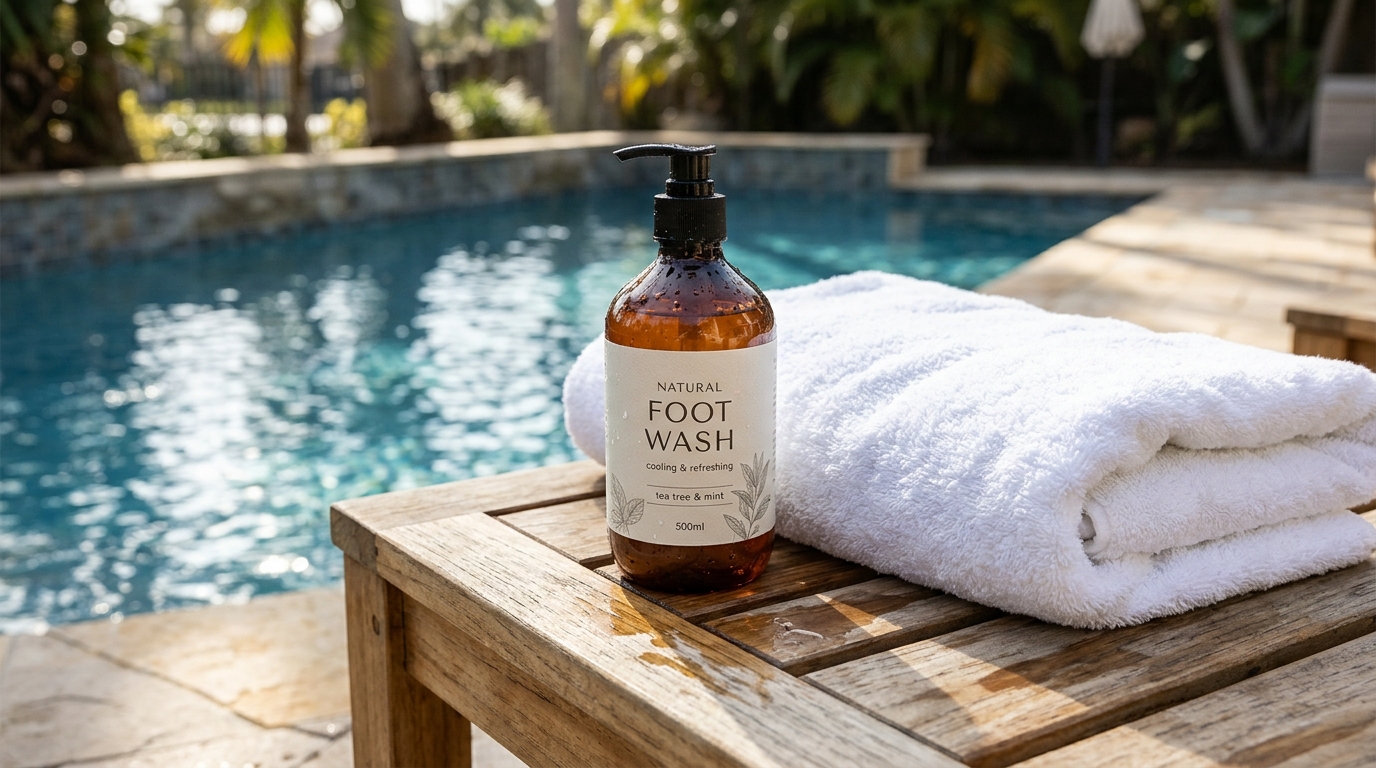
The single most important step is drying your feet properly. The Mayo Clinic recommends keeping feet clean and dry to prevent fungal infections, and that starts with the space between your toes — the area most people forget. After your swim, rinse your feet with clean fresh water to wash off chlorine, salt, or lake water, then towel-dry carefully, paying special attention between each toe.
Wear pool sandals on deck and in the showers and changing rooms — one habit that cuts your exposure to the fungi and viruses on communal floors. Keep them just for the pool, and rinse and dry them afterwards.
Change into clean, dry socks as soon as you can — cotton or moisture-wicking ones pull sweat away from your skin, and a light dusting of foot powder helps if your feet sweat a lot.
What Helps: Moisturise and Protect Your Skin
Once your feet are clean and dry, moisturise them with a plain fragrance-free foot cream or petroleum jelly, rubbed into the tops and soles of your feet and around your heels, where the skin is thickest. Avoid heavy cream between your toes, though — that area needs to stay dry.
If your heels are already cracked, a thicker cream at night under cotton socks can soften the skin over a few days. The Cleveland Clinic notes that moisturised skin resists the small cracks that let infection in, so this step does more than make your feet feel nice.
Check your feet regularly too — a weekly look at your soles and between your toes catches early signs of athlete’s foot, a wart, or a crack. If you have diabetes, this check matters even more, because small foot problems can become serious quickly.
Your Post-Swim Foot Care Routine
Here’s a simple routine you can follow every time you swim:
- Rinse: Wash your feet with clean fresh water when you get out.
- Dry carefully: Towel-dry thoroughly, including between every toe.
- Wear pool sandals: Keep them on around the pool deck, showers, and changing rooms.
- Clean dry socks: Put on fresh, dry socks and shoes as soon as possible.
- Moisturise: Rub fragrance-free cream into the tops and soles of your feet and your heels.
- Check weekly: Look over your feet once a week and treat anything unusual early.
FAQs
Should I shower after swimming?
Yes — a quick rinse with clean fresh water washes off chlorine, salt, and lake water, which can dry out or irritate your skin. Pay attention to your feet, and dry them properly afterwards, especially between your toes.
Can I get athlete’s foot from a swimming pool?
You can. The fungus thrives in warm, damp places like pool decks, showers, and locker rooms, so wearing pool sandals, drying your feet thoroughly, and changing into clean dry socks are the best ways to lower your risk. If you think you already have it, our guide to athlete’s foot explains the signs and treatment.
Why are my feet so dry after swimming?
Chlorine strips natural oils from your skin, leaving your feet dry, tight, or flaky — especially on the heels. Rinsing with fresh water and moisturising once your feet are dry helps a lot. If the dryness is severe or your skin keeps cracking, see our guide on peeling skin on feet.
Do I really need pool sandals?
Yes, if you swim at a public pool. Pool decks and changing-room floors are shared by a lot of bare feet, and they’re a common way to pick up athlete’s foot or plantar warts — a cheap pair of sandals is one of the simplest forms of protection you can buy.
How often should I moisturise my feet if I swim regularly?
After every swim is ideal — a quick rub of fragrance-free foot cream into the tops and soles of your feet once they’re dry is enough. If you swim several times a week, a thicker cream at night with cotton socks can keep your heels soft and crack-free.
Sources
- Mayo Clinic — athlete’s foot prevention and treatment guidance
- Cleveland Clinic — foot skin care and cracked heel information
- American Podiatric Medical Association — foot hygiene and public pool safety guidance
This article is for general information only and is not medical advice. Talk to your doctor or a podiatrist about your own feet.