Quick Answer: In short, foot pain from volleyball usually comes from the repeated impact of jumping and landing — every spike and block sends force straight through your heels and arches. Sore heels, aching arches, and ankle sprains are the most common complaints. Rest, proper court shoes, and a little strengthening usually sort it out within a couple of weeks. If the pain is sharp, one-sided, or doesn’t ease with rest, get it checked.
See a doctor promptly if you notice:
- Sharp or severe pain in the heel, arch, or a single spot on a bone
- Pain that makes walking or putting weight on your foot difficult
- Swelling, redness, or warmth that doesn’t settle within a day or two
- Numbness, tingling, or a burning feeling in your foot or toes
- Pain that keeps coming back every match and isn’t improving
Why Volleyball Is Hard on Your Feet
Volleyball looks graceful from the stands, but your feet would tell a different story. In a single match you might jump dozens of times — to spike, to block, to serve — and every landing sends your body weight crashing through your heels and arches. Add the sideways shuffles, sudden stops, and dives, and your feet are working hard the whole game.
Unlike running, where the impact is mostly straight-line, volleyball asks your feet to push off, land, twist, and cut sideways — all at once. That’s a lot for the small muscles and ligaments in your feet.
What It Is: The Most Common Causes
Plantar fascia strain tops the list. Every hard landing stretches the band of tissue under your foot, and repeated jumps can leave it irritated — usually a dull ache in the heel or arch, worst in the morning. The Mayo Clinic lists overuse and repeated impact among the main causes of plantar fasciitis, and volleyball serves up both.
Ankle sprains are the classic volleyball injury. You come down from a block and land on a teammate’s foot, or you roll your ankle on a lateral cut, and the ligaments on the outside stretch or tear. Even a mild sprain leaves the foot sore for days, and repeated sprains can leave the ankle unstable.
Heel bruising — sometimes called a stone bruise — happens when you land hard on the heel, usually in a thin-soled shoe on a hard court. It feels like a deep, aching bruise in the centre of the heel, and it hurts with every step.
Then there’s the wrong shoes. Running shoes are built for moving forward, not for the side-to-side work volleyball demands — your foot slides around in them during lateral cuts, and the arch gets no real support. If you play regularly, proper court shoes are one of the best investments you can make. Our guide to foot pain from basketball covers the same court-shoe problem in a sister sport.
What Helps: On the Court
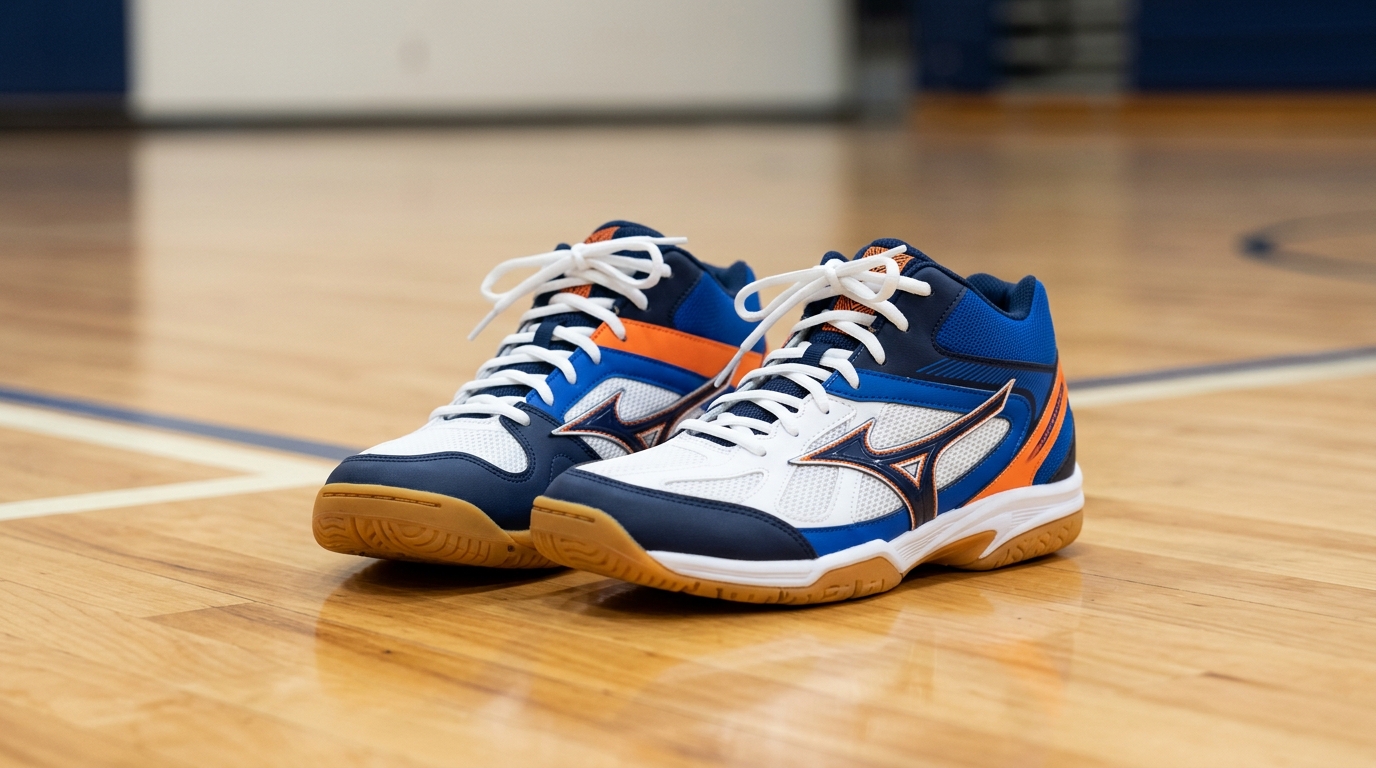
The single most useful change is wearing real volleyball or court shoes: a flat, grippy sole, strong lateral support, and cushioning tuned for jumping and landing. Make sure they fit snugly through the midfoot with room in the toes.
Learn to land softly. Coaches call it “quiet landing”: bend your knees as you come down, land on the balls of your feet, and let your legs absorb the shock instead of your heels. It takes practice, but it takes a lot of force off your feet.
Strengthen your ankles and feet between matches. The American Podiatric Medical Association recommends towel scrunches, toe spreads, and calf raises to build the small muscles that stabilise your feet on landing and on cuts. A few minutes, three or four times a week, makes a real difference.
Stretch your calves regularly, too. Tight calves limit how far your ankle can bend, forcing your feet to absorb more impact on every landing. The Cleveland Clinic notes calf tightness is a common reason heel pain flares in jumping sports — a wall stretch after practice, 30 seconds per leg, pays off.
What Helps: Recovery After a Match
After a hard match, give your feet a day to recover before jumping again. Rolling each foot over a tennis ball or a frozen water bottle for a few minutes loosens tight tissue — keep the pressure gentle, especially if the arch is tender.
Ice a sore heel or ankle for 15 minutes after play if it’s swollen, wrapped in a thin towel. If the soreness is still there the next morning, take an extra rest day rather than playing through it.
Look at your overall load. If you play several times a week plus training, your feet may never get a proper rest. Jumping sports all add up — our guide to foot pain from jumping explains how repeated impact builds into lasting foot pain, and why rest days matter as much as training.
Your Daily Routine for Happier Feet on the Court
Here’s a routine to keep your feet comfortable through the season:
- Warm up your feet: Before practice, spend two minutes spreading your toes, scrunching a towel, and rolling each ankle in circles.
- Wear court shoes, not runners: Lace up proper volleyball shoes with lateral support and landing cushioning, and replace them when the grip wears smooth.
- Practise soft landings: In warm-ups, bend your knees and land quietly on the balls of your feet.
- Strengthen after practice: Calf raises and towel scrunches for five minutes, three or four times a week.
- Ice and roll sore feet: Ice a swollen heel or ankle for 15 minutes after a match, and roll each arch over a tennis ball.
FAQs
Is foot pain from volleyball normal?
Mild soreness in the heels or arches after a hard match is common early in the season. Sharp pain, swelling that won’t settle, or pain that stops you walking is not normal — get it checked.
Why do my heels hurt after volleyball?
Repeated jumping and landing sends impact straight into your heels, and thin or worn-out shoes make it worse. Heel pain that’s worst first thing in the morning often means plantar fascia irritation.
Can volleyball cause plantar fasciitis?
Yes — repeated impact from jumping and landing is a known trigger, especially with tight calves. Rest, calf stretching, and proper court shoes usually help, but persistent heel pain should be checked by a doctor.
Should I wear ankle braces for volleyball?
Ankle braces can help if you’ve sprained an ankle before or yours feels wobbly on landings — a sensible precaution. They work best alongside strengthening exercises, not instead of them.
When should I see a doctor about foot pain from volleyball?
See a doctor promptly if the pain is sharp or severe, there’s swelling that doesn’t settle, you can’t put weight on your foot, or it keeps coming back every match despite rest and better shoes.
Sources
- Mayo Clinic — plantar fasciitis
- Cleveland Clinic — heel pain and calf tightness
- American Podiatric Medical Association — foot strengthening exercises
This article is for general information only and is not medical advice. Talk to your doctor or a podiatrist about your own feet.