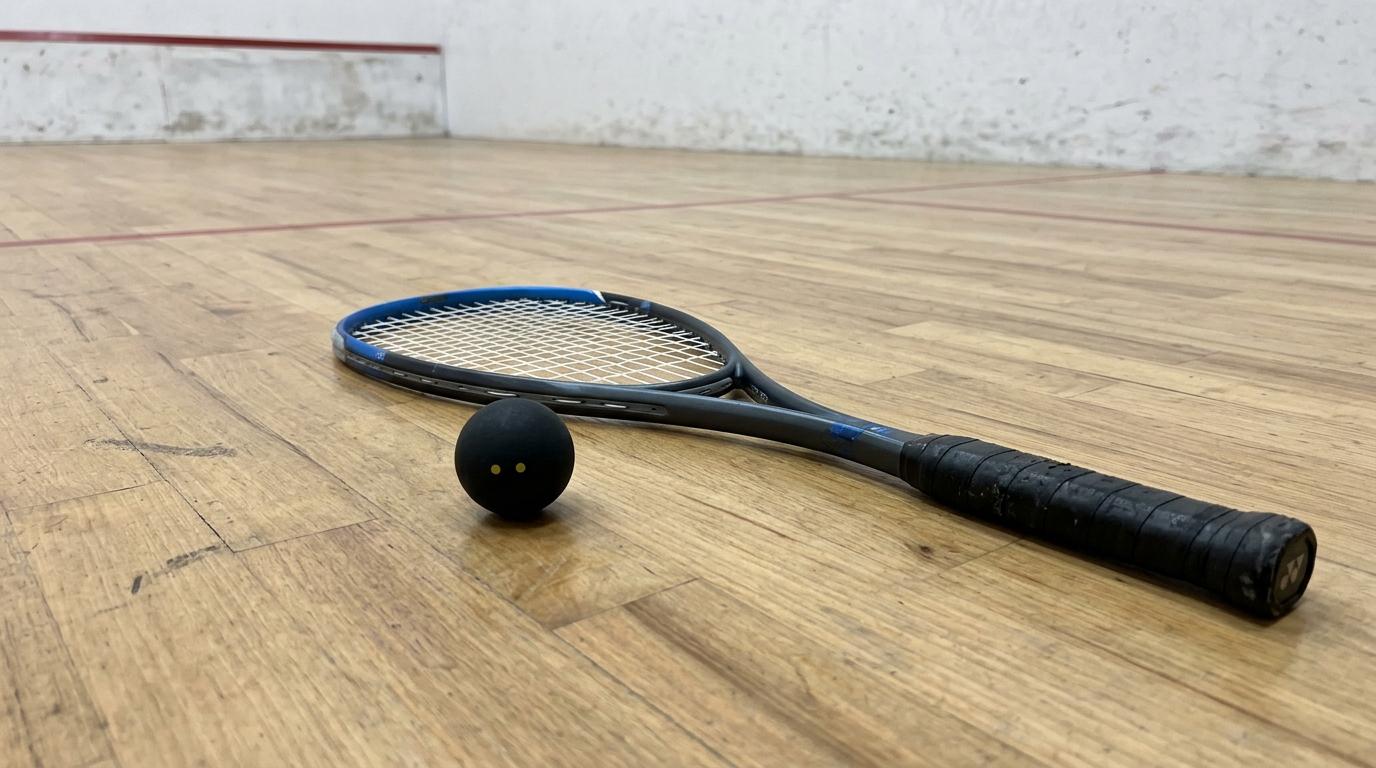
Quick Answer: In short, foot pain from squash usually comes from the hard court and the way you move on it — deep lunges, sudden stops and twists in a small enclosed space, and shoes that grip the floor so firmly your feet twist inside them. The pain is usually soreness in the soles, arches and heels, and it often fades with rest, better shoes and a warm-up. If it stays sharp, lasts more than a couple of weeks, or comes with swelling or bruising, see a doctor or podiatrist.
See a doctor promptly if you notice:
- Sharp or severe pain in the heel, arch, or one spot on a bone
- Pain that makes walking or putting weight on your foot hard
- Swelling, redness, or warmth that doesn’t settle within a day or two
- Numbness, tingling, or a burning feeling in your foot or toes
- A bruise under a toenail that turns dark, or pain after every match
Why Squash Can Hurt Your Feet
Squash is one of the toughest sports on your feet. You play on a hard wooden court inside a small enclosed box, and the ball bounces everywhere — so you spend the whole rally lunging, sprinting a few steps, then stopping dead and twisting back the other way. There’s no steady rhythm like a jog and no soft surface to forgive a hard landing, so your feet take the full force of every move.
What It Is: The Most Common Causes
The lunge is the biggest culprit. To reach a ball in the corner, you stretch one leg out and your front foot plants hard while your body weight drives forward over it, loading the arch and the ball of the foot at once. If your shoes don’t support the arch, that strain repeats on every shot — hundreds of loaded lunges per match.
Hard stops and twists are another frequent complaint. Squash shoes grip the court firmly — that’s what keeps you from slipping — but that grip means your foot stops instantly while your body keeps turning, and the twist goes through your ankle and midfoot. It’s a different strain from tennis, where a bigger court lets you run through shots, or pickleball, where the pace is gentler.
Black toenails are a classic squash problem. When you lunge hard, your toes jam into the front of your shoe, and repeated impact bruises the nail bed until the nail darkens. Shoes even slightly too short make this far worse — your toes need room to slide forward on every lunge.
Heat and sweat inside the court make things worse too. An enclosed court warms up fast, your feet sweat, and damp skin blisters more easily — especially on the heel and the ball of the foot. Our guide to foot pain from tennis covers similar court-sport strain on a bigger court, while foot pain from pickleball looks at the gentler cousin of the racket sports.
What Helps: Shoes and Footwork That Protect Your Feet
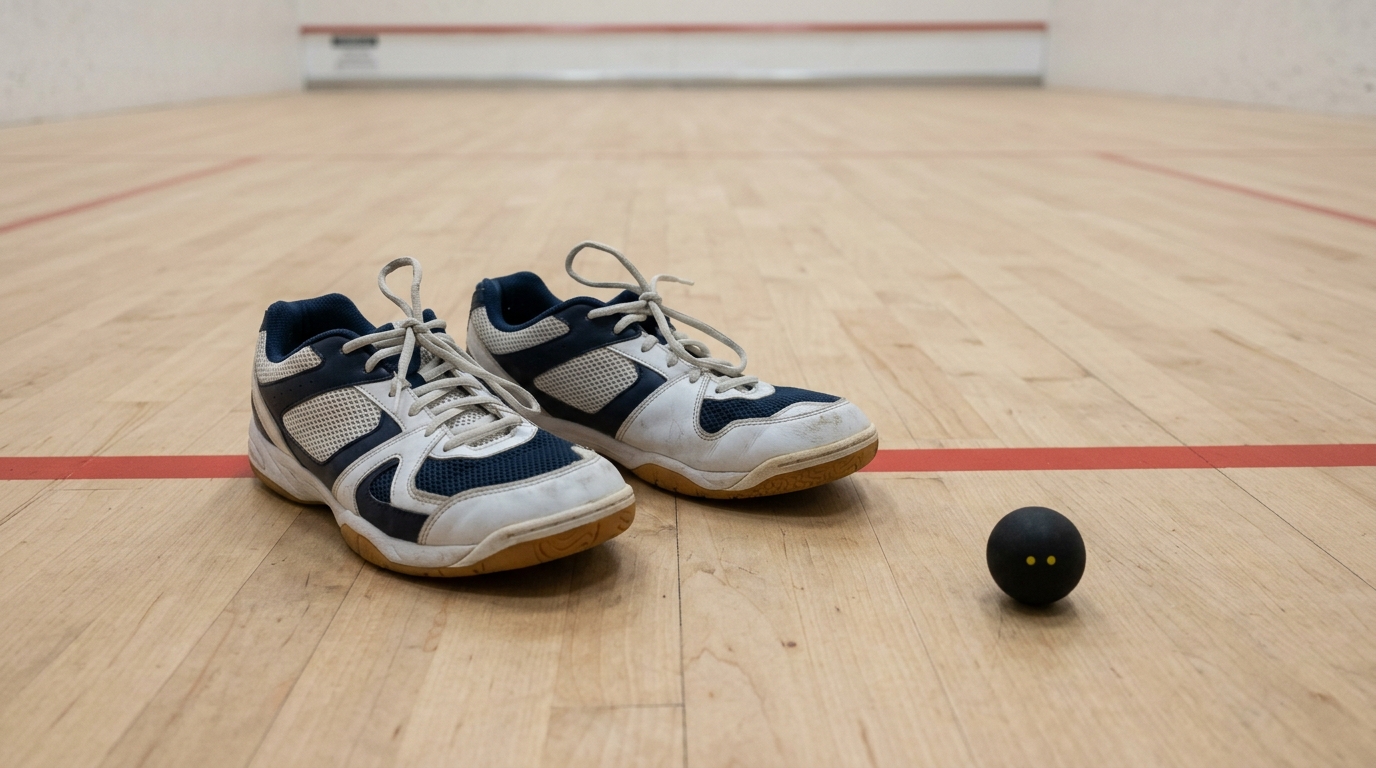
The first fix is your shoes. You need proper court shoes — non-marking soles, good lateral support, and a snug midfoot so your foot doesn’t slide and twist inside the shoe. Leave a thumb’s width between your longest toe and the front, because your toes slide forward on every lunge, and replace worn shoes promptly: once the cushioning flattens, every landing goes straight into your heels.
Your lunge technique matters too. A shorter, controlled lunge — knee bent, front foot flat — spreads the load across your whole foot instead of slamming it into the ball of the foot, while a turned-out foot or overreaching puts extra twist through the ankle.
Good socks help too. Moisture-wicking sports socks with padding at the heel and forefoot cut down on blisters and cushion the impact. The Cleveland Clinic points out that tight calves are one of the most common reasons heel and arch pain flares during exercise, and cold courts make tight calves even stiffer.
What Helps: Recovery After a Match
After a hard match, give your feet time to settle. Sit down, take your shoes off, and let your feet breathe. Rolling the bottom of your foot over a tennis ball or a frozen water bottle loosens tight tissue — keep the pressure gentle if your arch or heel is tender.
Rest your feet for a day if they’re sore, and skip the next match if the ache is still there in the morning — a week off now beats a month off later. If a toenail has turned dark, keep it clean and watch it; a black, very painful nail needs a doctor’s look.
Your Daily Routine for Happier Feet on the Squash Court
Here’s a routine to keep your feet comfortable on court:
- Warm up your feet and calves: Two minutes of ankle circles, calf raises and gentle lunges before you play.
- Check your shoes: Make sure they fit with a thumb’s width at the toes and the cushioning hasn’t flattened.
- Wear moisture-wicking socks: Padded sports socks cut blisters and cushion every landing.
- Keep your lunges controlled: Bend your knee, keep your front foot flat, and don’t overreach for balls you can’t reach.
- Roll sore feet after a match: Roll each foot over a tennis ball, and rest a day if the ache remains.
FAQs
Is foot pain from squash normal?
Mild soreness in the soles or arches, especially when you’re new to squash, is common and usually fades with rest, better shoes and a warm-up. Sharp or persistent pain is not normal and should be checked.
Why do my arches hurt after squash?
The deep lunge is the main reason — your front foot plants hard and takes your full body weight in a stretched position, which loads the arch heavily, and weak arch support and tight calves make it worse.
Can squash cause plantar fasciitis?
Squash can irritate the plantar fascia, especially with tight calves and flat or worn-out shoes. Rest, calf stretching and better shoes usually help — persistent heel pain needs a doctor’s look.
Why do my toenails turn black after squash?
When you lunge hard, your toes jam into the front of your shoe and the repeated impact bruises the nail bed. Shoes with a thumb’s width of room at the toes help — a very painful black nail needs a doctor’s look.
When should I see a doctor about foot pain from squash?
See a doctor promptly if the pain is sharp or severe, if swelling doesn’t settle, if a toenail is black and very painful, or if the pain keeps coming back despite rest and new shoes.
Sources
- Mayo Clinic — plantar fasciitis causes and symptoms
- Cleveland Clinic — arch pain and calf tightness information
- American Podiatric Medical Association — foot strengthening exercises
This article is for general information only and is not medical advice. Talk to your doctor or a podiatrist about your own feet.