Quick Answer: In short, foot pain from rowing usually comes from the foot-stretcher — the hard plate your feet push against on every stroke. Each drive forces your feet into it with full leg power, and over hundreds of strokes that pressure bruises your soles and strains your arches. It often fades with rest, a better setup, and cushioned socks. If it stays sharp, lasts more than a couple of weeks, or comes with swelling or numbness, get it checked.
See a doctor promptly if you notice:
- Sharp or severe pain in the heel, arch, or a single spot on a bone
- Pain that makes walking or putting weight on your foot difficult
- Swelling, redness, or warmth that doesn’t settle within a day or two
- Numbness, tingling, or a burning feeling in your foot or toes
- Pain that keeps coming back after every session despite rest and setup changes
Why Rowing Can Hurt Your Feet
Rowing looks like an arm sport, but your legs do most of the work — and your feet are the link between your legs and the boat. Every stroke starts with a drive against the foot-stretcher, a rigid plate with straps across the tops of your feet, repeated hundreds of times per session.
The stretcher is flat and hard, with no give — and with your feet strapped at a fixed angle, there’s no cushioning, no flex, and no chance to shift mid-stroke.
What It Is: The Most Common Causes
Foot-stretcher pressure is the biggest culprit. Each drive presses the balls of your feet hard into a rigid plate while the straps hold them there. Over a long row, that repeated pressure bruises the soles — and a stretcher angle that’s too steep makes it worse, forcing your ankles into an awkward bend.
Over-gripping with your toes is another frequent complaint. Many rowers curl their toes and tense the small muscles in their feet through the whole drive, and after an hour that constant gripping leaves your arches cramping and your toes stiff. Our guide to foot pain from cycling covers the same kind of fixed-foot pressure in a different sport.
Ankle stiffness plays a bigger role than most rowers realize. A proper drive needs your ankles to flex and extend smoothly, but cold mornings and tight calves make them stiffen up. When your ankles can’t move freely, your feet press unevenly against the stretcher. The Mayo Clinic notes that tight calves and limited ankle flexibility are among the most common reasons heel and arch pain flares during exercise.
Rowing also differs from kayaking. Kayakers brace their feet against foot pegs too, but their legs stay mostly straight and the force is gentle — they’re steering and bracing, not driving. Rowers use their legs as the engine, so the pressure is far higher and more repetitive, with no way to step off it mid-stroke. A poor setup — wrong height, wrong angle, straps too tight — multiplies all of this. Our guide to foot pain from weightlifting explains how a hard, flat surface underfoot during a heavy leg drive can bruise the soles in a similar way.
What Helps: Setting Up Your Foot-Stretcher
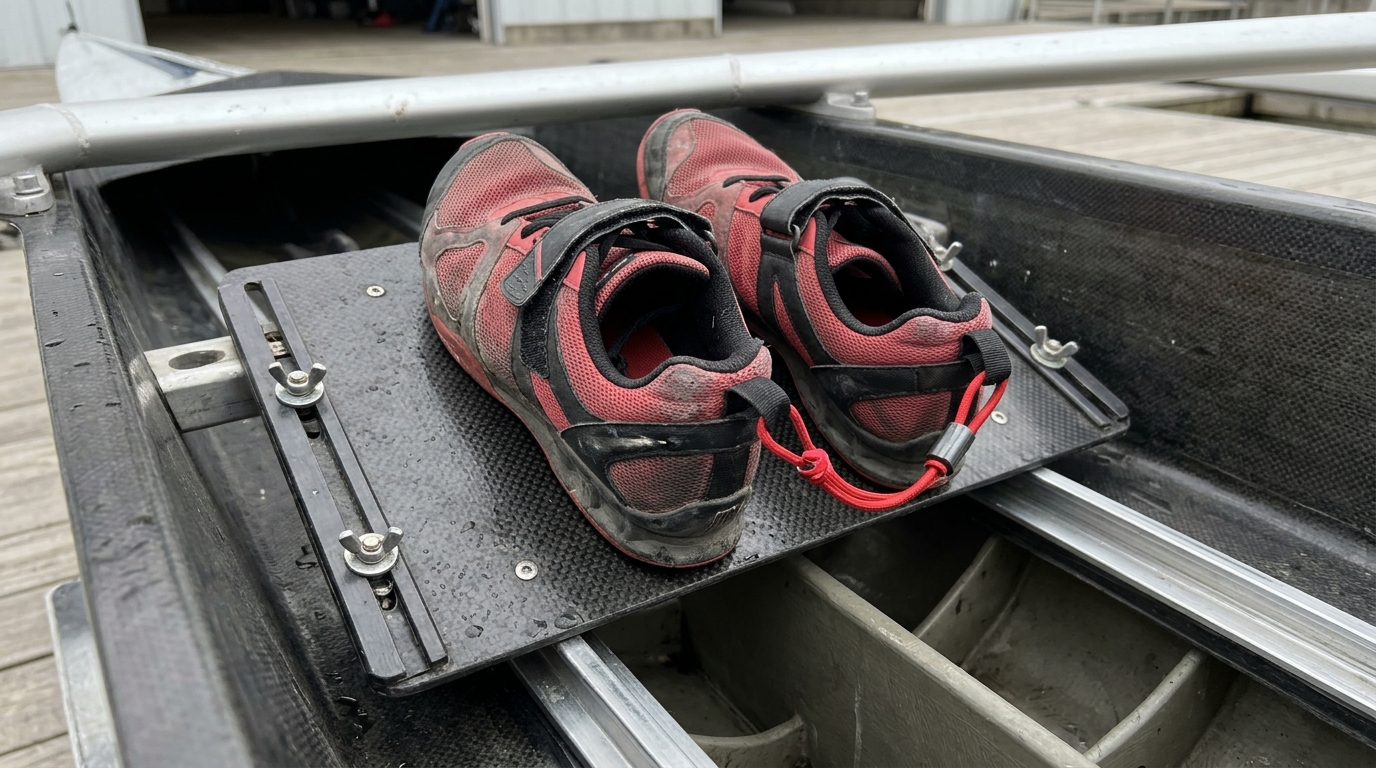
The first fix is your stretcher setup — worth ten minutes before your next outing. Set the height so your feet sit naturally, with your ankles in a comfortable, neutral position at the catch, and the angle so the plate meets the balls of your feet evenly instead of digging into one edge. Ask a coach to help if your club’s boats are adjustable.
Loosen the straps a touch. They need to hold your feet in place, but cinched down hard they cut into the tops of your feet and restrict blood flow, making numbness and soreness worse. You should still be able to wiggle your toes slightly.
Cushioned socks make a real difference. Padded rowing or hiking socks put a thin layer between your soles and the hard plate, taking the edge off hundreds of strokes. Some rowers also slip a thin foam pad behind the stretcher — just make sure it doesn’t slip or change the angle.
Warm up your feet and calves before you launch. The Cleveland Clinic points out that tight calves are one of the most common reasons heel and arch pain flares during exercise, and cold mornings make them even stiffer. A wall calf stretch and a few ankle circles take two minutes.
What Helps: Recovery After a Row
After a sore session, take your shoes off and let your feet breathe. Rolling the bottom of your foot over a tennis ball or a frozen water bottle for a few minutes loosens tight tissue — keep the pressure gentle if the soles are bruised or tender.
Rest your feet for a day and let the ache settle. If the soreness keeps coming back session after session, your setup still isn’t right — or something else is going on and worth getting checked.
Your Daily Routine for Happier Feet on the Water
Here’s a routine to keep your feet comfortable when you row:
- Check your stretcher before every row: Make sure the height, angle, and straps feel right at the catch.
- Wear cushioned socks: Padded rowing or hiking socks soften the pressure of the hard plate on every stroke.
- Warm up your feet and calves: Before you launch, spend two minutes spreading your toes, rolling each ankle in circles, and stretching your calves.
- Relax your toes during the drive: Push with the balls of your feet instead of curling your toes.
- Roll sore feet after a row: Roll the bottom of each foot over a tennis ball for a few minutes, and rest a day if the ache remains.
FAQs
Is foot pain from rowing normal?
Mild soreness in the soles or arches, especially when you’re new to rowing, is common and usually fades with rest and a better setup. Sharp or persistent pain should be checked.
Why do the balls of my feet hurt after rowing?
Every drive presses the balls of your feet hard into a rigid foot-stretcher while the straps hold them there. Hundreds of strokes add up to bruised, aching soles.
Can rowing cause plantar fasciitis?
Rowing can irritate the plantar fascia, especially with tight calves and a poorly adjusted stretcher. Rest, calf stretching, and a better setup usually help — persistent heel pain should be checked.
Should I wear special socks for rowing?
Cushioned rowing or hiking socks are a simple fix — they put a padded layer between your soles and the hard foot-stretcher. Avoid thin cotton socks that flatten out when damp.
When should I see a doctor about foot pain from rowing?
See a doctor promptly if the pain is sharp or severe, if swelling doesn’t settle, if you have numbness or tingling in your toes, or if it keeps coming back despite rest and setup changes.
Sources
- Mayo Clinic — plantar fasciitis causes and symptoms
- Cleveland Clinic — arch pain and calf tightness information
- American Podiatric Medical Association — foot strengthening exercises
This article is for general information only and is not medical advice. Talk to your doctor or a podiatrist about your own feet.