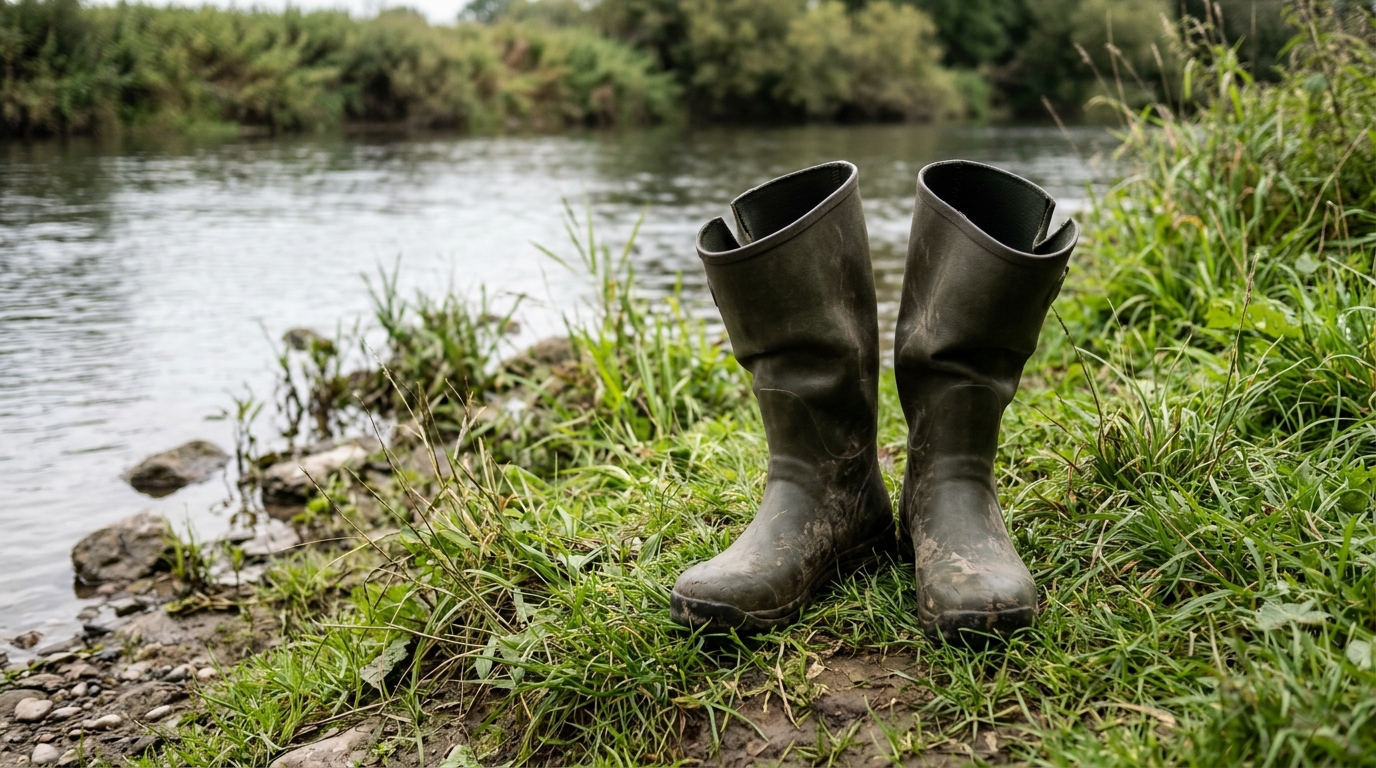
Quick Answer: In short, foot pain from fishing usually comes from standing still for hours on uneven ground — muddy banks, rocky shores, and slippery rocks force your feet to grip and balance constantly, while heavy waders and boots add weight and squeeze your toes. It usually eases with rest, supportive footwear, and stretching. If the pain is sharp or lasts more than a couple of weeks, get it checked by a doctor or podiatrist.
See a doctor promptly if you notice:
- Sharp or severe pain in the heel, arch, or a single spot on a bone
- Pain that makes walking or putting weight on your foot difficult
- Swelling, redness, or warmth that doesn’t settle within a day or two
- Numbness, tingling, or a burning feeling in your foot or toes
- Pain that keeps coming back after every trip despite rest
Why Fishing Can Hurt Your Feet
Fishing looks restful from the outside, but your feet work hard the whole time. You’re standing — often for hours — on ground that was never meant to be stood on: a muddy riverbank sloping toward the water, a rocky shore tilting under every step, or a boat deck slick with spray. Your feet grip and brace without you noticing, and by the time you pack up, your arches and calves are genuinely tired.
That’s what makes foot pain from fishing different from the soreness you get after a run or a game. You aren’t pounding or cutting — you’re holding a constant, low-level strain for a very long time, with your weight unevenly spread across slopes and rocks. And then there’s the footwear: waders and fishing boots are built to keep water out, not to support your feet, and they’re heavy — every step carries extra weight your feet feel by the end of the day. Our guide to foot pain from gardening covers a similar all-day standing strain, with the same slow build-up of tired arches and sore heels.
What It Is: The Most Common Causes
Standing on uneven ground is the biggest culprit. When one foot is higher than the other on a sloping bank, your arches and ankles work unevenly to keep you upright. The lower foot takes more load, the upper foot grips harder, and over four or five hours both end up aching.
Heavy waders and boots are another frequent complaint. Waders add weight to every step, and their built-in boots are usually flat, stiff, and short on arch support. The neoprene squeezes your feet, the thick socks bunch up, and by midday your toes feel cramped and your soles feel bruised. If the wader boots are a little small — and many anglers buy them snug — your toes jam against the front with every step down a bank.
Blisters and wet, softened skin hurt too. Hours in damp boots leave your skin pruned and fragile, and then every step on uneven ground rubs it raw. The heel and the ball of the foot are the usual hot spots, and once a blister forms, every cast makes it worse.
Cold water makes everything worse. Wading in a cold river chills your feet, and cold feet lose some feeling — so you may not notice small injuries until you’re home and they start to throb. Our guide to foot pain from dog walking explains how hours of walking on uneven paths builds into the same kind of lingering foot soreness.
What Helps: Footwear That Works With Your Feet
The first fix is fit. Your wading boots should feel snug around the heel and midfoot but leave a thumb’s width of space in front of your longest toe — and check that fit while wearing the thick socks you’ll actually fish in. If your toes jam against the front when you step down a bank, go up half a size.
Add support where the boots don’t have it. A supportive insole spreads the load across your whole foot instead of letting the arch take it all, and it makes a real difference over a long day.
Choose your footing on purpose. A folding stool or a small camp chair lets you take the weight off your feet between casts. When you can, pick a flatter spot to stand and avoid the steepest part of the bank.
What Helps: Recovery After a Fishing Trip
Once you’re home, get out of your damp boots and into something dry and supportive. Wash your feet with warm water, dry them thoroughly — especially between the toes — and check for blisters or cuts.
Soak sore feet in warm water for ten to fifteen minutes, then roll the bottom of each foot over a tennis ball to loosen tight tissue. If a spot is swollen or tender, ice it for ten to fifteen minutes. Take a rest day if the ache is still there the next morning — tired feet change how you walk, and that compensation turns a small ache into a real injury.
Your Daily Routine for Happier Feet on the Bank
Here’s a routine to keep your feet comfortable this fishing season:
- Stretch your calves and arches daily: A wall calf stretch and a few ankle circles each morning take two minutes and keep your heels and arches loose.
- Strengthen your feet: Toe spreads, towel scrunches, and single-leg balance build the small muscles that hold you steady on sloping ground.
- Check your wading boots before every trip: Fit with your thick socks on, grip, and arch support.
- Pack dry socks and a spare pair of shoes: A change of socks at lunchtime keeps your feet dry and blister-free.
- Recover after every trip: Rinse, dry, and check your feet, roll sore spots over a tennis ball, and ice anything swollen.
FAQs
Is foot pain from fishing normal?
Mild soreness in the arches or heels after a long day on the bank is common and usually fades with rest and better-fitting boots.
Why do my arches hurt after fishing?
Your arches spend hours gripping and balancing on uneven, sloping ground, and the small muscles that support them get exhausted — flat wading boots with little arch support make it worse.
Should I wear insoles in my wading boots?
Yes — a supportive insole spreads the load across your whole foot and makes a real difference over a long day in flat, stiff wading boots.
How do I stop blisters when fishing?
Keep your feet as dry as possible, wear well-fitting boots with your thick fishing socks, change into dry socks midday, and tape hot spots before you head out. Wet, sliding feet blister far faster than dry ones.
When should I see a doctor about foot pain from fishing?
See a doctor promptly for sharp or severe pain, swelling that doesn’t settle, trouble putting weight on your foot, or pain that keeps coming back after every trip despite rest.
Sources
- Mayo Clinic — blister prevention and foot skin care
- Cleveland Clinic — arch pain and foot strengthening information
- American Podiatric Medical Association — foot strengthening exercises
This article is for general information only and is not medical advice. Talk to your doctor or a podiatrist about your own feet.