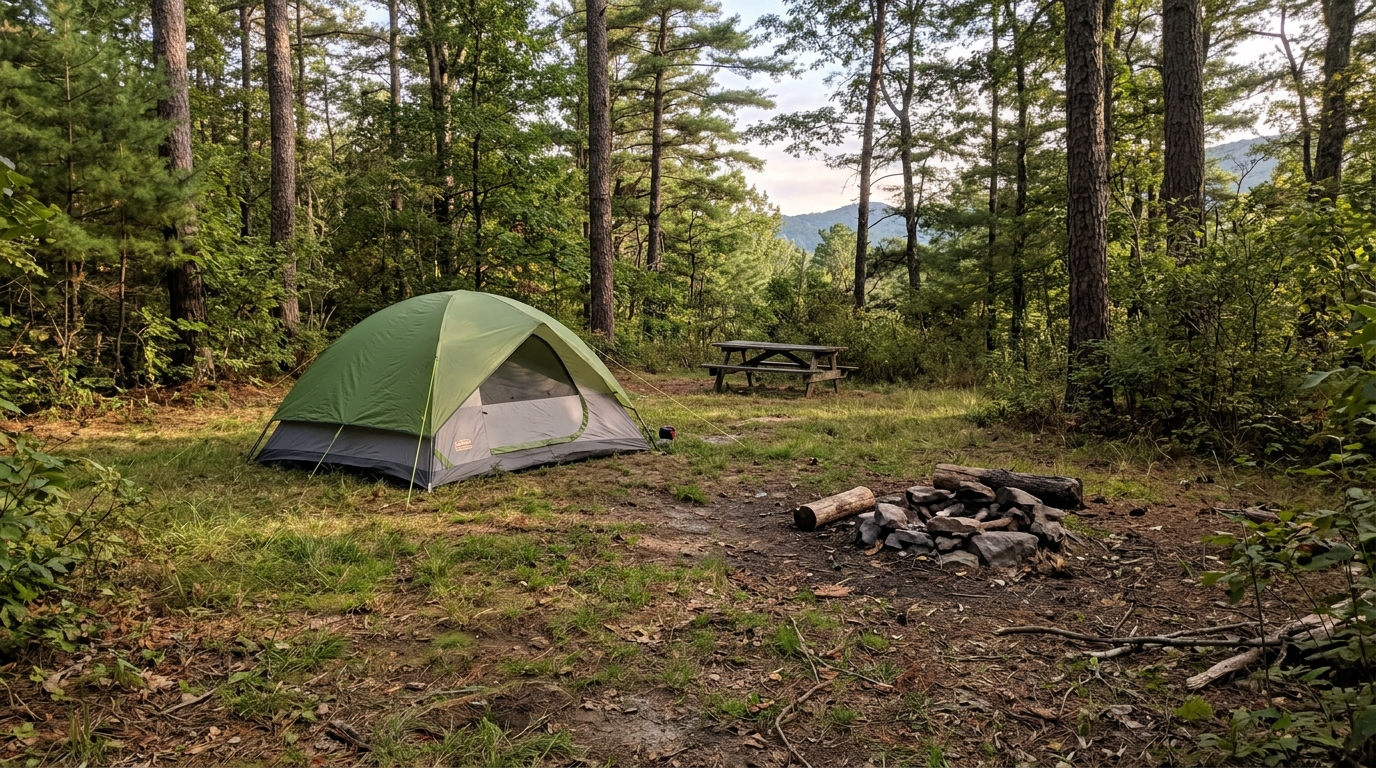
Quick Answer: In short, foot pain from camping usually comes from walking miles of uneven ground in boots or sandals, then going barefoot or wearing thin camp shoes around the tent site. Your feet get almost no rest: rough trails by day, hard ground and chores by evening, cold mornings in damp shoes. The fix is simple — supportive shoes for walking, real camp shoes with a sole, dry socks, and a few minutes of foot care each night.
See a doctor promptly if you notice:
- Sharp or severe pain in the heel, arch, or one spot on a bone
- Swelling, redness, or warmth that doesn’t settle after a day or two of rest
- Numbness, tingling, or a burning feeling in your feet or toes
- Pain that makes walking or putting weight on your foot difficult
- A wound, sore, or blister that won’t heal — especially if you have diabetes
Why Camping Is Hard on Your Feet
Camping looks relaxing, but your feet never really get a day off. You hike the trails, then you come back to camp and keep walking — to the water tap, to the firewood pile, around the tent — on bare, uneven ground. Every step lands on dirt, gravel, or grass.
The ground itself is the first problem. Camp sites are lumpy and stony, and tent floors are thin, so even standing still in camp means your feet are working to balance. Camp chores — hauling water, gathering wood, crouching by the fire — keep your feet and ankles busy all day.
Then there’s the footwear switch. Plenty of campers kick off their boots at the tent and spend the evening in flip-flops or bare feet. A flat sandal gives your arches no support at all, and bare feet on stones and roots take a beating. That’s the pattern behind a lot of foot pain from camping: boots all day, no support all evening, and sore feet by bedtime.
What It Is: The Most Common Causes
Plantar fasciitis is the most common culprit on a camping trip. The plantar fascia is the band of tissue along the bottom of your foot, and miles of uneven trail stretch and irritate it. The classic sign is heel pain with your first steps in the morning — and on a cold morning in a damp tent, those first steps can be brutal.
Blisters and sore spots come from wet feet and long walks. A stream crossing, a morning of dew-soaked grass, or just sweaty feet in boots will soften your skin, and soft skin blisters fast.
Metatarsalgia — pain in the ball of your foot — shows up after hours of walking on slopes and carrying a pack to and from the site. Our guide to foot pain from hiking covers the same trail problems in detail, and the same fixes apply on a camping trip.
What Helps: Shoes That Work at Camp
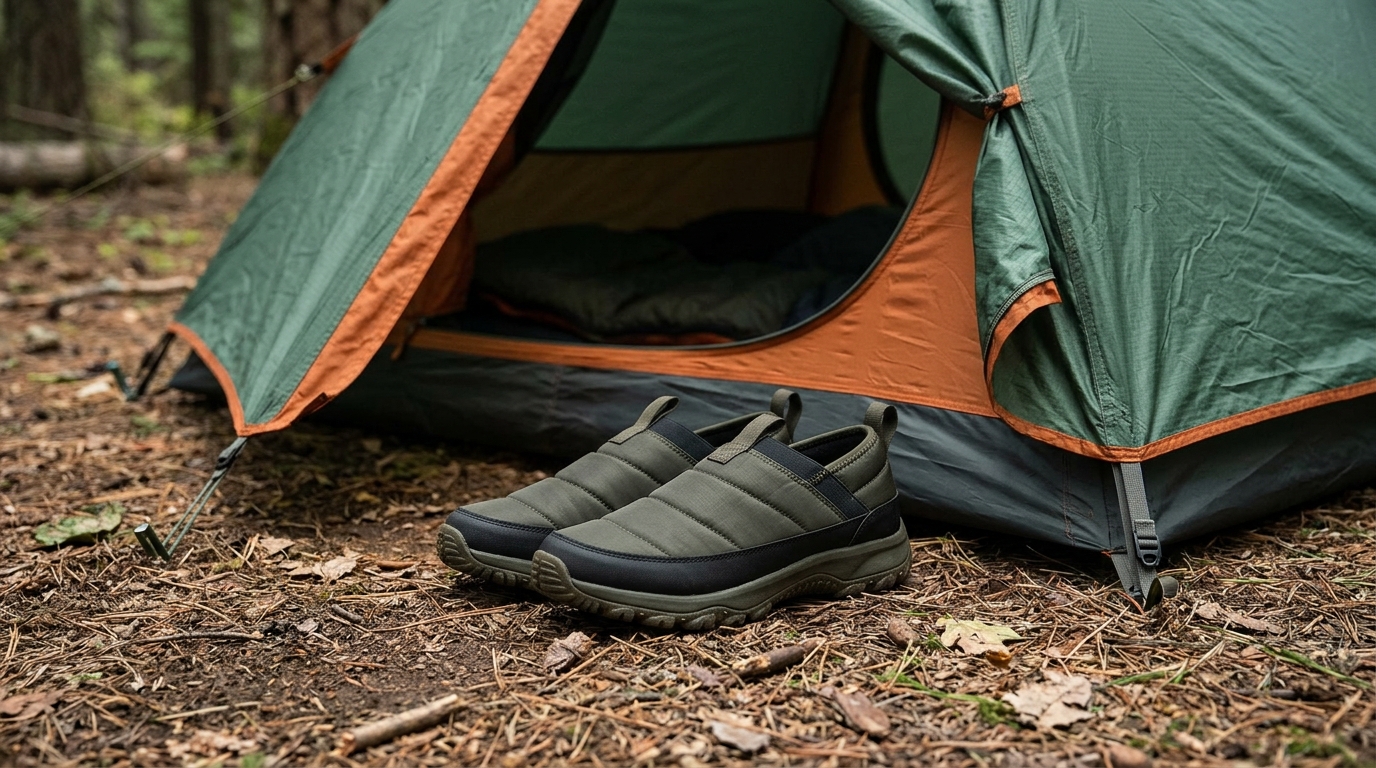
Pack two pairs of footwear, not one. Your walking boots or trail shoes handle the trails, and a proper pair of camp shoes handles the evenings. Good camp shoes have a real sole and some arch support — a lightweight trainer or a closed-toe camp shoe works far better than a flat flip-flop.
Keep your walking shoes dry. Stuff them with newspaper or a dry cloth overnight so they air out, and never put on damp boots in the morning if you can help it. Wet boots soften skin and invite blisters, and cold damp shoes make stiff morning feet worse.
Wear moisture-wicking socks on the trail, and change them when they get wet. Wool or synthetic blends keep your feet warm even when damp, while cotton socks stay wet and cold. If you’re camping with kids, the same rules apply — our guide to foot care on vacation covers how to keep the whole family’s feet comfortable on a trip.
What Helps: Recovery at the Campsite
Give your feet a few minutes of care each evening and the whole trip feels different. Wash them in warm water if you can, dry them properly — especially between the toes — and check for blisters or hot spots. Tape a hot spot straight away; a small plaster now saves a limping walk tomorrow.
Roll the bottom of each foot over a smooth stone, a water bottle, or a tennis ball if you packed one, then stretch your calves: one foot back, heel pressed down, hold for thirty seconds a side. If your feet are cold, warm them up slowly — never put freezing feet right next to a hot fire.
Rest your feet when you can, and give yourself a lighter day after a long hike. Pain that fades overnight is usually just tired feet; pain that greets you first thing in the morning, day after day, deserves a proper look from a doctor once you’re home.
Your Daily Routine for Happier Feet at Camp
A routine that keeps your feet going all trip:
- Start the day in dry socks and dry shoes: Warm socks from your sleeping bag beat cold damp ones.
- Wear supportive shoes on the trail: Real boots or trail shoes, laced snugly at the heel.
- Switch to camp shoes with a sole: Never spend the evening in flat flip-flops or bare feet.
- Check your feet each evening: Wash, dry, and tape any hot spot before it becomes a blister.
- Roll and stretch before bed: A bottle roll loosens tired arches, and calf stretches ease heel pain.
FAQs
Why do my feet hurt so much after camping?
You’re walking uneven trails all day, then walking around camp on hard, lumpy ground in the evening — often in flat shoes or bare feet. Your feet get no real rest.
What shoes should I wear camping?
Two pairs: supportive boots or trail shoes for walking, and camp shoes with a real sole and some arch support for evenings at the site. Avoid flat flip-flops as your only camp footwear.
How do I stop getting blisters when camping?
Wear moisture-wicking socks, keep your boots dry, and tape any hot spot the moment you feel it. Change into dry socks after a stream crossing or a sweaty hike.
Is it bad to walk barefoot around a campsite?
It feels nice, but bare feet on stones, roots, and hard ground take a beating, and you risk cuts, splinters, and stubbed toes. Wear camp shoes with a sole around the site and save bare feet for inside the tent.
When should I see a doctor about foot pain from camping?
See a doctor if the pain is sharp or in one spot, lasts more than a few days after you’re home, or keeps coming back on every trip. Numbness that doesn’t fade, or a cut or blister that won’t heal, should also be checked promptly.
Sources
- American Podiatric Medical Association — choosing footwear for outdoor activity
- Cleveland Clinic — plantar fasciitis causes and treatment
- Mayo Clinic — blisters: causes, prevention, and care
This article is for general information only and is not medical advice. Talk to your doctor or a podiatrist about your own feet.