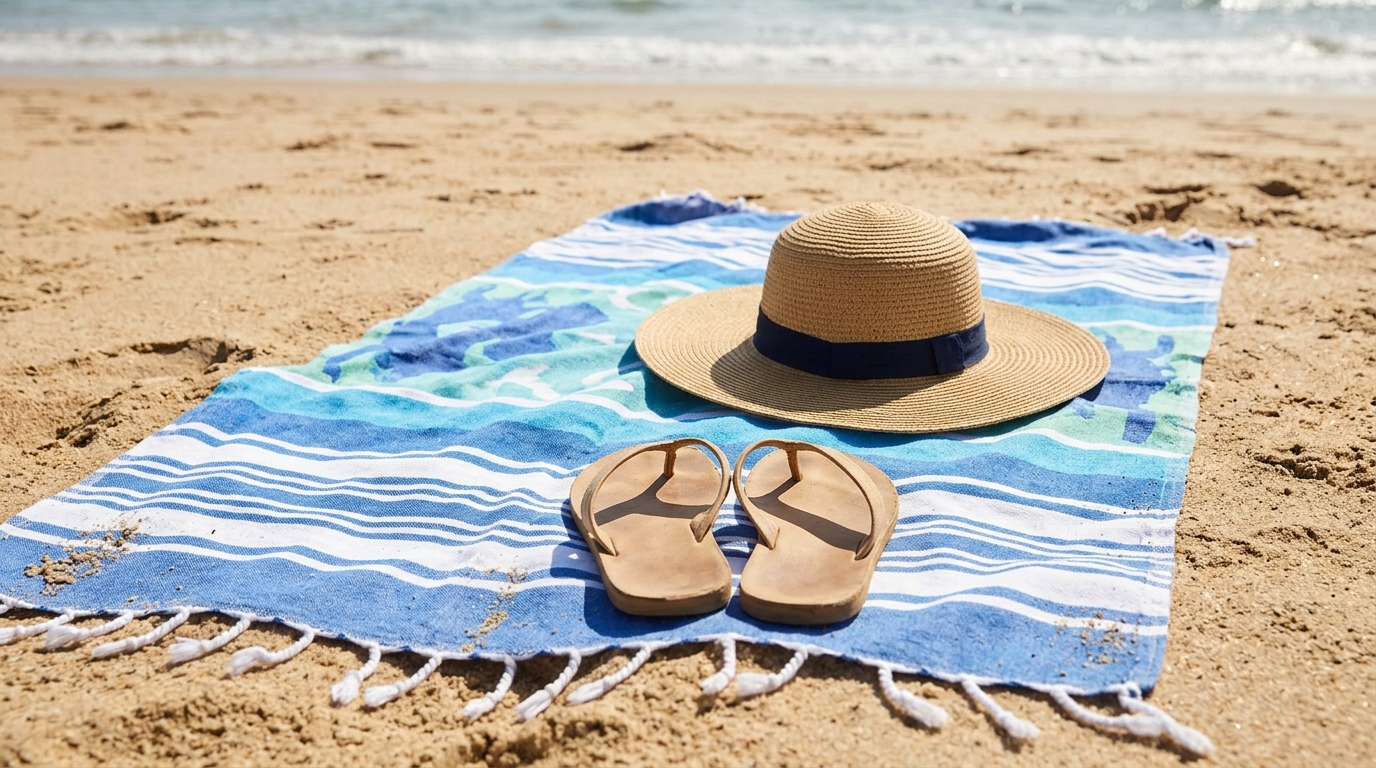
Foot care on vacation is mostly about preparation: broken-in shoes, a small foot kit, and knowing when to rest. On holiday you walk far more than usual — often in new sandals or shoes you have never worn for a full day — and that is a perfect recipe for blisters, sore arches, and aching heels. Add hot sand, pool decks, and wet shoes, and your feet face risks they never meet at home. A little planning prevents most of it: pack shoes you have already worn, blister plasters, moisturizer, and flip-flops for showers and pools. Foot care on vacation is not complicated — it is just a few habits that keep sore feet from spoiling a good trip.
See a doctor promptly if you notice any of these:
- A blister that becomes red, hot, swollen, or leaks pus
- A cut or sore on your foot that does not start healing within a few days
- Sudden swelling in one foot or leg, or pain in your calf
- Severe foot pain that stops you walking, or pain after a twist or fall
- Burns from hot sand or pavement, or signs of infection after a pool or beach visit
Why vacations are hard on feet
At home, your feet are used to your routine: the same shoes, the same distances, the same surfaces. On vacation, everything changes at once. You walk ten or fifteen miles a day sightseeing, stand in queues for hours, and do it all in shoes that may be brand new or chosen for looks rather than comfort. New shoes rub in places your old ones never did, and hours of walking multiply the friction. That is why blisters are the number one vacation foot problem — they are not a sign of weak feet, just feet doing far more work than usual in unfamiliar shoes.
Heat and water add to the trouble. Hot sand and pavement can burn bare soles surprisingly fast on a sunny afternoon. Pool decks and communal showers are prime territory for athlete’s foot and verrucas, which spread easily on damp floors. And wet feet — from swimming, rain, or sweaty socks — soften the skin and make blisters form faster. A foot that is wet and hot for hours is far more likely to blister than a dry one.
On vacation, people also push through pain. At home, a sore heel means you sit down; on holiday, you keep walking to the next museum or beach — and that stubbornness turns a small hot spot into a full blister.
Pack a small foot kit
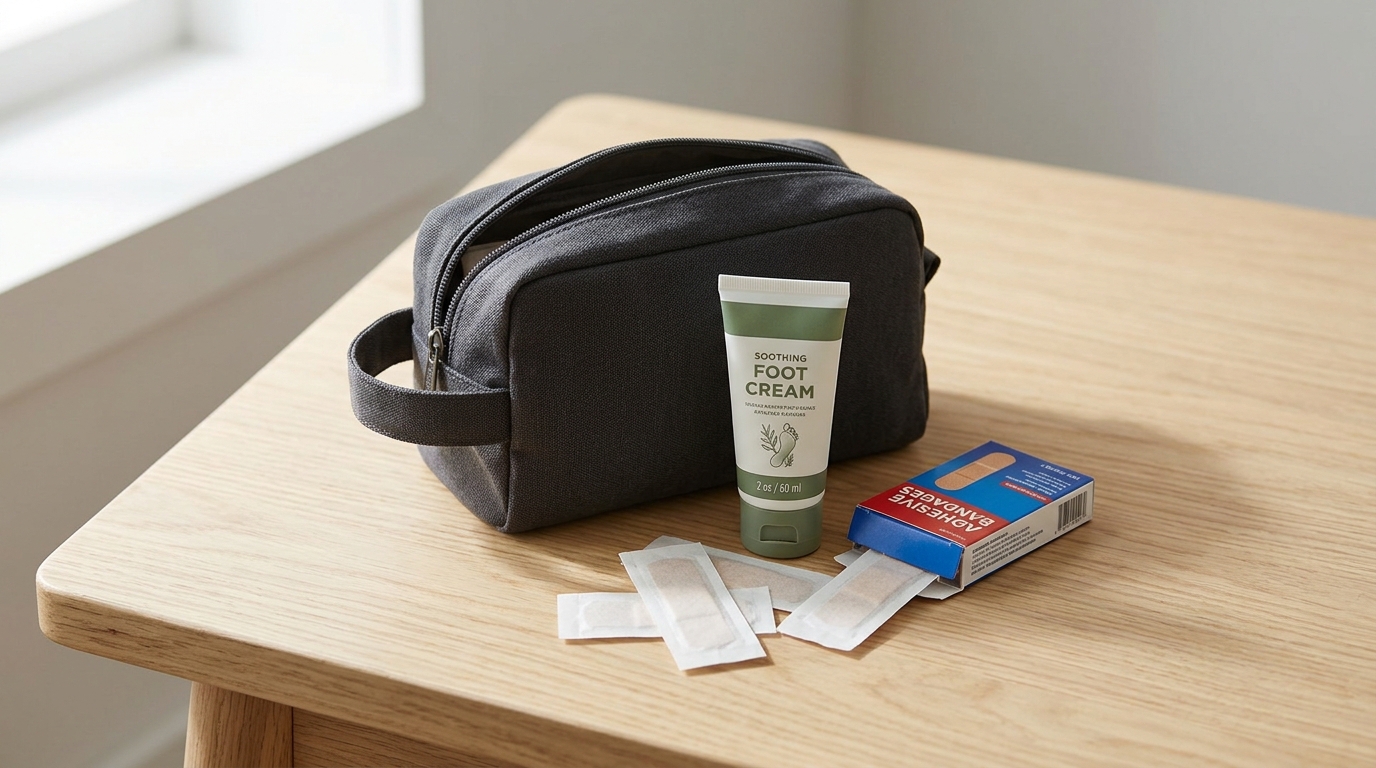
Pack blister plasters and moleskin. This is the single most useful item in a vacation foot kit. A blister plaster applied at the first sign of a hot spot can stop a blister before it forms, and moleskin cut to shape protects a sore area through a long walking day. Keep a few in your day bag, not just in the hotel room — you need them when the rubbing starts, not hours later.
Bring shoes you have already broken in. Never take brand-new shoes on vacation. The shoes you walk in all day should be ones you have worn comfortably for at least a week at home. Bring a second pair too, so you can switch if one pair starts to rub — changing shoes changes where the pressure falls and gives sore spots a rest. Pack flip-flops or shower shoes for pools, beaches, and hotel showers to protect against athlete’s foot and verrucas.
Add the small stuff. A travel-size moisturizer keeps heels from cracking in dry hotel air conditioning and after days of sand and salt water. A few pairs of moisture-wicking socks are worth their weight: cotton socks stay wet and cause blisters, while synthetic or merino socks keep feet drier. Sunscreen for the tops of your feet is easy to forget and painful to regret — the tops of feet burn fast in sandals. A small nail clipper handles a snagging toenail before it tears.
On the trip: habits that save your feet
Break up long walking days. Sit down for ten minutes every hour or two, take your shoes off, and let your feet breathe. Elevate them on a chair or a bag if they are swollen — even a short rest reduces swelling and soreness. If you are sightseeing, plan a cafe stop or a bench break into the day rather than pushing through until your feet force you to stop.
Keep feet clean and dry. Rinse sand and salt water off your feet when you leave the beach, dry between your toes, and change out of wet socks as soon as you can. At the hotel, let shoes air out overnight so they dry fully.
Stretch in your hotel room. A few minutes of calf stretches, ankle circles, and toe spreads at the end of the day loosen tight muscles. If your feet are swollen after a long flight or a hot day, lie down with your feet raised on pillows for fifteen minutes.
Listen to your feet early. A hot spot is a warning, not an annoyance. Stop, apply a blister plaster, change socks, or switch shoes right away. The five minutes it takes are nothing compared with a blister that ruins two days of walking. And if pain starts mid-trip — a sharp pain, a swollen ankle, a cut that looks infected — get it checked at a local pharmacy or clinic rather than hoping it gets better on its own.
Frequently asked questions
What shoes are best for a vacation?
Comfortable, broken-in walking shoes with good cushioning and arch support, plus a second pair to switch into. Avoid brand-new shoes and flat sandals with no support for long walking days.
How do I prevent blisters on vacation?
Wear broken-in shoes and moisture-wicking socks, apply blister plasters at the first hot spot, and keep feet dry. Changing socks midday on long walking days helps a lot.
Should I wear flip-flops at the pool and beach?
Yes — always wear flip-flops or shower shoes around pools, in communal showers, and on hot sand. They protect against athlete’s foot, verrucas, and burns.
What should I pack for foot care on vacation?
Blister plasters and moleskin, broken-in shoes plus a spare pair, moisture-wicking socks, moisturizer, sunscreen for your feet, flip-flops, and a small nail clipper.
What do I do if my feet swell on vacation?
Rest with your feet raised for fifteen minutes, drink water, and avoid tight shoes. Swelling after a long flight or a hot day is common and usually eases with rest and elevation.
Sources
- American Podiatric Medical Association — Summer Foot Care
- Cleveland Clinic — How to Prevent Blisters
- NHS — Athlete’s Foot: Prevention and Treatment
This article is for information only and is not medical advice. If your foot pain is severe, sudden, or not improving, talk to a healthcare professional for a proper diagnosis.